
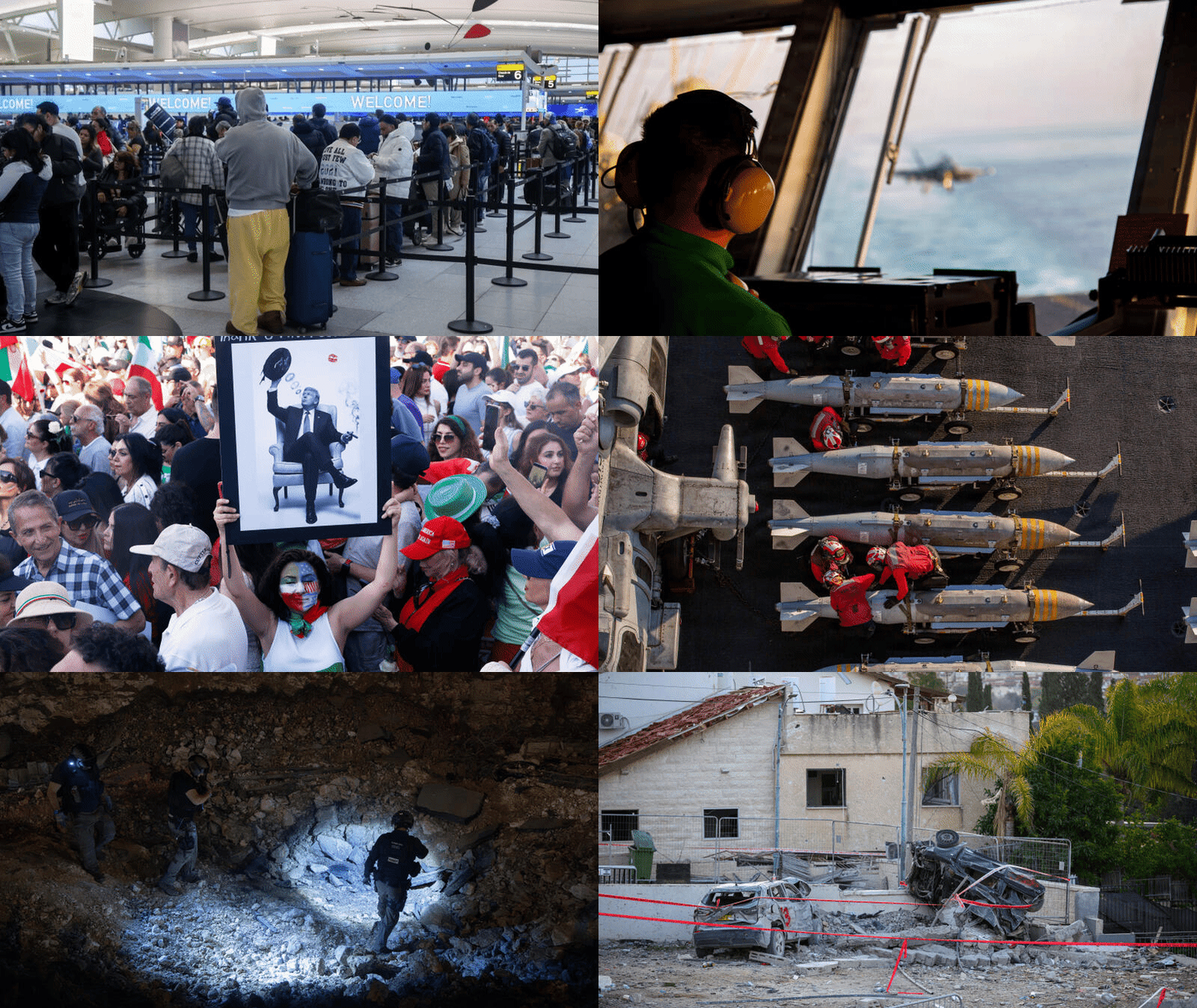
The conflict between the United States and Iran has intensified dramatically, with US President Donald Trump warning of a “big wave” of strikes on Iran. This comes as Iran targets a British base in Cyprus and Hezbollah sites in Beirut come under attack. The situation marks a significant escalation in the ongoing hostilities, raising fears of a broader regional conflict.
US and Israeli military forces have launched a sustained campaign against Iran and its allies, continuing for the third consecutive day. This follows the assassination of Iran’s Supreme Leader Ayatollah Ali Khamenei, a move that has further inflamed tensions. President Trump, in his first public address regarding the conflict, stated that the military operations could extend “far longer” than initially anticipated, possibly exceeding four to five weeks.
Trump’s Bold Assertions and Military Developments
In an interview with CNN, President Trump declared, “We are knocking the crap out of them … The big wave hasn’t even happened. The big one is coming soon.” His comments underscore the administration’s determination to intensify military actions against Iran, despite the potential for significant regional destabilization.
Meanwhile, the conflict has seen unintended consequences, with three US fighter jets mistakenly shot down by Kuwaiti air defenses. Fortunately, all six crew members managed to eject safely. In a related incident, Qatar reported that its air force had downed two Iranian warplanes, further complicating the military landscape.
Regional Impact and Economic Concerns
Iran has responded by escalating its strikes on Israel, Lebanon, the UAE, and Kuwait. The conflict’s ripple effects are being felt globally, with approximately 115,000 Australians stranded in the Middle East due to the closure of airports and civilian airspace. The energy markets are also reeling, as fears mount that oil prices could surge past $100 a barrel, a level not seen in years, impacting motorists worldwide.
“This was our last best chance to strike, what we’re doing right now, and eliminate the intolerable threats posed by this sick and sinister regime,” President Trump stated.
International Reactions and Security Concerns
The international community is watching closely as tensions rise. US Secretary of War Pete Hegseth emphasized vigilance against potential sleeper-cell activity within the US, describing Iran as “a regime that sows terror.” The Department of Homeland Security and the FBI are actively monitoring for any emerging threats.
In a related development, a mass shooting in Austin, which resulted in three fatalities and 14 injuries, is being investigated as a potential terror attack. Authorities are examining materials found in the suspect’s vehicle that may indicate a connection to terrorism.
Turkey’s Stance and Regional Diplomacy
Turkish President Tayyip Erdogan has criticized the US and Israel for their actions against Iran, labeling them a “clear violation” of international law. Erdogan expressed solidarity with the Iranian people, while also condemning Iran’s retaliatory strikes on Persian Gulf countries as “unacceptable.”
Despite Erdogan’s vocal opposition, Turkey has not been targeted by US-Israeli forces since the joint military operations began. Reports indicate that hundreds of Iranians have crossed into Turkey, seeking refuge from the escalating conflict.
Military Strategy and Future Outlook
President Trump justified the military campaign by highlighting the threat posed by Iran’s missile program, which he claimed was advancing rapidly. He outlined the strategic objectives of the US-Israeli operations, which include dismantling Iran’s missile capabilities, neutralizing its naval forces, and preventing the regime from acquiring nuclear weapons.
“First, we’re destroying Iran’s missile capabilities, and you see that happening on an hourly basis, and their capacity to produce brand-new ones,” Trump said. “Second, we’re annihilating their Navy. We’ve knocked out already 10 ships. They’re at the bottom of the sea. Third, we’re ensuring that the world’s number one sponsor of terror can never obtain a nuclear weapon.”
Amidst the military operations, airlines such as Etihad Airways and Emirates have resumed limited flights from Abu Dhabi and Dubai, focusing primarily on repatriation and assisting stranded passengers. However, flights to and from Australia remain heavily disrupted, with passengers advised to verify schedules with their airlines.
As the conflict unfolds, President Trump has reiterated his readiness to extend military operations beyond the initial four to five-week timeline if necessary. “Whatever the time is, it’s OK, whatever it takes,” he remarked, underscoring his commitment to the campaign.
The international community remains on edge as the situation develops, with potential implications for global security and economic stability. The coming weeks will be critical in determining the trajectory of this conflict and its impact on the broader Middle East region.