



Men are becoming increasingly conscious of their health, fitness, and appearance, sparking a surge in the global men’s wellness market. This market is projected to grow from $1.42 trillion in 2024 to a staggering $2.88 trillion by 2030. Wellness brands and private clinics are seizing this opportunity, employing marketing techniques that have long been used to target women.
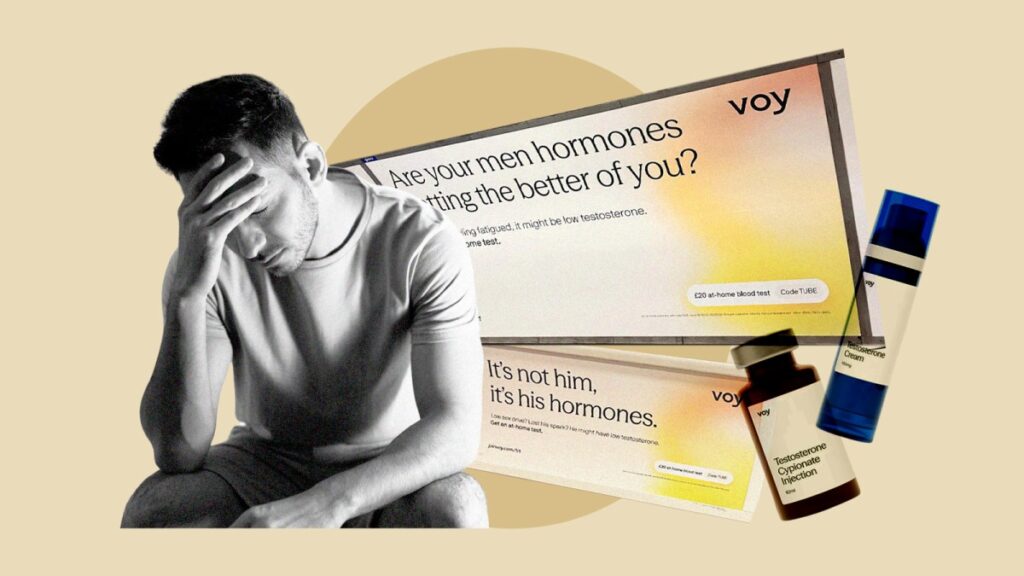
This month, Voy, a private clinic, began advertising testosterone tests on the London Underground, urging male commuters to check their levels if they feel fatigued. Some ads read, “It’s not him, it’s his hormones,” and “Men get hormonal too.” While some women on social media dismissed these ads as “rage bait,” Voy stated its intent was to destigmatize discussions about men’s health. “Men are often taught to brush off hormonal symptoms… These ads are deliberately plain-spoken to make the issue feel normal, recognizable, and worth talking about,” the clinic explained.
Marketing Health and Masculinity
Encouraging men to discuss their health is commendable. However, many men’s health clinics offering hormone tests, weight-loss drugs, supplements, and hair-loss treatments are promoting a specific, often expensive, version of health. Their websites frequently feature images of muscular, grey-haired men running athletically along beaches, insinuating that testosterone prescriptions can address issues ranging from low mood and libido to poor sleep and depression.
Professor Channa Jayasena, a leading researcher on testosterone, highlights two reasons for the growing interest in testosterone: the debunking of the myth that testosterone treatment might provoke heart attacks or strokes, and the fact that the population is aging and gaining weight. “The vast majority of men who are given testosterone nowadays are unfit men, and it’s potentially reversible if they get fitter,” Jayasena notes.
“If you take testosterone, you will feel a bit better. But your blood pressure might be a tiny bit worse. Your cholesterol will be a bit worse. It won’t kill you, but it will not prolong your life.”
The Risks of Testosterone Misuse
While testosterone can be beneficial for those who need it, misuse can lead to serious health consequences. Taking testosterone unnecessarily can cause bone marrow to produce too many red blood cells, thickening the blood and increasing the risk of heart attack or stroke. The misuse of anabolic steroids, which many in the UK use illegally, is even riskier, leading to infertility, liver and kidney damage, and mood swings.
Daniel O’Shaughnessy, who once used high doses of testosterone as an anabolic steroid, shares his insights. “Testosterone is quite normalized in the gay scene,” he says. “And in gyms, on Instagram and other platforms, both gay and straight men regularly discuss what they’re taking to enhance their body.” He mentions a growing trend in supplements like ashwagandha and tongkat ali, despite limited evidence of their effectiveness.
“There are even Reddit threads about how to cheat the system by doing things like not sleeping the night before the test, in order to get a low result.”
Concerns Over Private Clinics
Jayasena expresses concern over private clinics prescribing testosterone to men who do not need it. “The consensus is that 12 nanomoles per litre or over is a normal testosterone level. But some clinics treat men with significantly higher levels,” he warns. He also questions the accuracy of home blood tests, which can lead to erroneously low results if not properly administered.
Jack Tindle’s experience underscores these concerns. After being retested on the NHS, his testosterone levels were found to be low enough for a prescription, but only just, and not as low as the private clinic had suggested. “I’ve spoken to multiple men who have left clinics because they haven’t been happy with the advice,” Jayasena adds.
A Call for Awareness and Regulation
Luke Evans, a Conservative MP and GP, believes men are playing catch-up in the realm of body image and health treatment. “We are about 20 years behind where we are with women in terms of male body image and the way in which we treat some men’s problems,” Evans states. He has been advocating for a minister for men and boys since entering parliament.
“This is an emerging area of science. I hope lots of people will be benefiting from getting good advice, but it’s open to both interpretation, and at worst, corruption.”
As the men’s wellness industry continues to grow, there is a pressing need for awareness and regulation to prevent potential health crises in the future. The industry must ensure that advice and treatments are evidence-based, safeguarding the health of those it aims to serve.