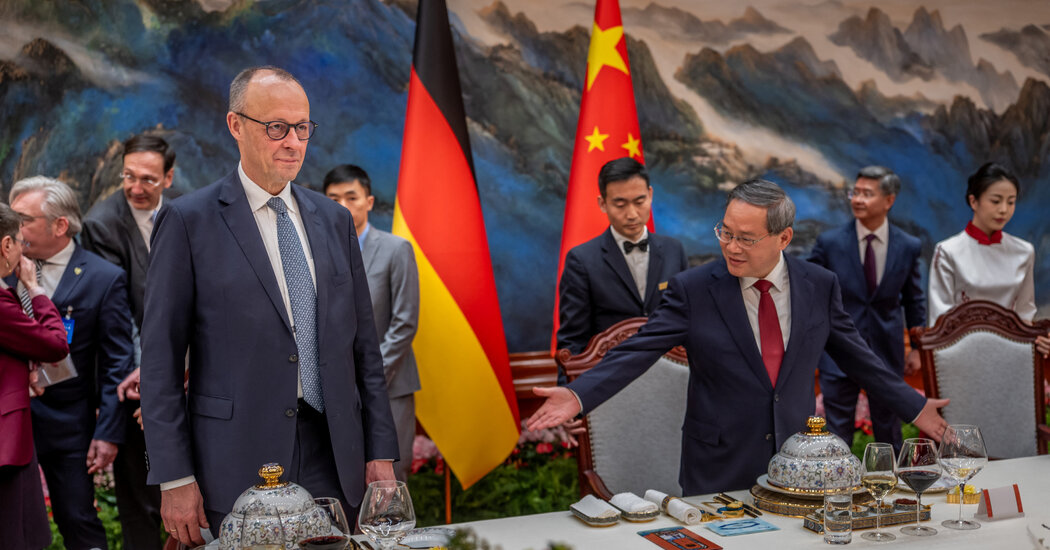
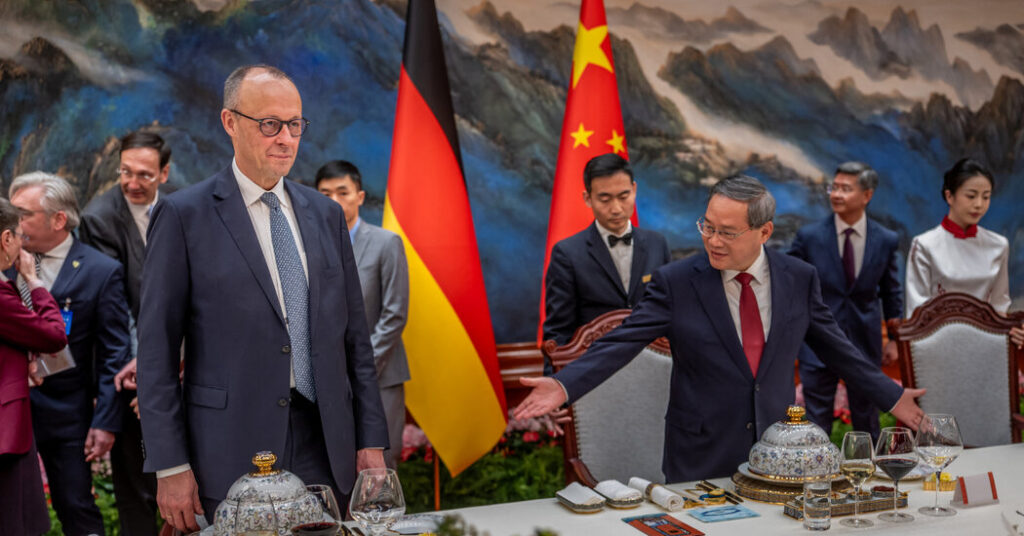
On Wednesday, German Chancellor Friedrich Merz delivered a pointed critique of Chinese trade policies during a visit to Beijing, highlighting the challenges faced by German firms operating in China. The following day, he toured the Beijing facilities of a renowned German automaker, riding in its latest luxury sedan and engaging with its CEO, who praised the vast innovation opportunities available in the Chinese market.
This juxtaposition underscores a growing disconnect between European political leaders and the business executives who accompany them on such diplomatic missions. While Merz’s comments reflect a broader European concern over China’s economic practices, the enthusiasm exhibited by the business leaders illustrates the complexity of the relationship between Europe and China.
Europe’s Diplomatic Tightrope
The announcement comes as Europe grapples with its strategic positioning between global superpowers. The European Union has been striving to assert its autonomy amidst the geopolitical tensions involving China and the United States. European leaders have voiced concerns over China’s trade practices, which they argue disadvantage European companies by limiting market access and promoting unfair competition.
However, the economic interdependence between Europe and China complicates this stance. China remains a crucial market for European goods, particularly in the automotive and manufacturing sectors. The visit by German industry leaders to Beijing highlights the importance of maintaining strong economic ties, even as political tensions simmer.
Historical Context and Economic Realities
This development follows a historical pattern of Europe navigating complex relationships with major global powers. During the Cold War, Europe balanced its alliances between the United States and the Soviet Union, emphasizing economic cooperation while managing political differences. Today, a similar balancing act is required as Europe seeks to maintain its economic interests in China while addressing political and ethical concerns.
According to sources, German firms have invested heavily in the Chinese market, with the automotive industry leading the charge. China’s growing middle class and demand for luxury vehicles present lucrative opportunities for German automakers, who are keen to capitalize on this trend despite the political challenges.
Expert Opinions and Strategic Implications
Experts suggest that Europe’s approach to China must be multifaceted, combining diplomatic engagement with strategic economic partnerships. Dr. Elena Fischer, a leading expert in international trade, notes,
“Europe cannot afford to isolate itself from China. The key is to engage in constructive dialogue while safeguarding our economic interests.”
Meanwhile, European firms are exploring ways to adapt to the evolving geopolitical landscape. Many are investing in local production facilities and forming joint ventures with Chinese companies to navigate trade barriers and enhance their market presence.
Looking Ahead: Europe’s Strategic Choices
The move represents a critical moment for Europe as it seeks to redefine its role on the global stage. The continent’s leaders must balance their commitment to democratic values and human rights with the economic realities of globalization. As Chancellor Merz’s visit demonstrates, the path forward is fraught with challenges but also opportunities for innovation and growth.
In the coming months, Europe will need to formulate a coherent strategy that addresses both its political objectives and economic imperatives. This will likely involve increased collaboration with international partners and a renewed focus on technological innovation to maintain competitiveness.
As Europe navigates this complex landscape, the decisions made today will have lasting implications for its economic future and geopolitical standing. The next steps will require careful consideration and strategic foresight to ensure that Europe remains a key player in the global economy.