



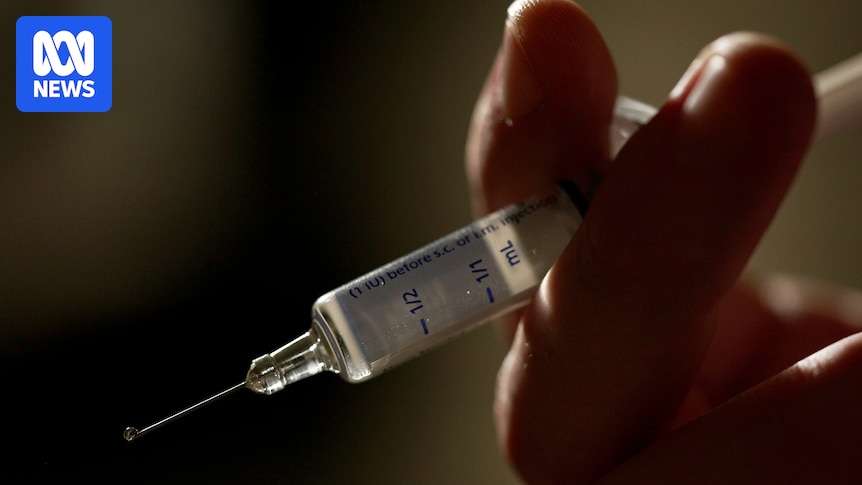
Hundreds of former prisoners in Queensland may have been exposed to HIV and hepatitis C due to an infected inmate sharing injecting equipment. Approximately 300 individuals, now living in the community, are being advised to undergo testing, as per a Queensland Health communique obtained by ABC News.
The communique, dated January 16, revealed that the infected individual, unaware of their status, had shared needles with other inmates. The document stated,
“Specific injecting partners were unable to be identified through contact tracing.”
The Health Contact Centre (HCC) is tasked with reaching out to these individuals to inform them of their potential exposure and recommend testing through general practitioners or sexual health clinics.
Queensland Health’s Response and Ongoing Efforts
Queensland Health has confirmed that 295 individuals, potentially exposed between January and June 2025 at a male correctional facility, have been contacted. The department emphasized the low community risk but insisted on necessary precautions.
“This work is ongoing,”
a statement from Queensland Health noted, highlighting the collaboration with prisoner health services to assess risks and offer testing to those still incarcerated.
Correctional staff were deemed not at risk, yet the situation has reignited discussions around implementing harm reduction strategies within prisons.
Calls for Preventive Measures in Prisons
The incident has intensified calls for the introduction of condoms and needle exchange programs in correctional facilities. Despite recent studies underscoring the dangers of shared needles—citing one instance where 86 inmates used a single needle in a day—Queensland remains the only Australian state prohibiting condoms in prisons, and no Australian prison currently operates a needle exchange program.
Anna Hawkes, CEO of Hepatitis Queensland, supported the contact tracing efforts, stating,
“They are doing what we would expect to be done. It is what the public health system is designed to do.”
However, she stressed the importance of preventive measures, advocating for harm minimization strategies within correctional facilities.
Queensland Corrective Services maintains its stance against allowing condoms in prisons, citing “operational reasons to ensure the safety and security of the facility.” Meanwhile, sexual health expert Dr. Wendell Rosevear criticized the lack of access to preventive health measures, describing it as “reprehensible.”
Expert Opinions and Broader Implications
Dr. Rosevear, who has long campaigned for condoms in prisons, warned of the broader societal impacts, stating,
“If prisons aren’t dealt with proactively, they become incubators and the incubators then impact on the whole society.”
His concerns are echoed by epidemiologist Skye McGregor from the Kirby Institute, who highlighted the importance of comprehensive testing programs in prisons for blood-borne viruses, noting the estimated prevalence of HIV and hepatitis C among Australian prisoners.
According to Dr. McGregor,
“The prevalence rate of HIV in Australian prisoners is estimated to be between 0.2-0.6 per cent. For hepatitis C, it’s a little bit different, with an 8 per cent prevalence of active infection in 2022.”
Such statistics underscore the critical need for effective prevention and testing strategies within correctional settings.
Future Directions and Challenges
As the Queensland Health communique continues to prompt public health actions, the debate over harm reduction policies in prisons remains contentious. The Together union, representing Queensland correctional employees, has not commented on the potential implementation of needle exchange programs. However, the Community and Public Sector Union, representing prison officers in other states, strongly opposes such measures on safety grounds.
Stewart Little, federal secretary of the union, predicted that introducing these programs could lead to “a high level of industrial action.” As discussions continue, the challenge lies in balancing public health priorities with operational safety within correctional facilities.
The unfolding situation in Queensland highlights the urgent need for comprehensive strategies to address health risks in prisons, ensuring the well-being of both inmates and the broader community.