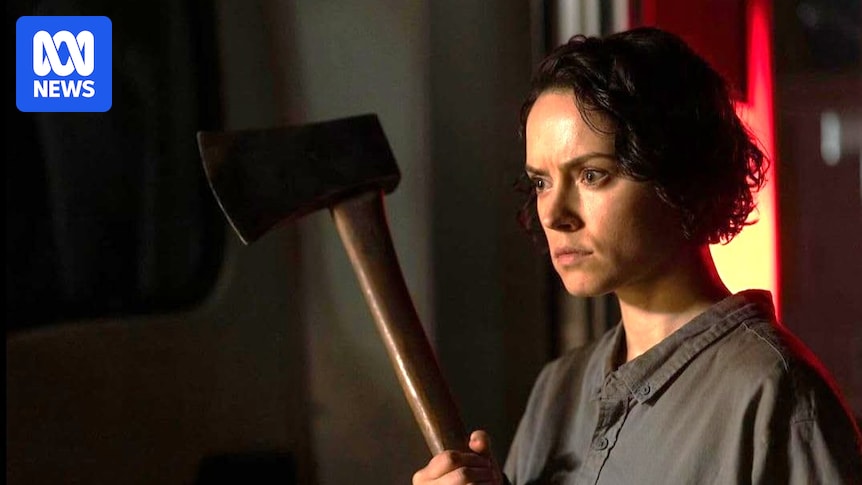
It was Tasmania’s “absolute remoteness” that initially inspired filmmaker Zak Hilditch to set his latest zombie horror flick, We Bury The Dead, on the island. However, economic constraints ultimately led him to film in Western Australia instead. The movie, featuring Star Wars actor Daisy Ridley as Ava, follows a “body retrieval unit” navigating a devastated Tasmania in search of her husband.
Hilditch expressed his desire to shoot the movie on-site in Tasmania during an interview with ABC Radio Hobart, but logistical and financial challenges proved insurmountable. “As hard as it is for [Ava] to travel the north to the south of the island, it’s actually that hard to bring all the bells and whistles and the crazy circus that is a film to a place like Tassie,” he explained.
Financial Constraints and Government Support
The decision to shift filming to Western Australia was influenced by the lack of financial support from the Tasmanian government, which could not provide the necessary funding. In contrast, the Western Australian government offered financial assistance, making it a more viable option for production.
A spokesperson from Screen Tasmania confirmed that an application for funding was received but was withdrawn before assessment. This situation has been seen as a missed opportunity for Tasmania’s arts sector, which receives the lowest amount of government funding among Australian states.
Adding to the disappointment, We Bury The Dead will have limited screenings in Tasmania, with only one cinema confirmed to show the film, restricting the local audience’s access to the big screen experience.
Creative Inspiration and Production Challenges
The film’s setting is the aftermath of a catastrophic military experiment in Tasmania, resulting in corpses showing signs of life. Early script versions were set in America or New Zealand, but Hilditch ultimately chose Tasmania for its stunning and remote landscapes, which he had admired on previous visits.
Despite the creative allure of Tasmania, the logistics of transporting the film crew, equipment, and vehicles to the island proved prohibitive. “We barely even got over the finish line with this film in general, shooting it in WA, let alone having to transport everything on the whole to an isolated island like Tassie,” Hilditch noted.
Screen Tasmania’s spokesperson reiterated that while the project had secured funding from Western Australia, it was a better fit for the production. The organization did manage to secure two traineeship placements on the project to help build screen industry capacity in Tasmania.
Impact on Tasmania’s Film Industry
The decision to film in Western Australia has sparked disappointment within Tasmania’s film community. Last year, Tasmania’s arts minister, Madeleine Ogilvie, was warned that the sector was “nationally uncompetitive” due to inadequate investment. A briefing to Ms. Ogilvie highlighted that support for the state’s arts and screen sector was “by far the lowest in Australia in both per capita and actual terms.”
Tasmanian filmmaker Briony Kidd expressed her disappointment, noting, “It’s always disappointing for Tasmanian filmmakers and the production community here when something could have been shot here and isn’t — because that’s an opportunity that they could have had.” Kidd emphasized the need for more state government support for projects by Tasmanian artists.
Courtney Tembry, founder of the Hobart Horror Society, echoed these sentiments, stating that the film’s absence from Tasmania felt like a missed opportunity given the state’s strong creative community engaged in the horror genre.
Recreating Tasmania in Western Australia
The film was ultimately shot in Albany, a city approximately 400 kilometers south of Perth. Hilditch commended his crew’s efforts to replicate the Tasmanian landscape, noting, “The amazing thing has been people who have no idea about any of that, when they see the finished film, they just assume we did actually shoot it all in Tassie.”
Briony Kidd acknowledged the film’s visual success, stating that the producers appeared to have effectively created a Tasmanian setting. She pointed out that it is not uncommon for movies to be set in Tasmania but filmed elsewhere, citing the 2021 film Nitram as an example.
“There are certainly different ways to convey Tasmanian-ness, without necessarily literally having Tasmanian landscapes in the background,” Kidd said.
Critical Reception and Limited Screenings
We Bury The Dead premiered in cinemas across North America on January 2 and in Australia and New Zealand from February 5. The only confirmed theatrical release in Tasmania will be at Village Cinemas Eastlands in Hobart from February 12, with the distributor, Umbrella Entertainment, seeking additional screenings in Hobart.
While Courtney Tembry expressed satisfaction that the film would be shown in Hobart, she lamented the lack of screenings in other parts of the state. The film has received positive reviews, with 87 percent of critics on Rotten Tomatoes giving it a favorable rating.
Hilditch described the film’s production as a “wild ride” and expressed excitement about its release in Australia. “It’s always a nice win to see the critics giving us a big thumbs up,” he said.