



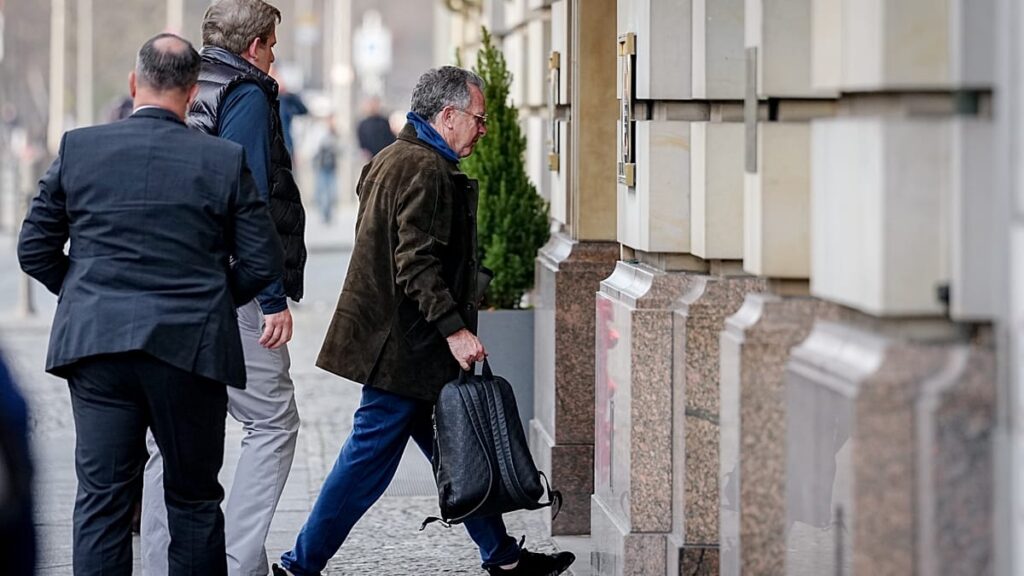
Ukrainian President Volodymyr Zelenskyy and U.S. envoys arrived in Berlin on Sunday for critical discussions aimed at negotiating an end to the ongoing war in Ukraine. The talks, featuring U.S. President Donald Trump’s special envoy Steve Witkoff and Trump’s son-in-law Jared Kushner, are set against a backdrop of escalating tensions and complex geopolitical stakes.
In a significant shift, President Zelenskyy has refrained from insisting on Ukraine’s NATO membership, citing a lack of unanimous support among allied states. Instead, he is open to exploring alternative security guarantees from the European Union and the United States. “We are talking about bilateral security guarantees between Ukraine and the US – namely Article 5-like guarantees – as well as security guarantees from our European partners and other countries like Canada, Japan and others,” Zelenskyy stated.
Meeting with European Leaders and NATO Officials
On Monday, Zelenskyy is scheduled to meet with German Chancellor Friedrich Merz, alongside numerous European heads of state, EU, and NATO leaders. These meetings are crucial as they aim to solidify a unified stance on the security framework for Ukraine that could potentially replace the NATO membership path.
In a series of audio messages, Zelenskyy confirmed his separate meetings with Chancellor Merz and other European leaders. However, he noted that the U.S. has yet to respond to Ukraine’s latest proposals on the peace plan, highlighting the ongoing diplomatic challenges.
Challenges in the Peace Negotiations
Washington has been attempting to mediate between the conflicting demands, with President Trump urging a swift resolution to the conflict. However, significant obstacles remain, particularly concerning the control of the Donetsk region, largely occupied by Russian forces, and the security guarantees for Ukraine.
Trump has increased pressure on Zelenskyy, stating, “You must finally move forward and make concessions when you are losing – because Ukraine is losing.” This blunt assessment underscores the urgency felt by the U.S. administration to reach a diplomatic solution.
Russia’s Firm Stance
Meanwhile, Russian President Vladimir Putin maintains his demand that Ukraine withdraw its troops from parts of the Donetsk region and abandon its NATO aspirations. These conditions are central to Russia’s peace terms and are likely to be rejected by Ukraine.
Yuri Ushakov, Putin’s foreign policy adviser, emphasized that Russian forces would remain in parts of the eastern Ukrainian Donbas region even if declared a demilitarized zone. He criticized the U.S. proposals, stating they had been “worsened” by Ukrainian and European amendments. Ushakov warned that the search for a compromise might be prolonged, with Moscow ready to raise “very strong objections.”
European Perspectives and Historical Context
German Chancellor Friedrich Merz, joined by French President Emmanuel Macron and British Prime Minister Keir Starmer, is leading European efforts to support Ukraine. Merz remarked that the era of ‘Pax Americana’ is largely over for Europe, signaling a shift in geopolitical dynamics.
Merz warned that Putin’s ultimate goal is “a fundamental change of borders in Europe, the restoration of the old Soviet Union within its borders.” He emphasized the broader implications of the conflict, stating, “If Ukraine falls, he will not stop.”
Putin, however, has repeatedly denied intentions to restore the Soviet Union or expand aggression towards European allies. This ongoing narrative battle highlights the deep-seated mistrust and strategic calculations at play.
As the talks in Berlin continue, the focus remains on finding a viable path forward that addresses the security concerns of Ukraine while navigating the complex geopolitical landscape. The outcome of these discussions could significantly shape the future of Eastern Europe and the broader international order.