




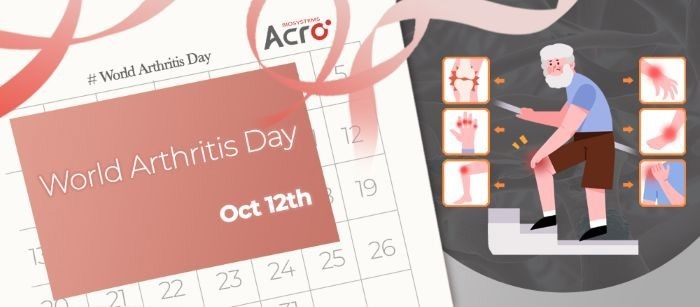
World Arthritis Day, observed annually on October 12, serves as a poignant reminder of the profound impact of arthritis, particularly Rheumatoid Arthritis (RA), on millions worldwide. RA, a severe form of arthritis, affects approximately 23.7 million individuals globally, significantly impairing their quality of life.
RA is not just a condition characterized by joint pain and swelling; it is a systemic autoimmune disorder that can affect various organs, including the heart and lungs. Without early and consistent treatment, up to 30% of patients may face substantial disability within five years of diagnosis.
Understanding Rheumatoid Arthritis: Beyond the Joints
Contrary to popular belief, RA is not confined to the elderly. Its peak onset occurs between the ages of 35 and 50, predominantly affecting young and middle-aged adults. Women are nearly three times more likely to develop RA than men.
The disease is driven by an aberrant immune response where the body mistakenly attacks its own synovial tissue, leading to chronic inflammation and joint destruction. RA is marked by symmetric and recurrent inflammation, particularly in the small joints of the hands, wrists, and feet.
Pathogenetic Mechanisms
RA begins with abnormal immune activation in the synovium, influenced by genetic predisposition and environmental factors. This leads to the formation of structures that produce proinflammatory cytokines like IL-1, IL-6, and TNF-α, driving chronic inflammation.
“The immune system’s attack on its own joints is a hallmark of RA, leading to a cycle of inflammation and joint damage.”
B cells, upon activation, produce antibodies that exacerbate the condition, while the innate immune system further sustains inflammation. This imbalance perpetuates synovial inflammation and results in irreversible joint damage.
Innovations in RA Therapeutics
The RA therapeutics market has evolved significantly, with TNF-α inhibitors traditionally dominating the landscape. However, the expiration of patents and the rise of biosimilars have shifted the focus towards new treatments targeting upstream inflammatory pathways, such as IL-17 and IL-23 inhibitors.
Novartis’s secukinumab and Eli Lilly’s ixekizumab have shown promising results, with significant sales growth due to their superior clinical response rates. Meanwhile, B cell modulating drugs like Biogen’s rituximab continue to play a crucial role in treatment strategies.
“The RA therapeutics market is witnessing a power shift from TNF-α dominance to a landscape of diverse innovation.”
Recent approvals of novel drugs have expanded treatment options, especially for patients with insufficient responses to existing therapies. The introduction of biosimilars has also broadened cost-effective therapy options, enhancing market competition.
ACROBiosystems: Pioneering RA Research
ACROBiosystems is at the forefront of RA research, offering an extensive suite of tools that support every stage of drug development. Their high-activity recombinant proteins, stable cell lines, and inhibitor screening kits streamline the path from basic research to clinical application.
These innovative solutions accelerate the development of new RA treatments, empowering scientists and engineers to simplify and expedite the creation of more effective and affordable medicines.
Hot RA Target Recommendations
ACROBiosystems has identified several key targets for RA research, including CD19, BCMA, CD3E, TNF-alpha, IL-6, and IL-17A, among others. These targets are crucial for developing new therapeutic strategies that can better manage RA and improve patient outcomes.
Looking Ahead: The Future of RA Treatment
The future of RA treatment lies in continued innovation and the development of therapies that address the underlying mechanisms of the disease. As research advances, there is hope for more effective treatments that can significantly improve the quality of life for those affected by RA.
World Arthritis Day serves as a call to action for increased awareness and research funding, ensuring that advancements in RA treatment continue to progress and reach those in need.