


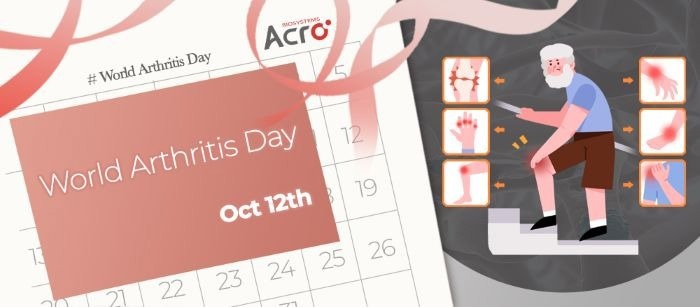
World Arthritis Day, observed annually on October 12, serves as a poignant reminder of the widespread impact of arthritis, a condition that significantly affects millions globally. Rheumatoid Arthritis (RA), one of the most severe forms, impacts the health and quality of life of approximately 23.7 million individuals worldwide. This autoimmune disorder not only causes joint swelling, pain, and stiffness but can also extend to major organs such as the heart, lungs, and vasculature.
Without early and consistent treatment, up to 30% of RA patients may experience significant disability within just five years of diagnosis. Contrary to popular belief, RA is not confined to the elderly; its peak onset occurs between the ages of 35 and 50, predominantly affecting young and middle-aged adults. Women are impacted nearly three times more frequently than men.
Understanding Rheumatoid Arthritis: A Complex Autoimmune Disorder
RA is driven by aberrant immune activation, where the immune system mistakenly attacks synovial tissue, leading to chronic inflammation and joint destruction. Characterized by symmetric, recurrent inflammation of small joints in the hands, wrists, and feet, RA often results in systemic complications that can lead to loss of joint function and disability.
ACROBiosystems, a leader in biopharmaceutical research tools, provides an extensive range of resources to support RA research. Their offerings include high-activity recombinant proteins, stable cell lines, and inhibitor screening kits, which streamline the path from basic research to clinical application, accelerating the development of new RA treatments.
Pathogenetic Mechanisms: Why the Immune System Attacks
The onset of RA involves aberrant immune activation in the synovium, influenced by genetic predisposition and environmental triggers. This results in the formation of tertiary lymphoid-like structures populated by activated synoviocytes, which produce proinflammatory cytokines and matrix metalloproteinases, driving chronic inflammation and tissue destruction.
“The innate immune system also plays a role in sustaining inflammation, with classically activated M1 macrophages releasing abundant proinflammatory mediators.”
During RA progression, B cells intensify autoimmunity by producing rheumatoid factor and anti-citrullinated protein antibodies, which activate inflammatory cascades. The disparity between innate and adaptive immunity perpetuates synovial inflammation, leading to irreversible joint damage.
Innovations in RA Therapeutics: A Shifting Landscape
The RA therapeutics market has evolved into a multifaceted landscape, with TNF-α inhibitors forming the traditional backbone, alongside emerging pathway treatments and novel drug breakthroughs. Historically, TNF-α inhibitors like AbbVie’s adalimumab dominated the market, generating over $200 billion in sales over two decades.
Despite the emergence of biosimilars and patent expirations, adalimumab remains a standard in autoimmune therapeutics. Meanwhile, treatments targeting upstream inflammatory pathways, such as IL-17 and IL-23 inhibitors, are gaining traction. Novartis’s secukinumab and Eli Lilly’s ixekizumab have shown significant sales growth due to superior clinical response rates.
Breakthroughs and Expanding Indications
The RA therapeutics market is advancing on two fronts: breakthrough innovation and expanded indications. In October 2023, Novartis’s secukinumab gained approval for long-term RA maintenance treatment, marking a milestone as the first IL-17 monoclonal antibody shown to slow structural joint damage.
“In March 2024, Eli Lilly’s ixekizumab was approved for patients with insufficient response to tocilizumab, offering a targeted option for difficult-to-treat populations.”
Concurrently, the uptake of biosimilars is accelerating, enhancing market competition and offering cost-effective therapy options, especially for patients transitioning from established biologics.
ACROBiosystems: Pioneering RA Therapeutics
ACROBiosystems has developed a comprehensive suite of tools for RA studies, supporting every stage of drug development. Their solutions, including high-activity recombinant proteins and inhibitor screening kits, facilitate the efficient translation of advanced RA treatments from basic studies to clinical adoption.
As the RA therapeutics landscape continues to evolve, the focus remains on innovative treatments and expanding access to effective therapies. With ongoing research and development, the future holds promise for improved management of this debilitating condition.
For further reading, explore the works of Gao, Y.-F., Zhao, N., and Hu, C.-H. (2025) on mesenchymal stem/stromal cells-based therapies for RA, and other seminal studies that delve into the pathogenesis and therapeutic advances in RA.