

As a child, Winston Eggleston was only vaguely aware of his father William Eggleston’s status as a renowned photographer. To him, it seemed normal to have parents who mingled with the likes of Dennis Hopper, or who spent hours playing piano amidst sporadic photography sessions. It was only later that Winston realized the uniqueness of his upbringing, marked by the presence of Kodak film boxes and the peculiar smell of dye-transfer paper, a medium that defined his father’s work.
William Eggleston, a pioneer in color photography, embraced the dye-transfer technique in the 1970s, a time when the art world largely dismissed color as vulgar. This method allowed him to imbue his photographs with vibrant, Technicolor hues. Despite Kodak discontinuing dye-transfer products in the 1990s, the Egglestons amassed remaining supplies, embarking on a meticulous project to select which of William’s thousands of photos would receive a final, color-saturated print. Ultimately, only about 50 photographs were chosen.
Exhibition at David Zwirner Gallery
Thirty-one of these selected works are currently on display in “William Eggleston: The Last Dyes,” an exhibition running through March 7 at the David Zwirner Gallery in New York. This show could potentially be the last to feature photographs produced using the dye-transfer process. On a recent frigid Saturday, visitors braved the cold to witness the dazzling reds, blues, yellows, and greens of Eggleston’s work, which stand out against the gallery’s white walls.
The exhibition includes a mix of Eggleston’s well-known pieces and previously unprinted works. Winston Eggleston, speaking from his home in Memphis, explained that the dye transfers were completed by Guy Stricherz and Irene Malli, among the last specialists in this labor-intensive process. Each batch of ten photos took six to eight months to print, a testament to the technique’s complexity.
The Legacy of Dye-Transfer Photography
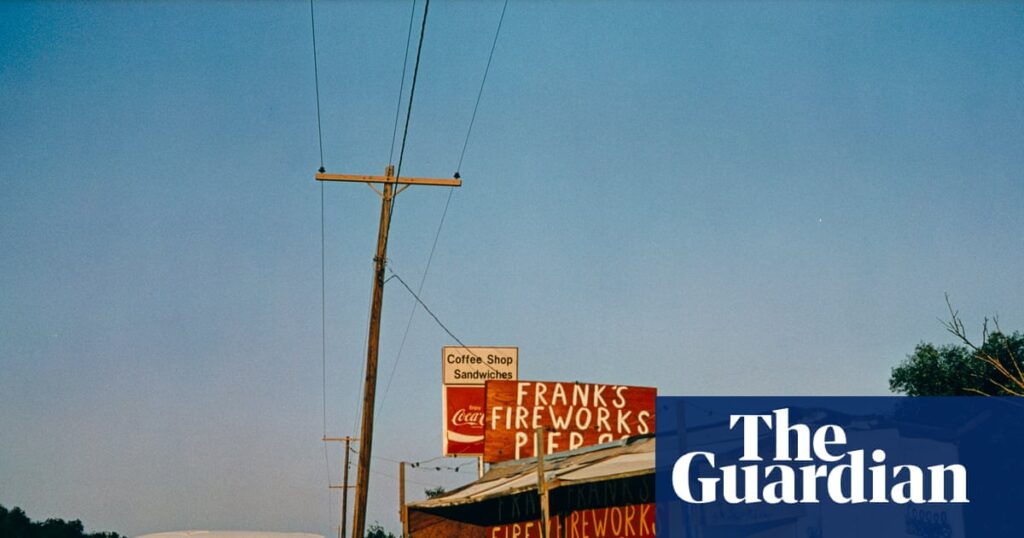
Eggleston’s photographs, taken between 1969 and 1974, capture a vanishing American South, characterized by derelict theaters and rusted advertising. When Eggleston’s work debuted at a controversial 1976 MoMA exhibition, it polarized audiences. While color photography had been around for decades, serious art photographers typically worked in black-and-white and avoided mundane subjects like toilets or iced tea. Over time, Eggleston’s ability to find beauty in the ordinary has been recognized, elevating him to one of America’s most significant living photographers.
His work has been celebrated in retrospectives across Berlin and Barcelona, and in 2012, a collection of 36 photographs sold for nearly $6 million at Christie’s. Despite his aversion to interpretation and titles, Eggleston’s “democratic and neutral” approach has left a lasting impact on the art world.
Reflections on a Storied Career
Winston Eggleston has worked alongside his father to preserve this legacy, archiving his extensive body of work. The new exhibition also features a photo of a blue ceiling, a nod to Eggleston’s famous red ceiling photograph, taken in the same house where a friend was later believed to be murdered. This inclusion reflects the Egglestons’ evolving perspective on their father’s oeuvre.
Despite decades of personal challenges, including the loss of his wife Rosa in 2015, William Eggleston remains engaged with his work. The final photo in the new book is a self-portrait from the 1970s, capturing Eggleston in serene repose. As Winston noted, his father is pleased with the exhibition and its accompanying catalogue, yet he hasn’t fully accepted the end of the dye-transfer era.
Winston once asked his father to choose a favorite photograph. Eggleston’s response encapsulates his philosophy: “Well, I guess I’d have to go into a room and turn the lights off, throw them all up in the air, and grab one.”