



It was an interview that lasted less than a minute. German journalist Tilo Jung, who himself has a Wikipedia page, sat down with Wikipedia founder Jimmy Wales. The conversation was brief but revealing, highlighting ongoing disputes about the platform’s origins. When Jung questioned whether Wales was the “founder or co-founder” of Wikipedia, Wales, unimpressed, responded, “I don’t care.” The exchange ended with Wales walking out, leaving Jung visibly stunned.
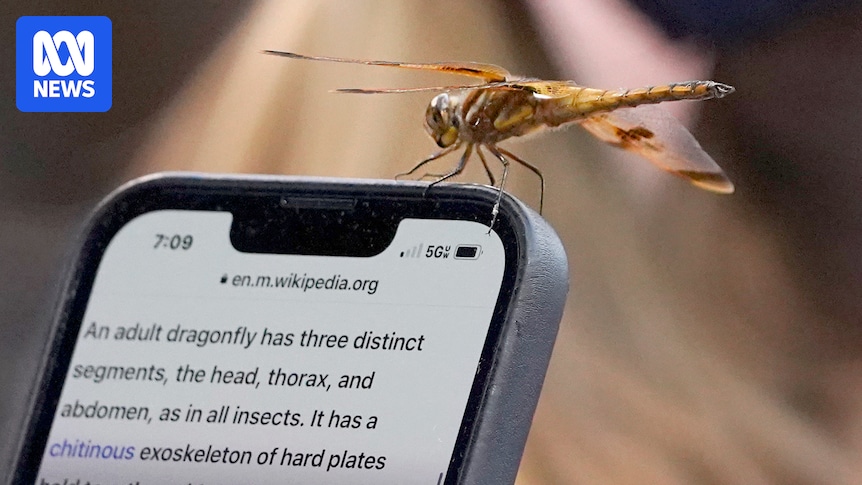
This incident underscores that even as Wikipedia celebrates its 25th anniversary, some foundational battles continue. Wikipedia, one of the top ten most-visited websites globally and the only one on that list run by a non-profit, is viewed nearly 15 billion times each month. As it marks this milestone, the online encyclopedia is launching initiatives to reflect on its journey and future in the age of artificial intelligence.
Celebrating Contributions and Looking Forward
To commemorate its anniversary, Wikipedia has introduced a campaign highlighting its past achievements and future directions. A new video docuseries celebrates the contributions of volunteer editors worldwide, such as a Tokyo librarian writing in Japanese and an Indian medical doctor who shared crucial COVID-19 information during the pandemic. Additionally, the Wikimedia Foundation, which operates Wikipedia, has launched a time capsule for fans to explore the platform’s historical and future roles in major global events.
Wales is also sharing memories of Wikipedia’s origin story as part of this time capsule. Ironically, it was this very origin story that prompted the abrupt end to his interview with Jung, pointing to the complexities of a site often seen as an arbiter of facts.
Debates Over Wikipedia’s Origins
Wikipedia’s own page on Wales describes him as a co-founder, stating, “On January 2001, with Larry Sanger and others, he launched Wikipedia.” In an interview with American podcaster Lex Fridman, Wales remarked, “Larry Sanger doesn’t get enough credit for his early work in Wikipedia, even though I think co-founder’s not the right title for that.”
ABC News interviewed Sanger, who revealed he no longer communicates with Wales. Sanger, a philosopher, joined Wikipedia’s parent company in January 2000 to work on encyclopedia projects and left in March 2002. He has since become one of Wikipedia’s most vocal critics. In 2020, Sanger published a book and blog posts questioning Wikipedia’s neutrality, followed by his “Nine Theses on Wikipedia” in 2025, advocating for reforms such as reviving the original neutrality policy.
“The reason that I love neutrality as much as I do is that in education, in journalism and in reference works, it allows people who are learning, who are improving their minds to have the full range of views to consider so that they can make up their minds as rationally as they can for themselves,” Sanger said.
Neutrality and Editorial Challenges
Wikipedia acknowledges that maintaining neutrality is an “evolving challenge” and encourages its volunteer editors to write without bias. However, Sanger’s critiques highlight ongoing debates about the platform’s editorial practices. He argues for abolishing source blacklists and ending decision-making by consensus.
In response to Sanger’s “Nine Theses,” Elon Musk launched Grokipedia in 2025, an AI-powered encyclopedia criticized for lifting content from Wikipedia without proper citations. Sanger’s analysis using Chat-GPT revealed both inaccuracies and instances where Grokipedia cited sources overlooked by Wikipedia.
Representation and Recognition on Wikipedia
Heather Ford, a professor at the University of Technology Sydney and former Wikimedia Foundation advisory board member, has researched Wikipedia’s representation of Australian people, places, and events. Her findings reveal disparities in who is deemed notable enough for a Wikipedia page.
Ford noted that fictional places like Summer Bay from “Home and Away” are represented more than real rural and regional locations in Australia. She also highlighted the time it took for Wikipedia to update the name change of Fraser Island to K’gari, reflecting ongoing challenges in accurately representing diverse communities.
The Role of AI in Wikipedia’s Future
Dr. Ford points out that Wikipedia editors have long embraced AI to enhance the platform. However, the rise of AI models that “hallucinate” and make errors presents new challenges. The Wikimedia Foundation emphasizes the importance of human-curated knowledge and plans to use AI to support, not replace, its volunteers.
“We will use AI to build features that remove technical barriers to allow the humans at the core of Wikipedia to spend their valuable time on what they want to accomplish, and not on how to technically achieve it,” the foundation’s policy states.
As Wikipedia looks to the future, it aims to maintain its role as a trusted source of knowledge amid technological advancements. “As long as we stay Wikipedia, people will still love us,” Wales told the New York Times. “All the noise in the world and all these people ranting, that’s not the real thing. The real thing is genuine human knowledge, genuine discourse, genuinely grappling with the difficult issues of our day.”