




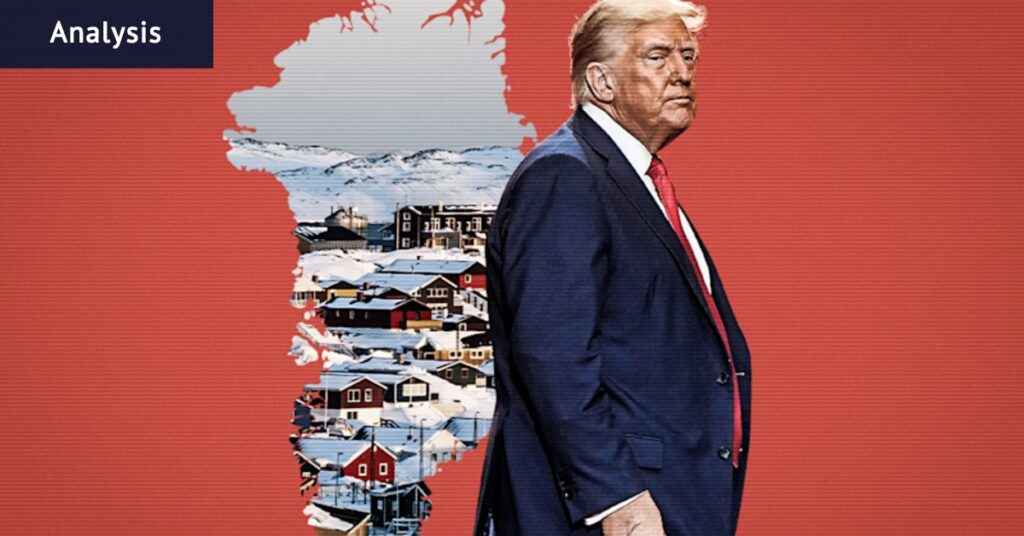
January 18, 2026 — In a dramatic display of political brinkmanship, President Donald Trump has once again resorted to his familiar strategy of tariff threats, this time aiming to gain control over Greenland. This move, however, is unlikely to succeed, as experts and historical precedents suggest.
Trump’s latest maneuver involves threatening Europe with tariffs, hoping to pressure Denmark into ceding Greenland. Yet, this tactic is fraught with challenges, as it relies on coercion rather than diplomacy. The situation is reminiscent of Trump’s previous tariff threats against other nations, which have often resulted in economic strain rather than successful negotiations.
Historical Context and Current Dynamics
The announcement comes as Trump continues to employ his characteristic unpredictability in international relations. His approach to Greenland echoes past attempts to leverage tariffs for geopolitical gains, such as in his dealings with China and Russia. However, the effectiveness of these threats is increasingly questioned.
Historically, the United States has pursued territorial expansion through negotiations and purchases, as seen in the acquisitions of Louisiana and Alaska. Trump’s current strategy, however, deviates from this path by using economic threats rather than diplomatic engagement.
Why Tariff Threats Are Ineffective
There are four primary reasons why Trump’s tariff threats are unlikely to succeed in acquiring Greenland:
- Overuse of Threats: Repeated tariff threats diminish their impact. European leaders, including British Prime Minister Keir Starmer and French President Emmanuel Macron, have learned to resist such pressures, knowing that acquiescence only invites future threats.
- Economic Backlash: Tariffs harm American consumers as much as European producers. An analysis by the Bruegel think tank revealed that previous tariff threats could shrink US output by 0.7%, while the EU would lose 0.3%. Such economic consequences are politically unpalatable, especially with upcoming elections.
- Cultural and Political Resistance: Greenland’s integration into the Danish realm and its people’s overwhelming opposition to American ownership pose significant obstacles. The annual financial support from Denmark, amounting to 3.9 billion Danish krone, underscores the complexity of any potential acquisition.
- Political Timelines: Both Trump and Danish Prime Minister Mette Frederiksen face electoral pressures. Frederiksen, who must call an election by October 31, is unlikely to concede to Trump’s demands, preferring to portray him as a threat to Denmark’s sovereignty.
Implications for International Relations
The move represents a potential flashpoint in US-European relations, with the NATO alliance at stake. Trump’s actions could inadvertently strengthen adversaries like Russia and China, who may exploit divisions within the Western alliance.
According to sources, the best outcome would involve extended negotiations over tariffs, allowing time for cooler heads to prevail. This would prevent an escalation into a genuine crisis, preserving the stability that NATO has maintained for decades.
Expert Opinions and Future Prospects
Experts suggest that a more effective approach would involve negotiating increased US control over military bases in Greenland, thereby enhancing NATO’s capabilities without challenging Danish sovereignty. This path aligns with historical US strategies of building alliances rather than sowing discord.
In the words of Kristian Bernhardtsen, a crane operator from Nuuk, “It doesn’t make sense saying that he needs Greenland. He can have bases. We have a base up north, and if he wants to expand it or make other military installations, he’s allowed to. There’s nothing stopping him.”
“The actual danger comes if he wrecks the NATO alliance with his territorial ambitions.”
As the world watches, the unfolding situation in Greenland serves as a litmus test for Trump’s foreign policy approach. Will he pivot towards diplomacy, or continue down a path of confrontation? Only time will tell.