


In November, a striking display of Israeli flags appeared along a highway in the Palestinian West Bank. Over 1,000 flags were strategically placed about 30 yards apart, stretching for roughly 10 miles south of Nablus. This area is known for frequent confrontations between Palestinian villages and extremist Israeli settlers. The flags, seen the morning after they were erected, bore a message reminiscent of the graffiti left by settlers: “You have no future in Palestine.”
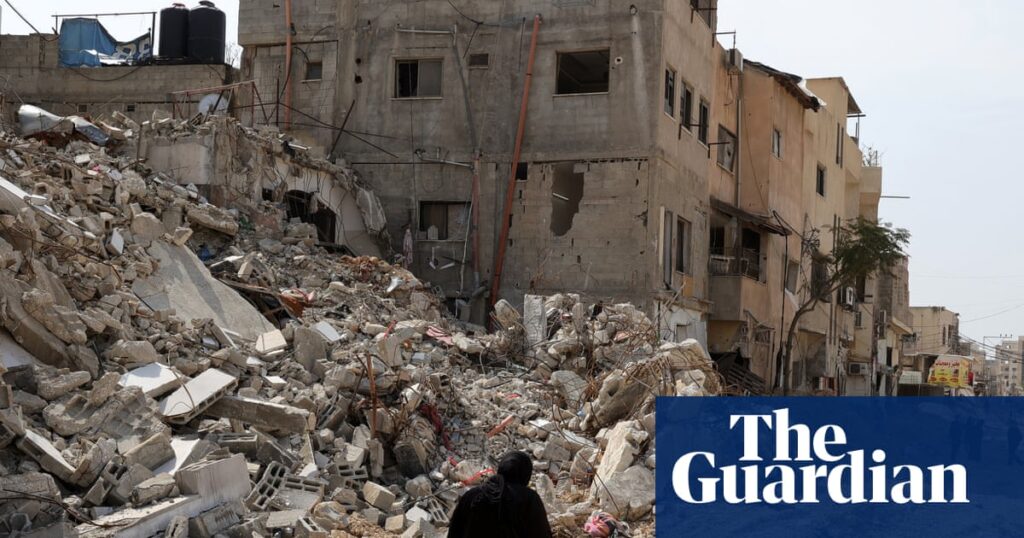
These flags, while seemingly a minor provocation compared to the staggering loss of life—70,000 Palestinians in Gaza and over 1,000 in the West Bank since October 2023—symbolize Israel’s growing dominance in the West Bank, a region recognized internationally as Palestinian territory. During the second intifada, Israeli settlers would not have dared such a bold display, fearing Palestinian retaliation. Today, the situation has shifted dramatically.
Returning to a Changed Landscape
Returning to the West Bank last month for the first time in 20 years, I was struck by the deterioration in daily life for Palestinians. As a former correspondent for the Guardian during the second intifada, I had witnessed the intense violence of that period. The first intifada (1987-1993) was characterized by stone-throwing youths, while the second (2000-2005) escalated to full-scale military confrontations. More than 3,000 Palestinians and over 1,000 Israelis lost their lives.
My recent visit, initially not intended for reporting, became necessary as I observed the increased control Israel and its settlers exert over Palestinians. The conditions were far worse than anticipated, prompting a deeper exploration of the current situation.
Conferences and Conversations
Invited to a conference at Birzeit University near Ramallah, organized by Progressive International and other Palestinian groups, I engaged with academics and activists discussing the decolonization of Palestine. Birzeit has a history of protest and clashes with Israeli forces, with the campus raided multiple times in recent years.
Post-conference, I joined attendees on a tour of the West Bank, seeking to understand the lack of a third intifada and the level of support for Hamas. Conversations revealed a demoralized population and a distant prospect of an independent Palestinian state.
Ramallah: A Deceptive Normalcy
Ramallah, the West Bank’s political and economic hub, appeared cleaner and more prosperous than before, akin to European cities. Yet, this facade of normalcy is misleading. The absence of villagers who once filled the streets with produce highlights the impact of expanding Israeli checkpoints, now numbering 849, up from 376 at the end of the second intifada.
These checkpoints disrupt trade and daily life, with red barriers often closed and yellow ones more accessible. Israeli incursions into Ramallah have increased, with soldiers making arrests and leaving injuries in their wake.
Historical Echoes and Current Realities
The remnants of past conflicts linger, such as the ruins of the presidential compound in Ramallah, a symbol of defiance from a time of unity under Yasser Arafat. His successor, Mahmoud Abbas, has resisted calls for a new uprising, a decision unpopular among many Palestinians.
In Bethlehem, Mayor Maher Canawati supports Abbas’s caution, fearing retaliation similar to Gaza’s destruction. The siege of the Church of the Nativity in 2002, where bodies once lay near the grotto, remains a stark memory.
Economic Struggles and Political Discontent
The West Bank’s economy is dire, with per capita income down 20% and unemployment at 33%. The Palestinian Authority, plagued by corruption, fails to inspire confidence. Many Palestinians, like a law graduate working at a fruit stall, find opportunities blocked by nepotism and political affiliations.
Despite Abbas’s unpopularity, some, like Canawati, believe Hamas would not win an election in the West Bank, though others disagree. Student council elections at Birzeit University suggest significant support for Hamas.
Settler Expansion and Rising Tensions
Since the second intifada, Israeli settlements have expanded significantly, with the settler population growing from 400,000 to over 700,000. Settlements now encroach on Palestinian lands, often with aggressive tactics.
“Anger has mutated into impotent resentment. Today stones are seldom thrown in the West Bank. This is something new … Resistance is slowly becoming a memory.” — Abdaljawad Omar, Birzeit University
In Umm al-Khair, settlers and the Israeli army pressure Bedouins, demolishing homes while expanding their presence. Surveillance is constant, and confrontations with soldiers are frequent.
The Future of Resistance
Despite provocations, a third intifada seems unlikely. Polls show mixed support for armed struggle, but fatigue and division hinder unified action. The refugee camps, once hotbeds of resistance, now face threats of demolition.
International pressure, such as the Boycott, Divestment, Sanctions (BDS) movement, offers some hope. However, immediate change remains elusive for Palestinians caught between a corrupt authority and an oppressive occupation.
As Christmas approaches, Bethlehem’s mayor hopes for renewed tourism and international support, yet acknowledges the challenges posed by Israeli extremism. The quest for peace continues amid despair and resilience.