

A few decades ago, the term “wellness” entered our everyday lexicon. Since then, methods to help slow down, recharge, and nourish have transitioned from niche practices to mainstream staples, including breathwork and sound healing. As we look towards 2026, wellness is poised to become even more embedded in how we move, rest, travel, and play—across the Emirates and beyond.
Resetting the Nervous System
Throughout the 2020s, therapy speak solidified its place in daily conversation, encompassing terms from boundaries to trauma bonding. However, the concept of “fight or flight”—a hormonal response to perceived threats—has been familiar for much longer. What is becoming increasingly clear is how easily this response is triggered in our modern, sensory-overloaded world. For instance, an unexpected email can cause our heart rate to rise. Without a real-life threat to fight or flee, our bodies can remain locked in this heightened state.
A recent Gallup study reports that about 45 percent of adults feel burnt out, which is why much of the wellness focus this year will be on “resetting” our nervous system. This involves taking it out of its sympathetic state, which floods the body with adrenaline and limits non-essential functions.
“Regulation is replacing hustle, presence is replacing productivity, and nervous system safety is becoming the new status symbol,” says Dr. Neeta Bhushan, an emotional health expert.
This craving for calm is expected to influence classes and coaching programs. Breathwork classes, for example, offer one of the quickest ways to activate the parasympathetic nervous system.
“We’re living in a time where we’re overloaded… Breathwork meets people where they are, and what I’m seeing now is less about spirituality and more about people wanting to feel calm, regulated, and in control again,” says Ashley Edelmen, breathwork master and co-founder of Immersiv.
Fitness and Wellness Integrate as the Ultimate Third Space
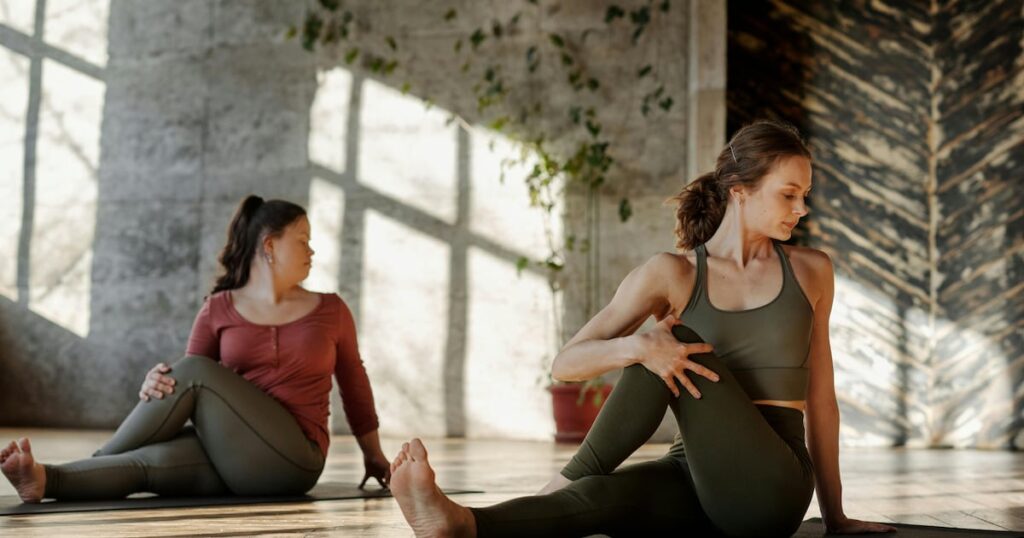
An increasing number of wellness clubs are emerging across the UAE, combining Pilates classes with red light therapy and cafes—all under one roof. This trend is expected to become more common in the coming years.
“Training is no longer the end goal—it’s the entry point. Members are increasingly aware that fitness alone doesn’t equal feeling well,” says Merigold.
Gyms such as Fitness First and Wellfit now integrate classic training equipment with wellness and longevity solutions, and new gym layouts include recovery, mobility, and reset spaces. Merigold adds, “Coaches will evolve into wellness educators—helping members understand how training, recovery, sleep, and stress interact.”
Mohammed Al Thani, founder of Sharjah gym Altitude Elite, believes that by 2026, fitness will delve deeper into purpose, longevity, and self-connection. “Gyms will evolve into true third spaces where people come to reconnect, reset, and build resilience. Training will become more intentional… to support not just the body, but the mind and soul,” he explains.
Wellness Becomes a Travel Backdrop
Meanwhile, wellness is further integrating into the hospitality scene with the rise of wellness travel and retreats, which have steadily increased in search volume over the past five years. The shift going forward will be more subtle, as wellness becomes the backdrop to any travel experience, rather than the sole focus.
“In 2026, wellness-led hospitality is evolving. Rather than overwhelming guests with complex programs, hotels are focusing on core pillars—sleep, movement, recovery, focus, and nourishment—supported by biohacking solutions,” says Samir Arora, general manager of The Retreat Palm Dubai MGallery.
Marichu Pertubal, wellness manager at The Retreat, adds, “Today’s guests are seeking wellness that fits real life, whether they are traveling for transformation or living within a fast-paced city like Dubai.”
More hotels are expected to adopt this blended approach. The home-grown hospitality brand, Siro, located in Downtown Dubai, appeals to business travelers who want to prioritize feeling their best during busy trips. Its expansion into places such as Montenegro and Saudi Arabia demonstrates the concept’s growing appeal, often dubbed “bleisure” trips.
Personalized Supplements for Longevity
Running in parallel is the advancement of technology and personalized healthcare. This includes everything from fitness trackers that break down advanced bodily metrics to the everyday person embracing glucose trackers. So, what’s next?
“One of the biggest shifts we’re seeing is a growing interest in diagnostics and deeper health insights,” says Oliver Motisi, chief product officer of Bioniq, a personalized supplements company from the UK.
Motisi explains that this rise in diagnostics is driving demand for personalized vitamins and supplements, tailored through blood tests or smart, AI-driven health questionnaires. As it becomes possible to track and adjust supplement formulas outside of the doctor’s office, people will see better results, which will likewise drive demand.
“You’re giving your body exactly what it needs, when it needs it,” Motisi adds.
All supplements, personalized or not, are expected to see an increase in the coming year, says Kristy Morris, founder and chief executive of Kailo. “Supplements are becoming more popular as people look for simple, everyday ways to take care of their health when life is busy and as healthcare feels more expensive and harder to access,” she adds.
A 2025 report on personalized nutrition claims the global market was valued at $14.02 billion in 2024, and “is projected to reach $48.57 billion by 2033”.
Supplements also fall into a wider wellness trend of prevention and longevity, in a way that’s relatively accessible. “The appeal is control,” says Mark Boyes, founder of Sigma Clinic for men’s longevity optimization. “Data makes health measurable and proactive. Nutrition is moving beyond weight management towards supporting energy, cognitive performance, and long-term resilience.”
Facial Care for Relaxation, Not Just Beauty
While massages have long been understood as a practice for health and healing as much as relaxation, similar facial treatments have traditionally been seen as cosmetic. However, as more face massage clinics and treatments emerge, their benefits are becoming more apparent.
“People are starting to look at facial wellness in a completely new way—not just as a beauty ritual, but as a real part of taking care of their overall health,” says Evgeniya Sorokina, co-founder of beauty and wellness clinic, The FaceRoom.
Sorokina explains that face massage is no longer something indulgent or occasional; it’s becoming a go-to practice for releasing tension, improving circulation, and bringing out natural radiance. This shift is partly due to the pressure screens put on our facial muscles after long days at the desk.
As wellness continues to evolve, these trends highlight a growing desire for holistic approaches that integrate seamlessly into daily life, promising a future where well-being is not just a goal but a lifestyle.