

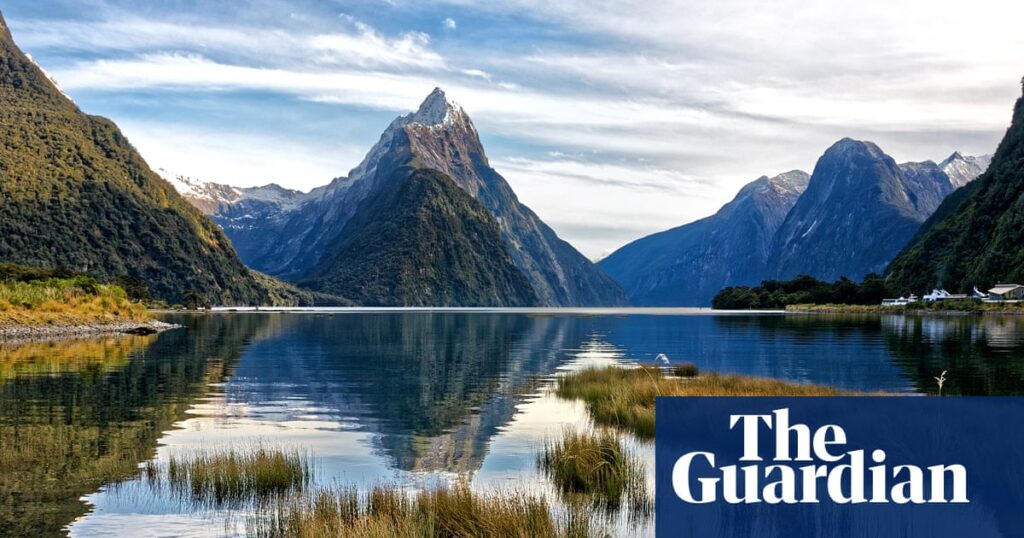
Wealthy Americans are at the forefront of a surge in applications for New Zealand’s “golden visa,” driven by the allure of the country’s natural beauty and entrepreneurial opportunities, as well as a desire to escape the political climate under former President Donald Trump. The revamped Active Investor Plus visa, which took effect in April 2025, has made it easier for affluent individuals to establish residency in New Zealand by lowering investment thresholds and reducing residency requirements.
Under the new rules, applicants are no longer required to meet English-language standards, and the time they must spend in New Zealand to secure residency has been slashed from three years to just three weeks. Additionally, successful applicants are permitted to purchase homes valued at over $5 million. Immigration New Zealand reports that the updated scheme has attracted 573 applications, encompassing 1,833 individuals, a significant increase from the 116 applications received over the previous two-and-a-half years.
American and Chinese Investors Lead the Charge
The latest government data reveals that investors from the United States account for nearly 40% of the applications, followed by China and Hong Kong. Since August 2025, applications from China have more than doubled, rising from 45 to 95. The remaining top 10 countries include Germany, Taiwan, Singapore, Vietnam, Japan and South Korea (tied), and Great Britain.
New Zealand offers two categories of “golden visa”: the “growth” category, which requires a minimum investment of NZ$5 million ($3 million) over three years, and the “balanced” category, requiring a $10 million investment over five years. The previous scheme demanded a $15 million investment.
Personal Stories and Economic Impact
Courtney and Jim Andelman, a California-based couple running a venture capital firm, were the 100th family to be granted a visa. They view the visa as an opportunity to spend more time in a country Courtney fell in love with 30 years ago during a backpacking trip, while also contributing to the local community. “This is not just about fun and games and having a chance to live in one of the most amazing countries on the planet – this is also a really smart investment scheme. It’s smart for us,” Courtney said.
The Andelmans have invested in various venture funds and are exploring direct investments, particularly in New Zealand’s “deep-tech” industry, which includes artificial intelligence, robotics, and biotechnologies. Despite the opportunity to purchase a home, they have opted not to, citing the hefty $5 million price tag and a desire not to strain the housing market. Instead, they plan to divide their time between New Zealand and Santa Barbara.
Political and Economic Context
Robbie Paul, CEO of Auckland-based venture capital firm Icehouse Ventures, has assisted over 30 applicants with their investments in New Zealand. Many Americans he has worked with see the visa as an escape from Trump’s administration. “I’ll put it this way, never in my time in New Zealand did I have an applicant reference Biden or Obama … and then, absolutely, a lot of references to people’s feelings towards Maga and Trump,” Paul remarked.
New Zealand’s appeal as a bolthole for wealthy foreigners is not new. Following Trump’s 2016 election victory, visits to the country’s immigration website surged by nearly 2,500%. Similar spikes occurred after the US Supreme Court’s decision on Roe v. Wade and Trump’s 2024 election win.
Historical Parallels and Future Outlook
Controversy has surrounded the acquisition of residency or citizenship by billionaires in New Zealand. Notably, Peter Thiel, co-founder of PayPal, was granted citizenship in 2017 after spending just 12 days in the country, prompting former Prime Minister Jacinda Ardern to tighten investment visa rules and ban foreign home ownership in 2018. However, the “golden visa” now allows holders to purchase homes over $5 million.
While wealthy investors flock to New Zealand, the country’s citizens have been leaving in record numbers due to a weak economy, high living costs, and unemployment. Recent migration statistics, however, show signs of improvement, with 66,300 citizens departing in 2025 compared to 67,200 in 2024.
The Active Investor Plus visa scheme has generated $3.39 billion in investment, according to Immigration NZ. Immigration Minister Erica Stanford stated, “International investment is critical for lifting productivity, supporting jobs, and helping New Zealand businesses to expand.”
As New Zealand continues to attract affluent investors, the balance between welcoming foreign capital and addressing domestic economic challenges will remain a critical focus for policymakers.