



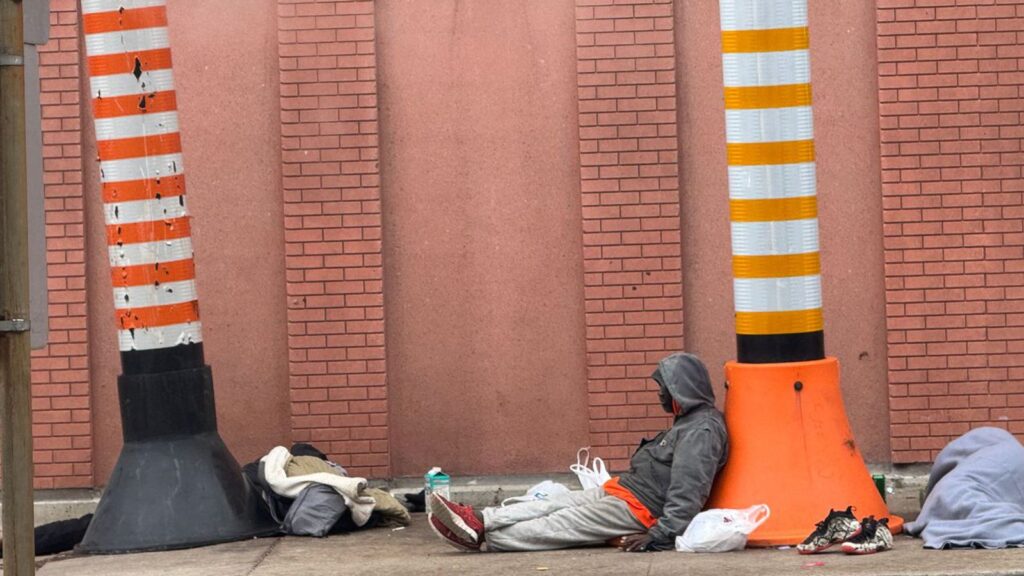
As Christmas approaches and the year comes to an end, officials from the Trump administration are highlighting economic indicators such as GDP growth and a booming stock market to bolster the president’s claim that Americans are experiencing the “greatest economy in the history of our country.” However, beneath these figures lies a sharply “K‑shaped” social reality: while the affluent enjoy spectacular gains in wealth and consumption, tens of millions of workers face stagnant real wages, mounting debt, mass layoffs, evictions, utility shutoffs, and preventable deaths.
The past year has seen a further concentration of wealth to levels unprecedented in modern history. In the United States, billionaires—comprising 900 individuals—have increased their wealth by a staggering 18 percent, reaching a record $6.9 trillion this year. Notably, ten individuals alone have seen their wealth increase by $750 billion. Elon Musk epitomizes this phenomenon, with his net worth surging by over $500 billion in just two years, reaching $749 billion—more than the GDP of entire countries.
Economic Disparities and Public Concerns
At the other end of the spectrum, a recent AP/NORC poll reveals that most Americans are concerned about rising prices for groceries, electricity, and holiday gifts. Nearly half are delaying major or non-essential purchases and are searching for the lowest prices. Many are also accruing debt through “buy now, pay later” apps such as Klarna, Affirm, Afterpay, PayPal, and Zip.
A Politico poll released in November found that more than a quarter of the population, 27 percent, have skipped a medical check-up due to cost, and nearly one in four have foregone prescribed medication for the same reason.
“The Trump administration ended the year by giving those with student debt a ‘Christmas gift’ in the form of ending the Saving on a Valuable Education (SAVE) student loan forgiveness program, which had reduced or eliminated payments for more than 7 million borrowers.”
Starting early next year, the government will resume aggressive collections and wage garnishments for those in default, exacerbating the financial strain on many Americans.
Detroit: A Microcosm of Inequality
The immense social chasm is particularly stark in Detroit, where the supposed revival from municipal bankruptcy more than a decade ago has been lauded by the corporate media and the city’s Democratic Party establishment. This Christmas, Detroit’s downtown business district—home to the new GM corporate headquarters, luxury residential towers, and sports arenas—is brightly lit for the holidays. Yet, just blocks away, homeless individuals sleep beside steam pipes in the Greektown entertainment district to keep warm. It was here, in a casino parking lot, that two small children tragically died from carbon monoxide poisoning inside their mother’s car in February 2025, after city and state agencies refused aid to their homeless family.
At the Leland House—one of the few remaining downtown buildings where low-income families could afford rent after most subsidized housing was shuttered or converted to “market rate” units—scores of residents have been forced from their homes in the dead of winter. After a grassroots fundraising effort raised enough money to pay an overdue DTE Energy bill owed by the property managers, the building’s basement electrical system was flooded under suspicious circumstances, prompting fire officials to order an emergency evacuation.
The tenants—many elderly and on fixed incomes—remain displaced weeks later, denied access to retrieve personal belongings, and face the likely loss of their homes. Local reporting indicates that the property owners neglected critical infrastructure, municipal responses were slow and inadequate, and residents are left uncertain. As one long-term tenant expressed, “They don’t want people like me living downtown. They’re creating a new downtown. That’s what they want.”
Public Funds and Corporate Interests
The city’s long-dominant Democratic Party political establishment has overseen this process. The Detroit Downtown Development Authority approved up to $5 million in public funds toward renovations at Little Caesars Arena to accommodate a new WNBA basketball franchise. Meanwhile, the Detroit City Council approved roughly $40 million in brownfield tax-increment financing for a practice facility at the former Uniroyal Tire factory site.
“These funds are derived from ‘captured’ property taxes in the downtown district that would otherwise support critical social services. While tenants are displaced and utilities are shut off, the DDA and city council provide direct public subsidies to benefit billionaire developers like Dan Gilbert and the Ilitch family.”
Workers in the Motor City’s auto industry are feeling the same brutal priorities. At GM’s Factory Zero—once promoted as the centerpiece of an electric-vehicle future—1,145 assembly workers are being permanently laid off as the plant was cut to a single shift. These layoffs followed months of forced overtime and temporary shutdowns. GM continues to post record profits and return billions to investors even as it eliminates jobs and consolidates operations, moving into new multi-million-dollar downtown headquarters owned by Dan Gilbert.
A Call to Action
This pattern is repeated across the US and around the world. The closure of Tyson’s Lexington, Nebraska plant will cost about 3,200 jobs in a town of 11,000. Across the United States, over 1 million job-cut announcements have been recorded this year. AI and digital technologies are being deployed to boost productivity and carry out mass layoffs across industries.
There is growing anger in the working class, which possesses enormous social power. Supply chains, transport, healthcare, and public services cannot function without labor. The strategic task is to convert widespread opposition into an organizational and political counteroffensive in 2026.
“The World Socialist Web Site and the International Workers Alliance of Rank-and-File Committees (IWA-RFC) call for the formation of rank-and-file committees in every plant, workplace, and neighborhood to demand an immediate halt to permanent layoffs; full pay and benefits for affected workers; and shortened working weeks with no loss of pay to preserve jobs.”
These committees should demand a ban on utility shutoffs and mass evictions; cancellation of predatory debt and an end to wage garnishment for student loan defaulters; and the reversal of public subsidies to billionaire projects in favor of massive public investment in housing, healthcare, and services.
An industrial counteroffensive must be connected to a political struggle against the Trump administration—a government of, by, and for the oligarchy. Trump is erecting a presidential dictatorship, the political form that corresponds to a society riven by staggering levels of social inequality. The vicious, fascistic campaign against immigrant workers, including Gestapo-style raids and the rounding up of entire families, is the spearhead for a broader attack on the democratic rights of the entire working class.
The Democratic Party has refused to mount any opposition, as it agrees with the main elements of Trump’s social program. Just one month ago, the Democratic Socialists of America mayor-elect of New York City, Zohran Mamdani, met with Trump at the White House, smiled for photos, and declared his readiness to work with the fascist president.
It is not a question of tinkering around the edges of a bankrupt economic and political system, but mobilizing the immense power of the working class in an irreconcilable fight against the entire corporate and financial oligarchy. This fight must be waged independently of—and in opposition to—both capitalist parties and the corrupt union bureaucracies, which serve as enforcers for the corporations and the state. The trade unions seek to divide workers along national lines and disarm them in the face of a historic offensive against jobs, wages, and democratic rights.
The program of this counteroffensive must be the expropriation of the financial and corporate elite, the socialization of the major industries, and the use of modern technology to eliminate poverty, guarantee decent housing and healthcare, and raise the material and cultural level of all humanity. The resources exist to guarantee full employment, housing, healthcare, and education for all. The question is: Who controls these resources—the oligarchy or the working class?
The answer depends on building a revolutionary socialist leadership, rooted in the working class and guided by a clear political program. The Socialist Equality Party and the International Workers Alliance of Rank-and-File Committees are fighting to develop this leadership and to organize the growing resistance of workers and youth throughout the world.