

Wall Street experienced a significant rally, buoyed by a groundbreaking trade agreement between the United States and Taiwan, focusing on the semiconductor industry. The US Commerce Department heralded the deal as a catalyst for a “massive reshoring of America’s semiconductor sector,” a move that could reshape the global tech landscape.
The agreement stipulates that the US will cap reciprocal tariff rates on Taiwanese goods at 15%. Additionally, the US will impose a zero percent tariff on generic pharmaceuticals, aircraft components, and certain natural resources deemed unavailable domestically. In return, Taiwanese semiconductor and technology firms are set to invest at least $250 billion in US production facilities, according to a fact sheet released by the department.
Meanwhile, the Australian dollar is approaching the 70 US cents mark, currently trading at 66.97 US cents, marking a 0.25% gain. Analysts from the Commonwealth Bank of Australia (CBA) attribute this rise to “lower expected market volatility, as measured by the VIX index,” which is seen as favorable for the AUD/USD exchange rate.
Impact of the US-Taiwan Chip Deal
This trade deal represents a strategic shift in the global semiconductor supply chain. The US has been keen to reduce its reliance on foreign semiconductor manufacturing, a sector critical to national security and technological advancement. The reshoring initiative aims to bolster domestic production capabilities, ensuring a stable supply of chips essential for everything from consumer electronics to military hardware.
According to industry experts, this move could significantly alter the competitive dynamics of the semiconductor market. By incentivizing Taiwanese companies to establish manufacturing plants in the US, the deal not only strengthens bilateral economic ties but also positions the US as a more self-reliant tech powerhouse.
“This agreement is a win-win for both nations, enhancing economic security and technological collaboration,” said a senior analyst at TechInsights.
Currency Markets React
The Australian dollar’s rise is closely linked to shifting expectations around interest rates in both the US and Australia. Recent US economic data suggests a potential shift towards a more “dovish” monetary policy, with less aggressive interest rate hikes anticipated. This sentiment is echoed by CBA, which noted, “A dovish repricing of FOMC policy can weigh on the USD.”
In contrast, Australian economists are eagerly awaiting upcoming economic data, including quarterly inflation figures and the labor force survey, ahead of the Reserve Bank of Australia’s (RBA) next meeting in early February. These data points are crucial, as they could prompt a “hawkish” policy adjustment, potentially supporting the AUD/USD exchange rate.
“Both data releases can lead to a hawkish repricing of RBA policy and support AUD/USD. We continue to expect a 25bp rate hike from the Reserve Bank of Australia (RBA) in February,” CBA analysts stated.
Wall Street’s Response
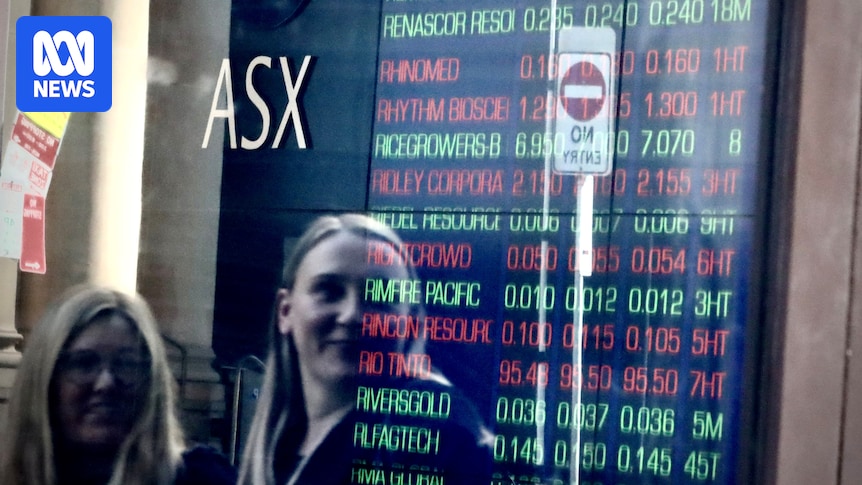
Wall Street’s rally was led by the tech-heavy Nasdaq, which rose approximately 0.3%. Among the standout performers was Taiwan Semiconductor Manufacturing Company (TSMC), the world’s leading producer of advanced AI chips. TSMC’s shares surged by 5.1% following the announcement of its latest financial results, underscoring investor confidence in its growth trajectory.
The broader market’s positive response reflects optimism about the semiconductor sector’s future, driven by the US-Taiwan agreement. This development follows several days of market losses, providing a much-needed boost to investor sentiment.
As the global economic landscape continues to evolve, the implications of this trade deal will be closely monitored. The reshoring of semiconductor production could have far-reaching effects, influencing everything from job creation in the US to the strategic positioning of Taiwan in global tech supply chains.
Stay tuned for further updates as this story develops.