

When you look at clouds, tree bark, or the front of a car, do you sometimes see a face staring back at you? This phenomenon, known as “face pareidolia,” is a perfectly normal illusion where our brains spot faces in patterns that aren’t actually faces. For most people, these illusions are harmless. However, new research published in Perception suggests that individuals with visual snow syndrome—a rare neurological condition that causes constant “visual static”—experience this phenomenon more strongly and more often.
The study offers a unique window into how an overactive brain may amplify erroneous illusory patterns it perceives in the world, highlighting how perception isn’t a perfect mirror of reality. This development follows a growing interest in understanding the implications of visual snow syndrome, which remains under-diagnosed and poorly understood.
Understanding Visual Snow Syndrome
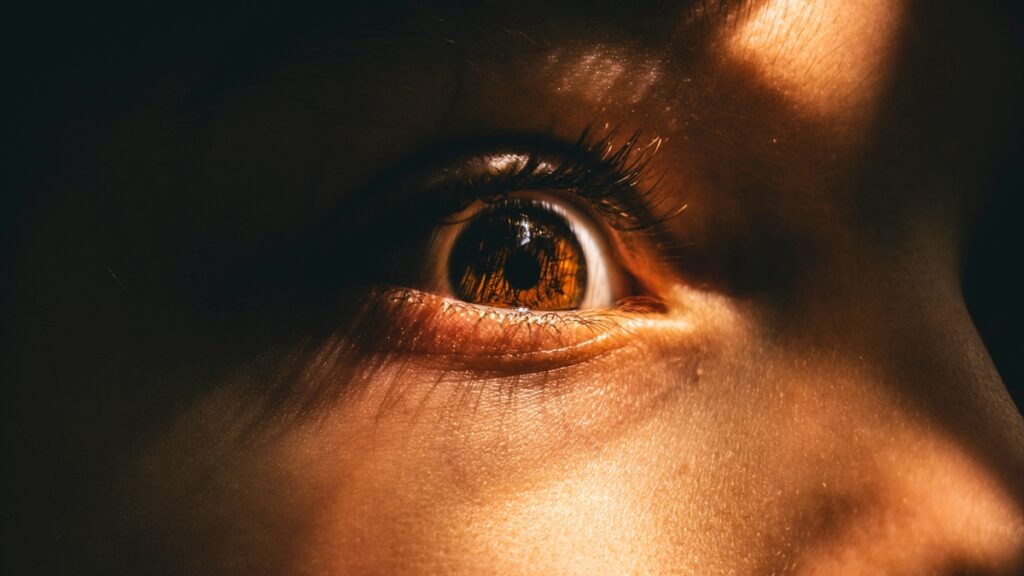
Visual snow syndrome is characterized by the persistent perception of flickering dots, akin to television static, across the entire field of vision. Individuals with the condition often report that these dots never disappear, even in darkness. The cause of this syndrome remains unclear, but recent evidence points to hyperexcitability in the visual cortex, the brain region responsible for interpreting visual information. Essentially, neurons may be firing too readily, flooding perception with noise.
Many individuals with visual snow syndrome also experience migraines, light sensitivity, afterimages, or visual trails that linger after motion. These symptoms can make everyday visual experiences confusing and exhausting. Despite growing awareness, the condition remains under-diagnosed and poorly understood.
Testing the Impact of Visual Snow on Perception
To explore how this hyperactive visual system alters the interpretation of ambiguous visual input, a research team conducted an online experiment involving over 250 volunteers. Participants first completed a questionnaire to determine if they experienced symptoms of visual snow. They were then shown 320 images of everyday objects, from tree trunks to cups of coffee, and asked to rate, on a scale from 0 to 100, how easily they could see a face in each image.
In total, 132 people met the criteria for visual snow syndrome, while 104 formed a control group matched for age. The study also tracked whether participants experienced migraines, allowing researchers to compare four subgroups.
The Brain That Sees Too Much
The results were striking. People with visual snow consistently gave higher “face scores” to each image than those without the condition, suggesting they were more likely to see faces in random textures and objects. Those with both visual snow and migraines scored highest of all.
“This pattern was remarkably consistent. In general, the groups agreed on which images looked most like faces, but the visual snow group reported seeing illusory faces more vividly,” the study noted.
The findings align with earlier theories that the visual snow brain is hyper-responsive. Normally, our visual system generates quick, low-level “guesses” about what we’re seeing, followed by slower checks to confirm those guesses. When that feedback loop is disrupted by excessive neural activity, an early “false alarm,” such as mistaking an object for a face, may be amplified rather than corrected.
The Link Between Migraine and Visual Snow
Migraine and visual snow have been frequently linked, with both involving abnormally high levels of cortical activity. During a migraine, visual neurons can become hypersensitive to flicker, light, and contrast. The data suggests that when migraine and visual snow occur together, the brain’s sensitivity to illusory faces increases even further, potentially reflecting a shared neural pathway underlying both conditions.
Future research could utilize this relationship to develop new diagnostic tools. Face pareidolia tests are quick, accessible, and could be adapted for children or nonverbal patients who can’t easily describe what they see.
A New Perspective on Perception
Face pareidolia isn’t a disorder—it’s a side effect of a perceptual system that prioritizes social information. Evolution has biased our visual system to spot faces first and ask questions later. For people with visual snow, that system may be dialed up too high, causing their brains to “connect the dots” in visual noise and interpret ambiguous input as meaningful patterns.
This finding supports the idea that visual snow is not just a vision problem but a broader disturbance in how the brain interprets visual input. By understanding why some people see too much, we can learn more about how all of us see at all.
Why This Research Matters
Visual snow syndrome is often dismissed or misdiagnosed, leaving patients frustrated. Linking the condition to a measurable illusion such as face pareidolia provides clinicians with a tangible sign of the altered brain activity behind the symptoms. It also humanizes the experience, affirming that people with visual snow aren’t imagining their perceptions—their brains are genuinely processing the world differently.
“Beyond diagnosis, this research contributes to a bigger question in neuroscience: how does the brain strike a balance between sensitivity and accuracy? Too little activity, and we miss the signal. Too much, and we start to see faces in the snow,” said Jessica Taubert, Associate Professor at the School of Psychology, The University of Queensland.
The move represents a significant step forward in understanding the complexities of human perception and the delicate balance our brains maintain to interpret the world around us.