


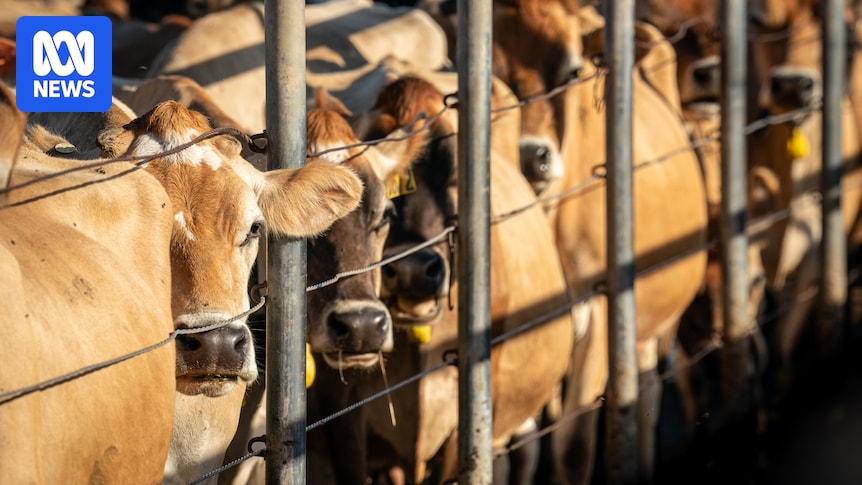
South Australian farmers are set to benefit from the legalization of virtual fencing technology, allowing them to move livestock remotely and enhance their response to bushfires. The decision, formalized last week, makes South Australia the last jurisdiction in the country to approve this innovative system, with a rollout anticipated next year.
The virtual fencing system utilizes electronic collars to guide animals away from danger, potentially preventing them from becoming trapped as fires approach. This technological advancement has been met with enthusiasm by Livestock SA, which anticipates strong demand from farmers eager to adopt the new method.
“The benefits are multi-dimensional,” said Livestock SA chief executive officer Travis Tobin. “Heaven forbid if they do come, but in natural disasters, it gives you that flexibility where you’re not losing kilometers of fence lines, and the animals can get away so they’re not trapped.”
New Technology Could Help in Emergencies
The specifics of how this technology will be licensed and regulated are still under discussion, but businesses are already collaborating with the state government to ensure they are prepared for the rollout. Halter, a company at the forefront of this innovation, plans to apply for a permit to sell and install virtual fencing in South Australia.
Brent Thomas, Director of Strategic Relations at Halter, emphasized that the advantages of virtual fencing extend beyond everyday operations. “With this technology, farmers are able with the palm of their hand, to move their cattle to safer ground,” he explained. This capability could prove crucial in emergencies such as floods or bushfires, safeguarding both human and animal lives.
Thomas noted that many South Australian farmers had been eagerly awaiting this announcement, with numerous individuals already on the company’s waitlist. “They had been really hopeful this news would come out for a long time,” he said. “I think they’re very, very excited … it’s going to be a game-changing technology for their farms.”
SA Farmers Enthusiastic About Transition
Among the farmers ready to embrace virtual fencing is Adam Mann, co-manager of Donovan’s Dairy in the South East. Mann has been a vocal advocate for the technology, anticipating that it will save both time and money on his farm.
“It’s nice to be on an even playing field with the rest of the states,” Mann remarked. “We’ll be trying to get it on as soon as possible, early 2026 will be a pretty good goal for us.”
Implications for the Future
The introduction of virtual fencing in South Australia represents a significant shift in how farmers can manage their livestock during emergencies. By providing the ability to move animals remotely, the technology not only enhances safety but also reduces the potential for financial losses associated with traditional fencing destruction.
This development follows a broader trend of integrating technology into agriculture to improve efficiency and resilience. As climate change continues to increase the frequency and intensity of natural disasters, innovations like virtual fencing could become indispensable tools for farmers worldwide.
Looking forward, the successful implementation of virtual fencing in South Australia could serve as a model for other regions facing similar challenges. As more farmers adopt this technology, it may lead to further advancements and adaptations, ensuring that agriculture remains sustainable and secure in the face of environmental changes.
The rollout of virtual fencing is not just a technological advancement; it is a testament to the evolving nature of farming in the 21st century, where innovation meets necessity to protect livelihoods and the environment.