


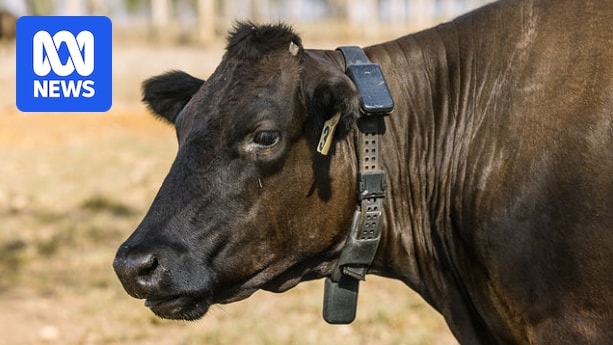
Virtual fencing has been legalized in New South Wales, marking a significant shift in livestock management practices. This innovative technology, already hailed as a “lifesaver” by users, enables farmers to move or confine livestock without traditional physical barriers. The system employs collars that emit sounds and electric pulses when animals stray from designated areas, allowing for dynamic boundary management through a mobile app.
The legalization in NSW follows successful implementations in other Australian states, where farmers have praised the technology for its effectiveness. However, opinions remain divided within NSW, with some farmers expressing concerns over the reliability and maintenance of the technology.
Understanding the Technology
The core of virtual fencing technology lies in its ability to monitor and control livestock movements through electronic collars. According to Brent Thomas, Director of Strategic Relations at Halter, these collars function like an “Apple Watch for cows,” offering health monitoring and fertility indicators alongside movement control. The system requires the installation of a tower on the property, which connects to the farmer’s internet or telephone service, providing a backup in case of faults.
Livestock researcher Pamela Lawson notes that virtual fencing is already utilized by approximately 23% of Tasmania’s dairy herd, although its adoption in the beef sector may progress more slowly due to the extensive grazing areas involved. Despite this, Thomas highlights successful usage on large ranches in Montana and Texas, demonstrating the technology’s scalability.
Cost Considerations
For many farmers, the cost of implementing virtual fencing is a critical factor. Angus McIntosh, a farmer in Molong, NSW, manages around 2,000 sheep and 100 cows and is considering the technology. However, he is wary of the expenses involved, noting that affordability is key for widespread adoption. The collars themselves can cost several hundred dollars per cow, and additional towers, necessary for setting up virtual fences, can cost about $6,000 each, depending on the land’s topography.
The operational costs include a monthly app fee of approximately $2 to $2.50 per cow. Comparatively, traditional fencing costs about $12,000 per kilometre, with farmers typically installing two to three kilometres annually. While initial setup costs for virtual fencing might match a farmer’s yearly fencing budget, the long-term savings could be substantial. Phil Donato, MP for Orange, has advocated for the technology, citing examples of reduced fuel costs and increased family time for farmers in Tasmania.
Performance in Emergencies
One area of concern for farmers is the performance of virtual fencing during emergencies such as bushfires and floods. The technology was tested during severe storms in Tasmania last year, with farmers successfully moving livestock remotely, thus avoiding dangerous night-time operations. Robert McIntosh, Chair of the NSW Farmers Association Animal Welfare Committee, acknowledges the potential of virtual fencing as a “game changer” in emergencies. However, he cautions about reliance on mobile phone signals, given the connectivity issues in rural areas. Fortunately, many systems also utilize satellite navigation, offering a more reliable alternative.
Future Implications
The introduction of virtual fencing in NSW represents a significant advancement in agricultural technology, promising increased efficiency and safety in livestock management. As the technology becomes more accessible and affordable, it is likely to see broader adoption across various farming sectors. The ongoing development and refinement of virtual fencing systems will be crucial in addressing the concerns of reliability and cost, ensuring that farmers can fully benefit from this innovative approach.
As NSW farmers begin to explore the potential of virtual fencing, the agricultural landscape is poised for transformation, offering a glimpse into the future of farming where technology and tradition converge to enhance productivity and sustainability.