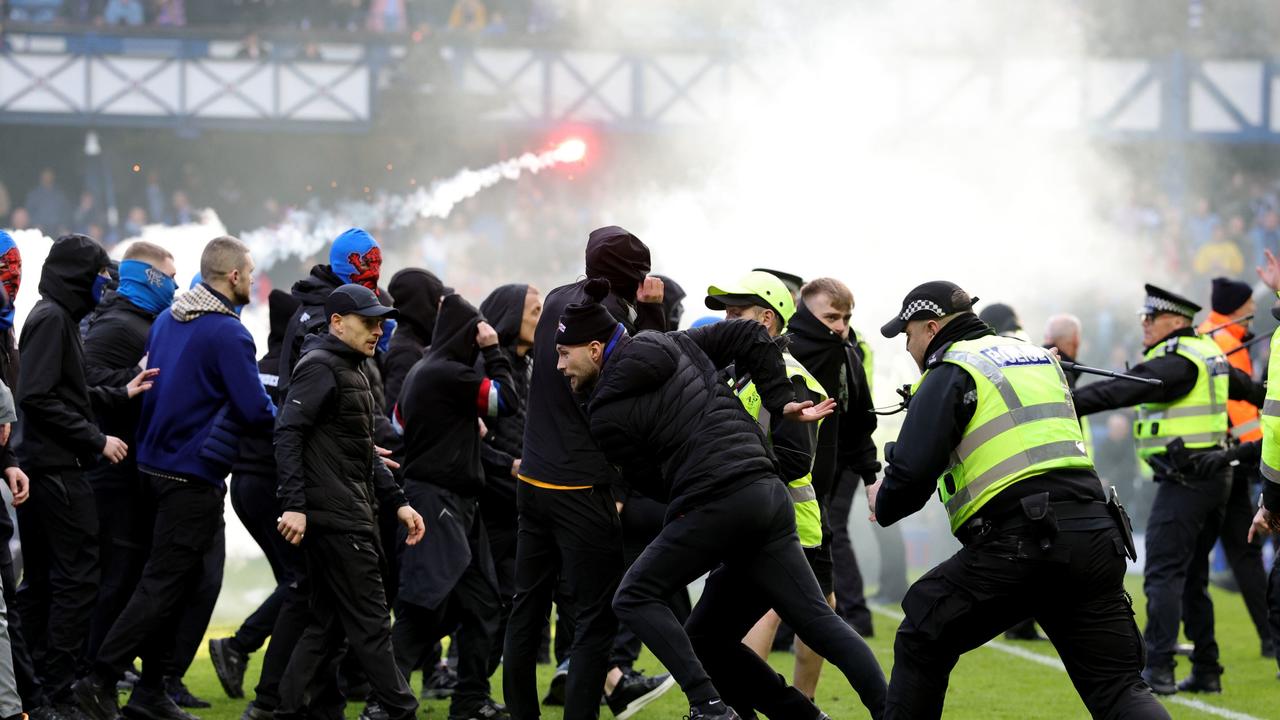


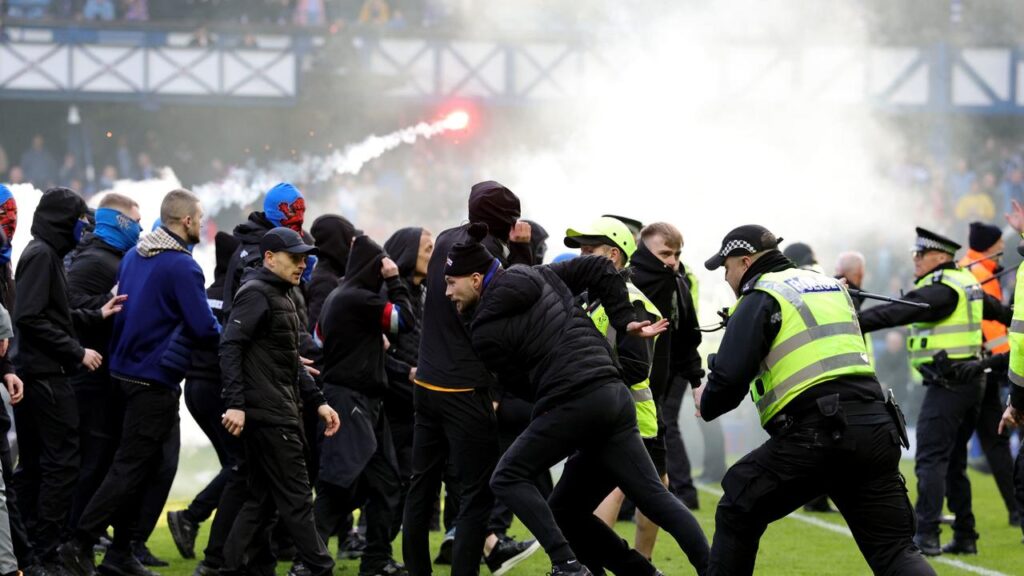
The Scottish Football Association has launched an investigation following violent clashes between Rangers and Celtic fans during the Scottish Cup quarter-final on Sunday. The altercation, described as “shameful” by authorities, resulted in injuries to police officers and a chaotic scene at Ibrox Stadium.
Backed by a contingent of 7,500 fans, Celtic triumphed over their Glasgow rivals 4-2 in a penalty shootout after a goalless draw in extra time. The victory celebration by Celtic supporters quickly escalated into a pitch invasion, sparking a retaliatory incursion by hundreds of Rangers fans.
Unruly Celebrations Turn Violent
The post-match celebrations turned violent as fans from both sides clashed on the pitch. Missiles and fireworks were thrown, and insults traded, before police and stewards managed to form a barrier to separate the opposing factions. A man was apprehended after an incident involving a Celtic staff member, who was confronted by a Rangers supporter.
Celtic player Tomas Cvancara was seen with blood stains on his jersey, while right-back Julian Araujo was reportedly pushed by a Rangers fan. The Scottish Football Association condemned the behavior, stating, “An investigation will be carried out immediately in line with the Judicial Panel Protocol.”
Authorities Condemn Fan Behavior
Police Scotland Chief Superintendent Kate Stephen labeled the rioting as “shameful” and called for broad condemnation from the football community and society at large. “A number of arrests have already been made,” she stated. “Officers and stewards were faced with extreme hostility and violence over a sustained period, with many individuals having armed themselves with items clearly intended to cause harm.”
“Officers and members of the public have been injured in this despicable display and I want to express my thanks to all officers and staff deployed.” – Chief Superintendent Kate Stephen
Premier Sports commentator Rory Hamilton, speaking live on television, described the incident as “an ugly, ugly end to what has been a superb game of football.”
Historical Tensions and Ticket Allocation
This incident marks the first Old Firm derby in nearly a decade to feature a significant allocation of tickets for away fans. Following numerous hooligan clashes in previous meetings, away supporters were banned from matches in 2023, only to be allowed back on a reduced basis last year. Celtic had been given fewer than 1,000 tickets for games at Rangers since 2018, with this Scottish Cup tie seen as a test for greater numbers of away fans.
Celtic manager Martin O’Neill addressed the incident involving his backroom staff member, expressing disappointment if the celebrations had gone too far. “There is a natural euphoria about winning a game and about fans joining in,” he said. “If this has gone too far, that would be disappointing.”
Match Highlights and Future Implications
Despite failing to register a single shot on target in 120 minutes, Celtic advanced to the semi-finals through a dramatic penalty shootout. Rangers captain James Tavernier hit the bar with the first penalty, and Djeidi Gassama missed his attempt, allowing Cvancara to seal the victory for Celtic.
“Old Firm games are explosive games, they always have been. That’s maybe one of the reasons why the derby is one of the best in the world.” – Celtic Manager Martin O’Neill
Rangers manager Danny Rohl, who was not on the pitch during the incident, acknowledged the emotional intensity of the match. “I think we all know the emotional situation after a game. Nobody likes to see this,” he commented.
The defeat adds to Rangers’ recent struggles against Celtic, following a 2-2 draw in the Scottish Premiership where they squandered a two-goal halftime lead. The ongoing tensions between the clubs and their supporters highlight the challenges of managing such high-stakes encounters.
As the investigation unfolds, the football community and authorities will be closely monitoring the situation, with potential implications for future matches and fan attendance policies.