


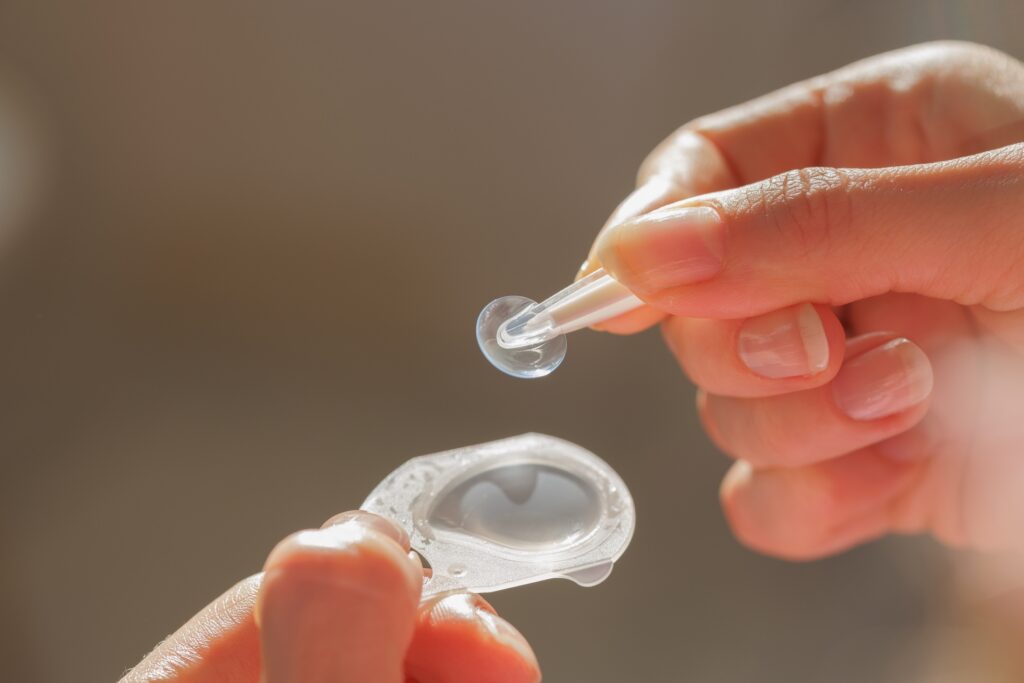
Macro shot of hands removing soft contact lens from packaging with tweezers for vision correction and eye care
With an impressive 55 years of experience in the optical industry, Lyn Simeon has witnessed the remarkable evolution of contact lenses firsthand. Her journey, which began in 1970, has taken her through various roles at OPSM, private practices, casual work with Specsavers, and now as a manager at Teachers Health Fund.
The announcement comes as Simeon reflects on her career, noting the significant changes and advancements she has seen in eyecare. “After more than five decades in the optical industry, I still smile when I think about how much has changed, and how much I’ve loved being part of it,” she shared. Her role over the past 14 years has expanded beyond optics, encompassing eyecare, dental, and membership services, broadening her understanding of the field.
The Evolution of Contact Lenses
Contact lenses have been a consistent thread throughout Simeon’s career, reflecting the broader changes within the industry. When she began, hard contact lenses were the norm, with soft lenses just starting to gain traction. This was a far cry from the early days when Leonardo da Vinci first conceptualized correcting vision by placing water over the eyes in 1508, or when F.A. Müller created the first glass contact lens in 1887.
By the 1930s, hard plastic lenses emerged, and the 1960s saw the introduction of soft lenses. By the time Simeon started in the 1970s, soft lenses were being mass-produced and gaining popularity, albeit with a complex cleaning and care regime that would seem daunting to today’s users.
“Comparing that era to now is like comparing a typewriter to a smartphone,” Simeon remarked, highlighting the drastic changes in lens technology.
Advancements in Lens Technology
The development of disposable lenses revolutionized the industry, offering convenience and reducing infection risks. “Patients who were once anxious about cleaning routines suddenly had a lens option that fit seamlessly into their lives,” Simeon observed.
Today’s market offers a diverse range of options: daily disposables, extended wear lenses, toric lenses for astigmatism, and specialized lenses for conditions like keratoconus. Multifocals have improved life quality for those needing distance and near correction, while colored lenses provide a cosmetic choice for self-expression.
The Future: Smart Lenses
Looking to the future, the potential of smart lenses is particularly exciting. These lenses could monitor health indicators like blood sugar or deliver medication directly to the eye, a concept that once seemed like science fiction. “Now, it’s within reach,” Simeon noted.
Contact lenses have not only transformed vision correction but also enhanced confidence and lifestyle. For athletes, they offer freedom from glasses, while others enjoy a natural look without frames. “I’ve seen patients walk out taller, happier, relieved to find vision that feels easy and natural,” Simeon said.
Challenges and Responsibilities
Despite the progress, challenges remain. The rise of colored lenses sold online without professional fitting poses risks of infections or complications. “A practitioner doesn’t just fit the lens; they teach, support and monitor eye health,” Simeon emphasized, underlining the importance of education and regular check-ups.
Reflecting on her career, Simeon feels proud of her contributions to the field. “Contact lenses are more than just medical devices. They offer freedom, practicality, and confidence, and they continue to evolve with every generation,” she stated.
Looking Ahead
Simeon believes that younger generations will view contact lenses as smart tools that integrate health, lifestyle, and technology. “If the past 55 years have taught me anything, it’s that this journey is far from over,” she concluded, optimistic about the future of contact lenses.