



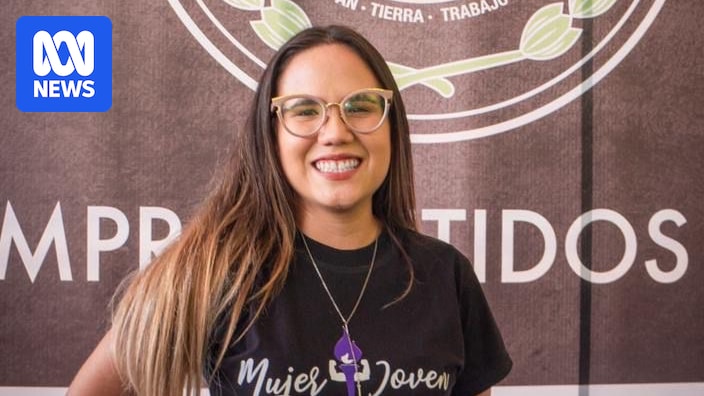
Diana Camacaro vividly recalls the moment her life changed forever. Just two days after the contentious 2024 Venezuelan election, the human rights activist received a chilling message via the Telegram app. The sender, a former classmate with ties to President Nicolás Maduro’s regime, warned her that she was on a list of individuals slated for arrest that very day.
Faced with imminent danger, the 27-year-old fled her home in Venezuela, a place she has not returned to since. Her initial refuge was a safe house where she hid alongside other political dissidents for over two months. However, her passport was among hundreds canceled by the government, thwarting her legal attempts to seek asylum abroad.
Escaping the Regime’s Reach
Camacaro’s time in the safe house was cut short when it too came under threat of a raid. “The person who was sheltering us had been warned of a potential arrest,” she recounted from Cucuta, a town on the Colombia-Venezuela border. “We realized the situation was unsustainable after two-and-a-half months and decided to leave.”
Her journey to Colombia marked the beginning of her life in exile, a fate shared by many Venezuelans. Gaby Arellano, a former opposition parliament member, was forced to flee in 2018 under similar circumstances. “All my rights and the office I held were violated,” Arellano stated, describing her escape as a desperate flight facilitated by her proximity to the Colombian border.
Political Shifts and Uncertain Futures
Despite Maduro’s recent capture by U.S. forces, Camacaro remains wary of returning to Venezuela. “Until there is a stable transition and a democratic government, it is not safe for activists like us,” she said. The United Nations and Human Rights Watch have documented thousands of extrajudicial killings under Maduro’s regime, with millions more fleeing the country due to economic collapse exacerbated by U.S. sanctions.
With Vice-President Delcy Rodríguez now serving as interim president and opposition leader María Corina Machado calling for elections, Venezuela is at a political crossroads. Reports indicate the government is releasing numerous prisoners, a significant concession after years of international pressure.
Economic Implications and Global Interests
Meanwhile, President Donald Trump has announced plans for the U.S. to reclaim oil assets in Venezuela, a country with the world’s largest oil reserves. The potential economic implications are vast, as Venezuela’s economy is heavily reliant on its oil industry.
Camacaro expressed a pragmatic view, stating, “If giving oil to the U.S. is the price for a free and democratic Venezuela, then it is worth it.” However, the prospect of U.S. involvement raises concerns about further interference in Venezuela’s resources.
More than 7.9 million Venezuelans have left the country since Maduro took power in 2013, marking one of the largest displacement crises in the world.
Voices from the Border
Street artist Marcos Leon, who travels to Cucuta to earn a living, described the atmosphere in Venezuela post-Maduro as one of “uncertainty and unease.” He voiced concerns about U.S. intentions, stating, “Every favor requires a returned favor.”
The country’s reliance on oil, coupled with rampant corruption, has left everyday Venezuelans struggling. José Rafael Rodríguez Meléndez, a fruit vendor in Cucuta, dreams of returning home but acknowledges the economic challenges remain unresolved.
For many in the Venezuelan diaspora, hope for change is tempered with caution. While some, like Arellano, support Machado as a potential leader, others remain skeptical of her ability to bring about meaningful change.
As Venezuela navigates this turbulent period, the world watches closely, aware that the outcomes will have profound implications for the region and beyond.