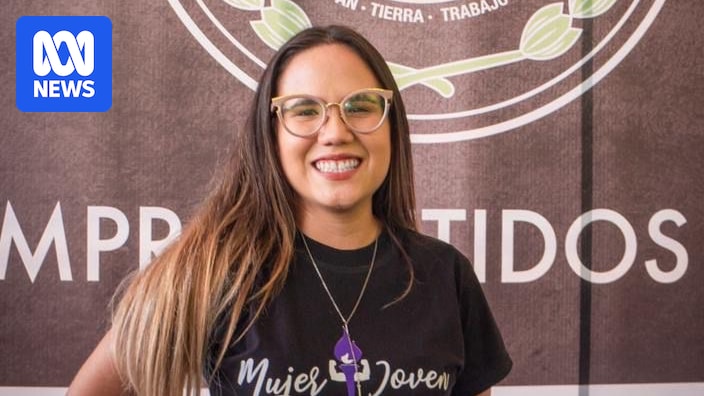
Diana Camacaro recalls the moment her fears materialized into reality. Just two days after the contentious 2024 Venezuelan election, the human rights activist received a chilling message via the Telegram app. The sender, a former classmate with ties to President Nicolás Maduro’s regime, warned her that she was on a list of individuals slated for arrest that very day.
Faced with imminent danger, the 27-year-old was forced to abandon her home in Venezuela, a place she has yet to return to. Upon receiving the alarming message, she sought refuge in a safe house, joining other political dissidents in hiding for over two months. Her situation worsened when she discovered that her passport, along with those of many other activists and government opponents, had been revoked, effectively trapping her within the country’s borders.
“The person who was sheltering us in the safe house had been warned that she was possibly at risk of arrest,” Ms. Camacaro explained from Cucuta, a town on the Colombia-Venezuela border. “I can’t reveal who she is, obviously, but she is also a politically exposed person and was at risk, as were many activists, of being arrested.”
The Plight of Venezuelan Dissidents
Ms. Camacaro’s story is not an isolated case. Gaby Arellano, an opposition parliamentarian elected in 2015, was compelled to flee Venezuela in 2018. “All my rights and the office I held were violated,” Ms. Arellano recounted, describing her escape to Colombia as a desperate flight aided by others during critical hours.
Despite the recent capture of Nicolás Maduro by U.S. forces, Ms. Camacaro remains apprehensive about returning to Venezuela. “Until there is a stable transition and a stable democratic government there, it is not safe for activists like us who are abroad to return,” she stated. Her concerns are underscored by the continued detention of her friends and colleagues, with reports of extrajudicial killings under Maduro’s regime.
“Knowing that Maduro will finally be held accountable before international justice is a great relief for Venezuelans,” Ms. Camacaro expressed.
Political Shifts and International Involvement
Following Maduro’s detention, Vice-President Delcy Rodríguez has assumed the role of interim president with U.S. support, while opposition leader María Corina Machado has pledged to return and push for elections. This development has led to the release of numerous prisoners, a long-standing demand from both domestic opposition and the international community.
Meanwhile, President Donald Trump has announced plans to reclaim oil assets in Venezuela, a country with the world’s largest oil reserves. This move has sparked debate over the implications of U.S. involvement, with some fearing further interference in Venezuela’s sovereign affairs.
“Every favor requires a returned favor,” commented street artist Marcos Leon, highlighting the uncertainty surrounding U.S. aid.
Economic Struggles and the Venezuelan Diaspora
The economic crisis in Venezuela, exacerbated by U.S. sanctions and domestic policies, has led to hyperinflation and widespread poverty. The United Nations refugee agency reports that over 7.9 million Venezuelans have fled since Maduro’s rise to power in 2013, marking one of the largest displacement crises globally.
For those who remain, like Marcos Leon, survival often involves crossing into Colombia to earn a living. “To work over there [in Venezuela], there are very few opportunities,” he explained, describing the dire economic conditions that force many to seek livelihoods abroad.
José Rafael Rodríguez Meléndez, who has lived in Cucuta for a decade, echoes this sentiment. Despite his longing to return home, he acknowledges the persistent economic challenges that prevent many from doing so. “I want to be in my country, but because of the difficult economic situation in Venezuela, one has to leave for the life one wants,” he shared.
Looking Forward: Hope and Caution
As Venezuela navigates this tumultuous period, the diaspora remains hopeful yet cautious. Ms. Arellano advocates for immediate leadership by María Corina Machado, whom she trusts. However, skepticism persists among others like Mr. Leon, who calls for fresh leadership untainted by past political failures.
The future of Venezuela hangs in the balance, with its people yearning for stability and prosperity. As the international community watches closely, the hope for a democratic transition continues to fuel the resilience of those who have been displaced.