



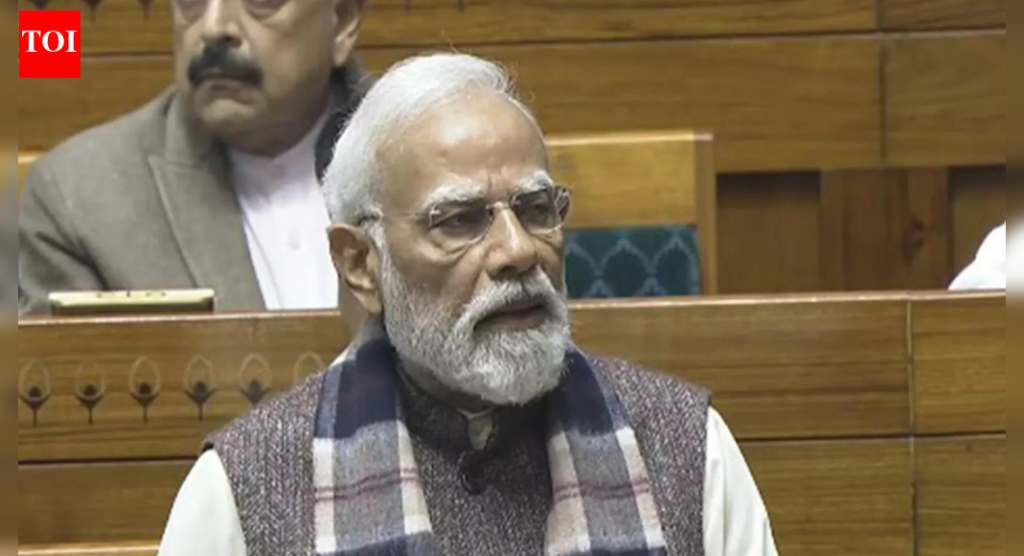
The Lok Sabha witnessed a fiery debate on Monday over the national song ‘Vande Mataram’ as it marked its 150th anniversary. The discussion quickly turned into a political battleground, with the ruling Bharatiya Janata Party (BJP) accusing the Congress of disrespecting the song and the opposition alleging that the BJP was using the occasion to divert attention from pressing national issues.
NEW DELHI: The special session was opened by Lok Sabha Speaker Om Birla, who described ‘Vande Mataram’ as a potent symbol of India’s unity, strength, and the freedom struggle. He emphasized that the debate was intended to honor the sacrifices of freedom fighters and pass their legacy to future generations. However, the session soon devolved into a heated exchange between the National Democratic Alliance (NDA) and the INDIA bloc, with both sides hurling accusations.
Political Accusations and Historical Context
Prime Minister Narendra Modi led the charge for the BJP, accusing the Congress of “surrendering before the Muslim League” and disrespecting ‘Vande Mataram’. He criticized the absence of opposition leader Rahul Gandhi from the debate, suggesting a historical pattern of disregard for the song by the Gandhi family. Modi referenced historical correspondence between Jawaharlal Nehru and Subhas Chandra Bose to argue that Congress had once diluted the song under political pressure.
“Serious discussion is going on in Parliament, but LoP Rahul Gandhi is not present… First Nehru, now Rahul Gandhi, has shown disregard to Vande Mataram,” said PM Modi.
In response, Congress deputy leader Gaurav Gogoi accused Modi of attempting to “rewrite history” and defended the Congress’s role in elevating ‘Vande Mataram’ to its national status. He argued that it was the Muslim League, not Congress, that sought to boycott the song, and warned against reviving “divide and rule” politics.
Opposition’s Counterarguments
Other opposition leaders echoed similar sentiments. Samajwadi Party leader Akhilesh Yadav criticized the BJP for using the national song as a political tool, warning against imposing beliefs on others. He drew parallels to British “divide and rule” tactics and stressed that ‘Vande Mataram’ should be a unifying force.
“Those who did not participate in the freedom struggle are now lecturing on its values,” said Yadav.
Meanwhile, BJP MP Anurag Thakur accused Congress of being “afraid” of ‘Vande Mataram’, claiming that objections to the song mirrored those once raised by the British and Mohammed Ali Jinnah. He criticized the absence of key opposition leaders and called for national unity around the song.
Implications for Upcoming Elections
Congress MP Priyanka Gandhi Vadra accused the BJP of politicizing ‘Vande Mataram’ ahead of the 2026 West Bengal elections. She alleged that the debate was a deliberate distraction from issues like unemployment and inflation, and accused the government of targeting historical figures to rewrite history.
“The ruling party is committing a ‘big sin’ by politicizing a song that belongs to every Indian,” said Priyanka Gandhi.
Defence Minister Rajnath Singh called for an unbiased assessment of ‘Vande Mataram’, arguing that neither the song nor Bankim Chandra Chatterjee’s ‘Anandmath’ were anti-Islam. He accused some of deliberately rendering the song incomplete and blamed Congress’s politics of appeasement for India’s partition.
Regional Perspectives
TMC MP Mahua Moitra accused the BJP of using ‘Vande Mataram’ as an electoral tool, claiming that the timing of the discussion was aimed at gaining an advantage in Bengal. She contrasted the song’s ideals with current issues like water scarcity and pollution, arguing that the government had failed to uphold its spirit.
“The debate was meant to deflect from governance failures,” said Moitra.
Looking Ahead
The debate over ‘Vande Mataram’ underscores the deep political divisions within India and highlights how historical symbols are often used in contemporary political battles. As the country approaches the 2026 West Bengal elections, the discourse around national identity and historical legacy is likely to intensify.
As the dust settles on this parliamentary session, it remains to be seen how these discussions will influence voter sentiment and whether they will lead to any substantive policy changes regarding national symbols and their role in modern India.

