


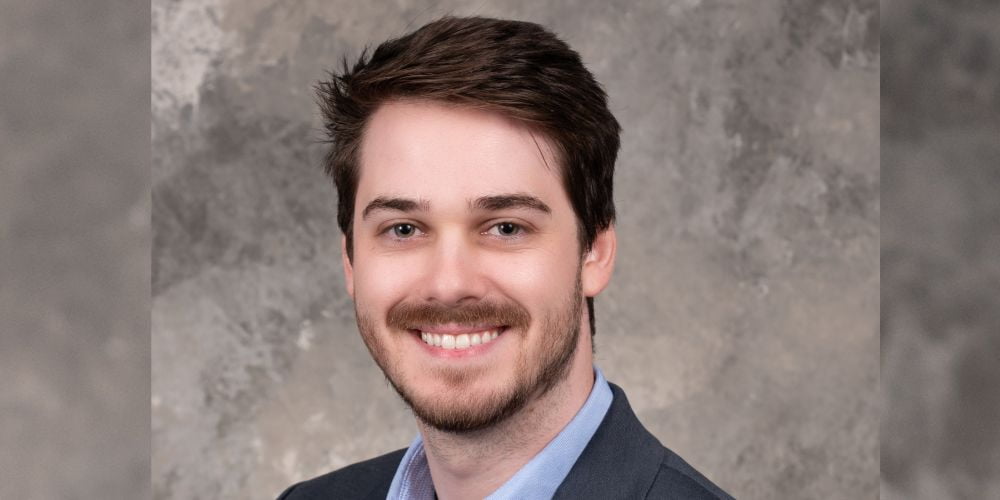
Alec Whited, a 2025 Master’s graduate in Biology from the University of Texas at Arlington (UTA), is making strides in understanding how cells remove waste. His research could pave the way for innovative treatments for autoimmune diseases and enhance wound healing processes. Whited’s groundbreaking findings, coauthored with Aladin Elkhalil, a fourth-year doctoral student at UTA, were recently published in the prestigious journal Genetics.
While working in the Ghose Lab at UTA, Whited discovered a previously unknown cellular pathway that enhances the removal of dying cells. He explained, “Similar to taking your garbage out on trash day, living things must also get rid of their unwanted waste, whether it’s digested food or dead cells that have fulfilled their purpose.” Now a research assistant at UT Southwestern, Whited emphasized the importance of this process, noting that its disruption can lead to significant health issues.
Understanding Cellular Waste Management
The announcement of Whited’s research comes at a time when understanding cellular processes is crucial for medical advancements. The removal of dying cells is a vital biological function, as failure to do so can result in inflammation and autoimmune diseases. Whited elaborated, “When cells die, they release molecules that can trigger inflammatory responses. If these dead cells aren’t cleared out efficiently, the body may mistakenly interpret these molecules as threats and launch an immune response.”
His research identifies how this cellular waste management can prevent chronic inflammation and the development of autoimmune diseases. This discovery is particularly significant as autoimmune diseases affect millions worldwide, with limited treatment options currently available.
Implications for Wound Healing
Whited’s study also explores the implications for wound healing. One gene identified in the research is linked to cell-to-cell fusion, a critical process in tissue repair and wound closure. “By better understanding the genetic mechanisms behind this, we hope to identify additional genes that could play a role in improving wound healing,” Whited noted. This research could lead to breakthroughs in treating chronic wounds, although further studies are necessary to fully comprehend the genetic interactions involved.
Inspiration for Aspiring Scientists
Reflecting on his journey, Whited shared insights for aspiring scientists, particularly those at UTA. He praised the Department of Biology for its supportive environment and collaborative spirit, which fosters both academic growth and a sense of belonging within the scientific community. “There were four labs in the space that I worked in, and everyone was eager to learn new concepts and apply them to their own research,” he said. This environment, he believes, is crucial for making meaningful contributions to science.
Whited’s work was supported by The Cancer Prevention Research Institute of Texas and the National Institutes of Health–National Institute of General Medical Sciences, underscoring the importance of funding in advancing scientific research.
The Broader Impact
The implications of Whited’s research extend beyond immediate medical applications. By uncovering new cellular pathways, this study contributes to a deeper understanding of biological processes, potentially influencing future research directions. The work at UTA exemplifies how academic institutions can drive scientific innovation and impact global health challenges.
As Whited continues his career at UT Southwestern, his research promises to inspire further exploration into cellular biology and its applications in medicine. The publication in Genetics not only highlights the significance of his findings but also serves as a testament to the collaborative and innovative spirit fostered at UTA.
