



The capture of former Venezuelan president Nicolás Maduro by the US intelligence services and armed forces has sparked widespread speculation about its consequences, particularly concerning Venezuela’s vast oil reserves. The political situation in Venezuela remains fluid, but the country’s significant position as an oil producer is undeniable.
Venezuela is home to some of the world’s largest proven oil reserves, estimated at around 300 billion barrels, surpassing even Saudi Arabia. However, these figures should be approached with caution, especially when considering data from outside the Organisation for Economic Cooperation and Development (OECD). Within the OECD, statistics distinguish between proved, probable, possible, and contingent reserves, requiring consistency over time.
Understanding Venezuela’s Oil Reserves
Proven reserves refer to the oil that can be extracted economically with current technology. This figure is not static; it fluctuates with oil prices. As prices rise, so do reserves, as higher profits justify the costs of extracting additional oil that would otherwise remain underground. In 2008, international oil prices neared $140 per barrel. Today, Venezuelan oil typically sells at a $25 discount to the Brent benchmark, around $35 a barrel. Consequently, current proven reserves may be well below 100 billion barrels, a stark contrast to the frequently cited figures.
The Challenges of Venezuelan Oil
Most Venezuelan oil is heavy and sulfur-rich, making production and transportation costly. Heavy oil requires dilution with naphtha or gas oil, and sulfur removal during processing involves expensive hydrogen. Only advanced refineries in the US Gulf Coast, India, the Middle East, and China can process this type of oil, leading to significant discounts compared to other grades.
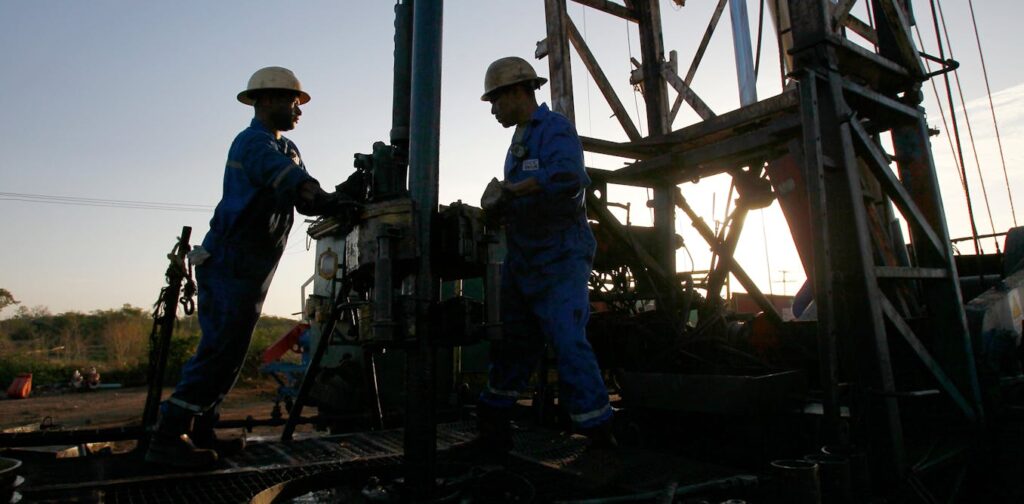
American oil companies have operated in Venezuela for nearly a century, and by the 1960s, the US was the largest foreign investor in the country. In 1971, Venezuela nationalized its oil industry, creating the state monopoly Petróleos de Venezuela SA (PDVSA). However, decades of political mismanagement, purges, and US sanctions have plagued the industry. Production has plummeted from over three million barrels a day in the early 2000s to less than one million barrels last year.
Impact on Global Oil Markets
The state of Venezuela’s oil sector means even a modest increase in production would require billions in investment, and a significant boost would take years of substantial funding, assuming political stability. Despite the initial dip in oil prices following the US action, the global market remains oversupplied. Even a complete halt of Venezuelan exports would likely have a minor impact on prices.
“The global oil market is oversupplied right now, and even the total loss of Venezuelan exports would have only a minor impact on prices.”
In the long term, additional Venezuelan barrels could exacerbate the oversupply, complicating efforts by OPEC and other producers to stabilize prices. Oil prices fell further after US President Donald Trump announced plans to seize up to 50 million barrels of Venezuelan oil. Concerns that these events would harm China appear exaggerated, as Venezuelan oil accounts for just 5% of Chinese imports. Canada, another heavy oil producer, has been redirecting exports from the US to China, a trend likely to continue.
Political and Economic Consequences
The rationale for a “takeover” of Venezuela’s oil industry seems economically unfounded. The US could have lifted the 2019 sanctions imposed by Trump, allowing American companies to purchase Venezuelan oil like others. The long-term political ramifications of this legally questionable US action are troubling the oil market. President Trump’s apparent appetite for military ventures could extend to further actions against Iran, another major oil producer and OPEC member.
“The last thing the oil market needs right now is more uncertainty.”
The unpredictability of US actions may also embolden other nations, such as Russia, to justify aggressive moves, further destabilizing energy markets. As the world watches, the implications of this strike on Venezuela extend beyond oil prices, potentially reshaping geopolitical dynamics and energy security.