


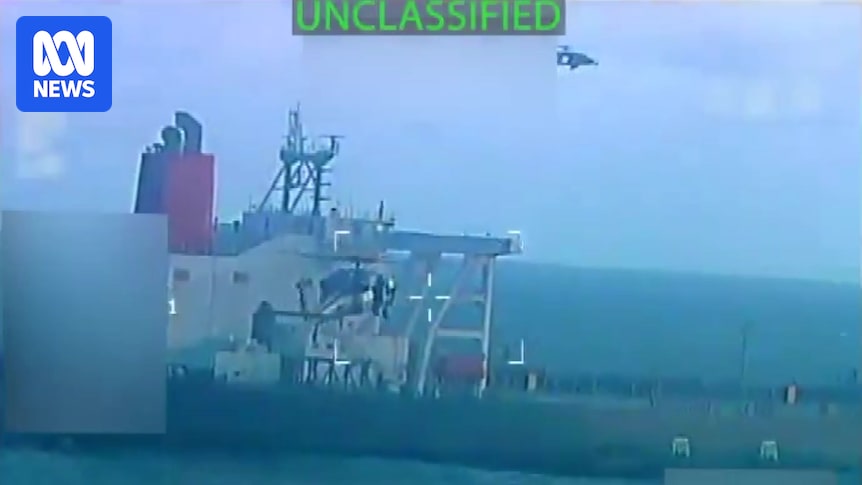
Tensions between the United States and Venezuela have escalated following the seizure of an oil tanker by American forces in the Caribbean Sea. The White House announced that the vessel, captured on Wednesday, was part of a “shadow fleet” used to transport “black market” oil. This move marks a significant step in the Trump administration’s efforts to crack down on these clandestine operations.
The seizure of the 20-year-old tanker, currently known as the Skipper, could be the first of many, as reports suggest the administration is compiling a list of additional tankers for potential capture. This development raises questions about the motivations behind the US’s focus on shadow fleets and the broader implications for US-Venezuela relations.
Understanding Shadow Fleets
Shadow fleets refer to unregulated vessels that aim to circumvent sanctions on oil, as explained by S&P Global. These fleets often consist of aging tankers that operate under changing names and flags, which are not affiliated with the countries they claim, and typically lack required onboard tracking systems to avoid detection. The Skipper, previously known as the Maera, Toyo, and Adisa, exemplifies this pattern, having been sanctioned by the US in 2022 for facilitating oil trades benefiting Hezbollah and Iran’s Islamic Revolutionary Guard Corps.
Evidence of the Skipper’s Shadow Fleet Activities
The Skipper employed multiple evasion techniques to operate undetected. At the time of its capture, it was falsely flying the flag of Guyana, as confirmed by the Guyanese government. Furthermore, an analysis by maritime intelligence firm Pole Star Defense revealed that from November 2024 through November 2025, the Skipper went 200 days without transmitting its location via the Automatic Identification System (AIS), a requirement under a UN treaty.
“This represented an escalation from passive AIS avoidance to active geographic spoofing — an attempt to obscure not just the act of loading, but the specific jurisdiction and origin of the cargo itself,” the analysis by Pole Star reads.
Satellite imagery from Windward, a firm relied upon by US officials, also indicated that the Skipper had transported Iranian oil to China and was linked to illicit cargoes from Russia. In late October, the vessel began spoofing its location data, broadcasting coordinates off the coast of Guyana while actually docked at Venezuela’s San José Offshore Terminal.
US Motivations Behind the Seizure
US Attorney-General Pam Bondi stated that the decision to seize the Skipper was due to its involvement in “an illicit oil shipping network” supporting terrorist organizations, echoing the reasons for its 2022 sanction. However, this action also aligns with the Trump administration’s broader strategy to pressure Venezuelan President Nicolás Maduro Moros. The US has increased its military presence in the Caribbean and authorized covert CIA operations inside Venezuela, ostensibly to curb drug trafficking.
Critics, including some members of Congress and President Maduro himself, argue that these actions are part of a regime change agenda. Venezuela’s economy heavily relies on crude oil exports, which constitute over 80% of its exports. The US’s efforts to stifle this trade could further strain the Venezuelan economy, already reeling from a collapse in global oil prices since 2013.
Maria Machado, leader of the US-backed Venezuelan opposition, stated, “The regime is using the resources, the cash flows that come from illegal activities, including the black market of oil, not to give food for hungry children, not for teachers who earn one dollar a day, not to hospitals. They use those resources to repress and persecute our people.”
Venezuela’s Oil Trade and Sanctions
The US has long imposed sanctions against Venezuela, targeting its economy and oil trade. These measures include blocking Venezuela’s access to US financial markets and imposing tariffs on countries purchasing Venezuelan oil. Allies like Russia and Iran, also under sanctions, have assisted Venezuela in bypassing these restrictions using shadow fleets operated by shell companies.
Legal Implications of the Seizure
Sanctions are a tool used by governments to discourage undesirable behavior without military force, often involving financial penalties or restrictions on goods and services. However, legal experts argue that the US’s seizure of the Skipper may breach international laws. According to Australian National University international law expert Don Rothwell, a vessel can be captured on the high seas only under specific circumstances, such as being stateless or a pirate ship, which the Skipper does not appear to meet.
Don Rothwell commented, “The seizure of the tanker was really, completely inconsistent with some of the very fundamental principles of international law and, most importantly, the law of the sea.”
Despite these legal concerns, Windward reported that vessels like the Skipper, sanctioned by the US, are vulnerable to interception due to their false flagging, rendering them stateless under international maritime law.
As the situation unfolds, the world watches closely to see how these tensions will impact US-Venezuela relations and the global oil market. The Trump administration’s actions signal a continued hardline stance against shadow fleets and the regimes they support, potentially reshaping geopolitical dynamics in the region.