


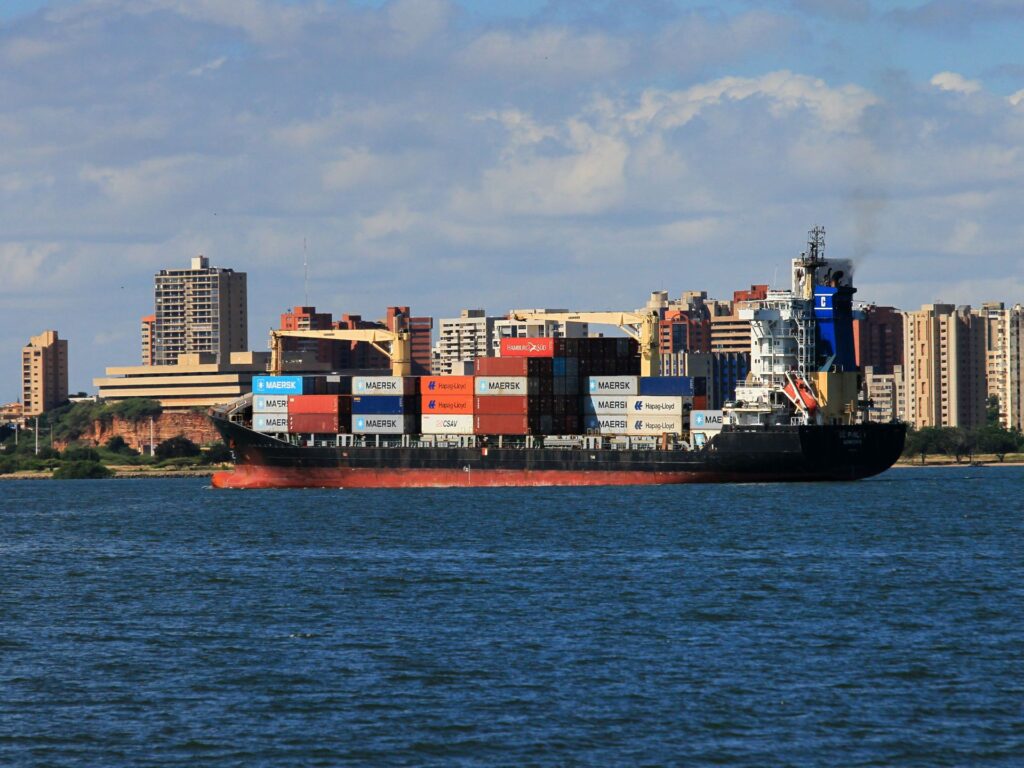
The United States has seized an oil tanker in international waters off the coast of Venezuela, according to officials cited by international news agencies. This incident, occurring on Saturday, follows closely on the heels of US President Donald Trump’s announcement of a blockade targeting all sanctioned oil tankers entering and leaving Venezuela.
This marks the second such seizure in recent weeks, underscoring a significant escalation in US military presence in the region as President Trump intensifies pressure on Venezuelan President Nicolas Maduro. Three officials, speaking to Reuters on the condition of anonymity, did not disclose the operation’s exact location but confirmed that the US Coast Guard led the action.
Meanwhile, two officials confirmed to The Associated Press that the operation was a “consented boarding,” with the tanker voluntarily stopping to allow US forces to board. However, there has been no official confirmation from US authorities regarding the operation’s specifics, leaving many questions unanswered.
Impact on Venezuelan Oil Exports
Since the US seized a sanctioned oil tanker off Venezuela’s coast last week, an effective embargo has taken hold. Loaded vessels, carrying millions of barrels of oil, remain in Venezuelan waters to avoid seizure, leading to a sharp decline in Venezuelan crude exports.
While many vessels transporting oil from Venezuela are under sanctions, others, including those carrying crude from Iran and Russia, are not. Some companies, such as the US-based Chevron, continue to transport Venezuelan oil using authorized ships. China, the largest buyer of Venezuelan crude, imports about four percent of its oil from Venezuela, with December shipments expected to average over 600,000 barrels per day.
Experts warn that if the embargo persists, the loss of nearly a million barrels a day of crude supply could drive oil prices higher.
Military Tensions and Regional Reactions
Trump’s pressure campaign on Maduro includes a ramped-up military presence in the region, with over two dozen military strikes on vessels in the Pacific Ocean and Caribbean Sea near Venezuela, resulting in at least 100 casualties. Trump has also indicated that US land strikes on Venezuela could commence soon.
Venezuelan President Maduro has accused the US of aiming to overthrow him and seize control of the nation’s vast oil resources, which are the largest crude reserves globally. In response, Brazilian President Luiz Inacio Lula da Silva cautioned against any “armed intervention in Venezuela,” labeling it a potential “humanitarian catastrophe.”
During a summit of the South American Mercosur bloc in Foz do Iguacu, Brazil, Lula reiterated his opposition to US actions, warning that they could set a “dangerous precedent for the world.” He drew historical parallels to the Falklands War, suggesting that South America is once again threatened by the military presence of an external power.
Looking Forward
The seizure of a second oil tanker and the ongoing military buildup signal a critical juncture in US-Venezuela relations. As tensions rise, the international community watches closely, concerned about the potential for conflict and its broader implications on global oil markets and regional stability.
With the situation evolving, the world awaits further developments and official statements from US authorities, which will shed light on the future of this geopolitical standoff.