


The United States is intensifying its efforts to intercept ships carrying Venezuelan oil, following the recent seizure of a tanker, according to six sources familiar with the situation. This move marks the first interdiction of a Venezuelan oil cargo tanker since the imposition of US sanctions in 2019.
The seizure aims to increase pressure on Venezuelan President Nicolas Maduro. In support of this strategy, the US has bolstered its military presence in the southern Caribbean and introduced new sanctions. This development has alarmed shipowners and operators involved in transporting Venezuelan crude, prompting many to reconsider their routes from Venezuelan waters.
Escalating Sanctions and Military Presence
The US Treasury Department recently announced sanctions on six shipping companies and six crude oil tankers, accusing them of “engaging in deceptive and unsafe shipping practices” that support Maduro’s regime. Four of these tankers are registered in Panama, while the others are flagged by the Cook Islands and Hong Kong. These supertankers had recently loaded crude oil in Venezuela, as indicated by internal documents from the state oil company PDVSA.
David Goldwyn, a former energy diplomat at the US State Department, described the sanctions as a “powerful intimidation tactic,” suggesting they could pave the way for the US to seize the vessels. He noted, “Certainly, any sanctioned vessel owner will think twice about lifting Venezuelan crude for fear of losing the vessel entirely.”
Impact on Venezuelan Oil Exports
The US has assembled a target list of additional sanctioned tankers for potential seizure, with the Justice Department and Homeland Security planning these actions for months. The reduction or halt of Venezuelan oil exports, a critical revenue source for the Maduro government, could significantly strain its finances.
White House spokesperson Karoline Leavitt emphasized the US’s commitment to enforcing sanctions, stating, “We’re not going to stand by and watch sanctioned vessels sail the seas with black-market oil, the proceeds of which will fuel narcoterrorism of rogue and illegitimate regimes around the world.”
Legal and Human Rights Concerns
The US’s actions have sparked legal and human rights debates, with experts questioning the legality of recent strikes against boats in the Caribbean and Pacific. These operations, which have resulted in over 80 fatalities, have been criticized as potential extrajudicial attacks. However, the US maintains that its actions are necessary to combat drug cartels labeled as terrorist organizations.
“The term piracy in this context appears to be rhetorical or figurative, rather than a legal usage,” said Laurence Atkin-Teillet, a specialist on piracy and the law of the sea at Britain’s Nottingham Law School.
Monitoring and Future Actions
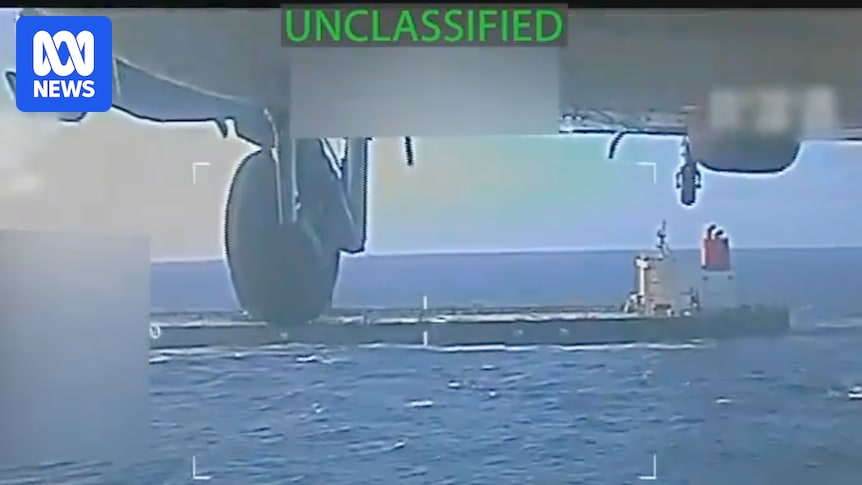
US forces are closely monitoring tankers at sea and in Venezuelan ports, waiting for them to enter international waters before taking action. The seizure of the tanker Skipper, previously sanctioned for trading oil with Iran, has led to increased surveillance around Venezuela and neighboring Guyana.
Further ship seizures are anticipated, contingent on logistical arrangements for ports to receive and unload seized oil cargoes. The timing of these actions will depend on how quickly these arrangements can be finalized.
Meanwhile, the Venezuelan government has condemned the US seizure as “an act of international piracy.” However, legal specialists argue that the seizure, endorsed by the US, does not meet the definition of piracy under international law.
The ongoing US actions against Venezuelan oil shipments underscore the broader geopolitical tensions and economic challenges facing the Maduro government. As the situation unfolds, the implications for international maritime law and global oil markets remain closely watched.