

The United States has ordered its government employees to leave Saudi Arabia, a move that underscores the escalating tensions in the Middle East. This decision follows a series of military confrontations involving Iran, Israel, and other regional players, which have heightened geopolitical instability in the region.
The evacuation order was issued as the conflict between Iran and a coalition of US and Israeli forces continues to intensify. Recent attacks have targeted strategic locations, including oil facilities and military assets, prompting concerns about the safety of foreign nationals in the area.
China’s Diplomatic Stance and US Relations
In a related development, China’s foreign minister, Wang Yi, expressed regret over the ongoing conflict, stating that the war in the Middle East “should never have happened.” His comments come as China seeks to maintain a balanced diplomatic approach, emphasizing mutual respect in its relations with the United States.
Wang Yi’s remarks were made during China’s annual parliamentary sessions, where he also highlighted the importance of sincere and good-faith interactions between China and the US. This diplomatic overture occurs amid a backdrop of US-led efforts to counter Iran’s influence in the region.
Italy’s Role and Military Support
Meanwhile, former US President Donald Trump praised Italian Prime Minister Giorgia Meloni for Italy’s support in the conflict. Italy has pledged to send air-defense aid to Gulf countries and is preparing a naval mission to Cyprus as part of a European initiative to secure the region.
Trump’s endorsement of Meloni underscores the international dimensions of the conflict, with European nations playing a critical role in supporting US and Israeli military efforts against Iran.
Military Escalations and Strategic Strikes
Israel has been actively involved in the military campaign, recently targeting a fleet of Iranian fighter jets at Isfahan Airport. The strikes are part of a broader strategy to weaken Iran’s military capabilities, with Israel also targeting detection and air defense systems.
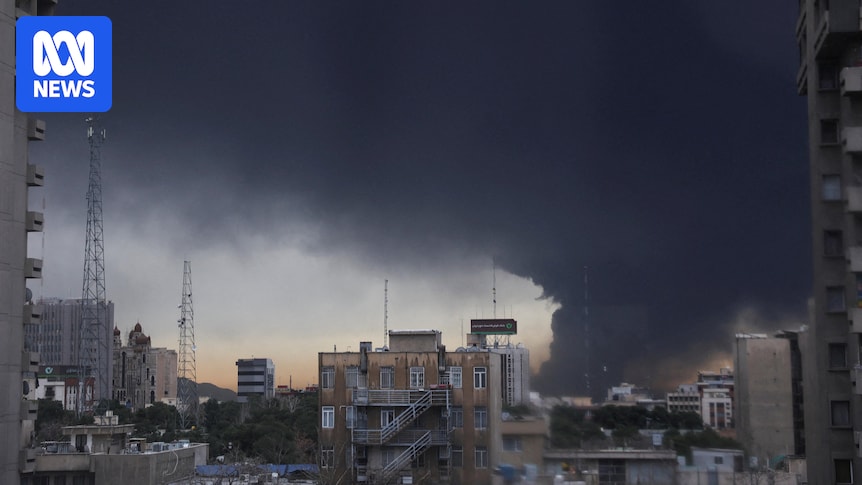
In addition to these military actions, reports indicate that US and Israeli forces have damaged multiple oil facilities around Tehran. These strikes aim to disrupt Iran’s economic infrastructure, further pressuring the Iranian government amid the ongoing conflict.
Regional Repercussions and Humanitarian Concerns
The conflict has also spilled over into neighboring countries, with missile and drone attacks reported in Bahrain, resulting in injuries and damage to infrastructure. Bahrain’s interior ministry condemned the attacks, attributing them to Iranian aggression.
Lebanon has likewise been drawn into the conflict, with Israeli airstrikes targeting Hezbollah positions. The Lebanese health ministry reported casualties and warned of a looming humanitarian disaster as the death toll continues to rise.
Iran’s Response and Future Implications
Iranian President Masoud Pezeshkian has vowed to respond to any attacks from neighboring countries, emphasizing that Iran’s actions would be defensive rather than aggressive. This stance reflects the broader regional tensions and the potential for further escalation.
As the conflict unfolds, the international community remains on high alert, with diplomatic efforts ongoing to de-escalate the situation. The evacuation of US personnel from Saudi Arabia highlights the seriousness of the threat and the need for continued vigilance.
The coming weeks will be critical in determining the trajectory of the conflict, with potential implications for global security and economic stability. International stakeholders are closely monitoring developments, seeking to prevent further deterioration of the situation.