
Updated January 14, 2026 — 11:39am, first published January 14, 2026 — 6:00am
Washington: A senior US State Department official has sharply criticized Australia’s proposed new hate speech legislation, describing it as “clumsy” and cautioning that it might inadvertently shield extremists while penalizing legitimate discourse. The critique underscores the Trump administration’s increasing resolve to challenge what it perceives as encroachments on free speech by allied nations, particularly in Europe and the United Kingdom, but also extending to other Western countries.
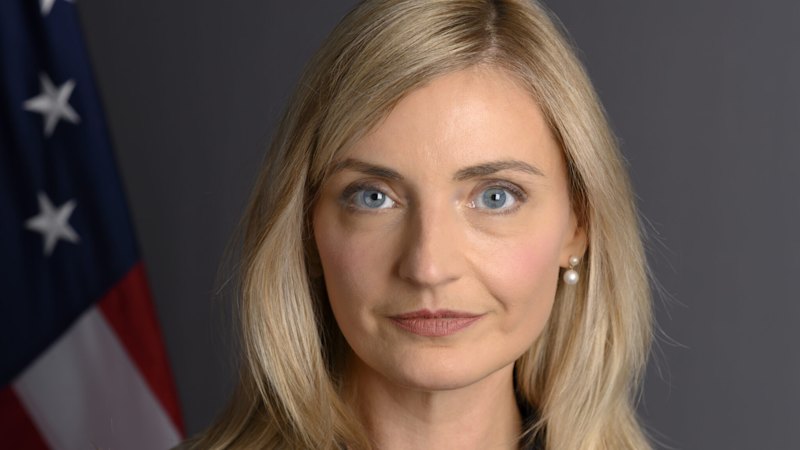
Sarah Rogers, the Under Secretary of State for Public Diplomacy, responded to an online post by Australian activist Drew Pavlou. Pavlou had highlighted a contentious clause in the bill that exempts individuals quoting religious texts from prosecution. He argued that this provision could allow extremists to propagate hate under the guise of religious expression.
Concerns Over Religious Exemptions
Rogers, who reports to Secretary of State Marco Rubio, expressed her concerns on social media, emphasizing the potential for perverse outcomes. “A statute that imprisons you for calling to deport jihadist extremists – but provides safe harbor if you *are* a jihadist extremist – would be deeply perverse. Let’s hope this isn’t what Australia intends,” she wrote.
She further criticized the bill as possibly being a misguided attempt to avoid the pitfalls seen in Europe and the UK, where individuals have faced legal action for quoting religious texts or even praying silently. “The problem with ‘hate speech’ laws – one problem of many – is that they’re enforced by the kinds of people who coddle actual violent zealots, so long as they seem subaltern,” Rogers added.
Political Reactions and Implications
Prime Minister Anthony Albanese defended the proposed exemption, citing the Old Testament as an example of religious texts that could otherwise fall afoul of the new laws. He emphasized the government’s intent to avoid unintended consequences and announced that the legislation would be reviewed by a committee.
A spokesperson for Attorney-General Michelle Rowland reiterated the government’s objective to balance cracking down on hate speech with preserving freedom of speech and religion. “The government is now consulting broadly on the legislation, hearing from the public and working across the parliament to get this right,” the spokesperson stated.
The legislation is part of a broader initiative to combat antisemitism and other forms of hatred, following a terrorist attack on December 14 at Bondi Beach that targeted Jewish individuals.
Domestic Criticism and Expert Opinions
Some Australian political figures, including Western Australian MP Ben Small, have echoed Rogers’ concerns. Small argued that the exemption could permit Islamist preachers to incite hatred while stifling secular criticism of radical Islam. “The test for this legislation is whether or not it makes it harder for radical Islam to spread in Australia. This legislation fails that test by making it more difficult for secular criticism,” he said.
Experts have weighed in on the potential ramifications of the bill. Legal scholars warn that the exemption could create a loophole for extremist rhetoric, while civil rights advocates argue that the bill must be carefully crafted to protect free speech without enabling hate speech.
Looking Ahead
The debate over Australia’s proposed hate speech laws highlights the complex interplay between safeguarding free expression and addressing the spread of extremist ideologies. As the government continues to consult with stakeholders and refine the legislation, the international community will be watching closely to see how Australia navigates these challenges.
The outcome of this legislative process could set a precedent for other countries grappling with similar issues, underscoring the global significance of the debate over free speech and religious freedom.