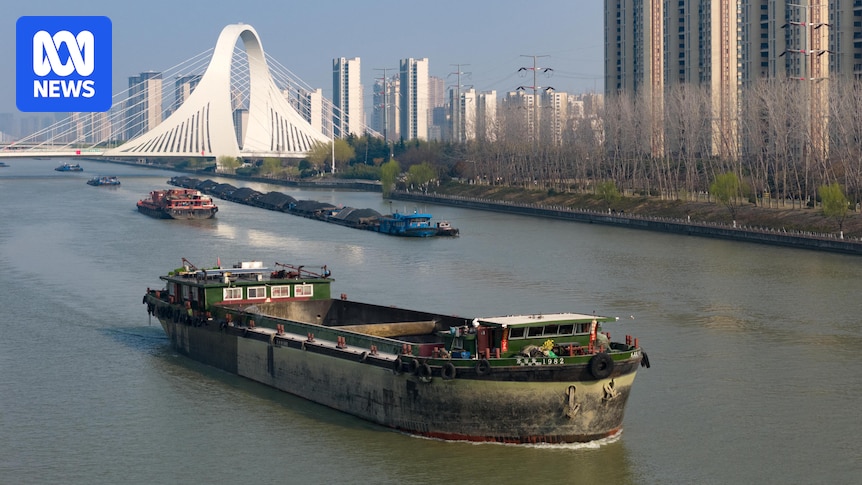




The United States has announced plans to deploy its Navy to escort commercial shipping vessels through the Strait of Hormuz, a strategic chokepoint in global oil transportation, amid escalating tensions in the Middle East. President Donald Trump declared that the US would provide insurance and financial guarantees for maritime trade in the region, following Iran’s closure of the strait and threats to attack passing ships.
This development comes as the region faces heightened military activity. The Israel Defence Forces (IDF) reported the destruction of approximately 300 missile launchers in Iran and several targets in Lebanon. According to the IDF, hundreds of fighter jets and aircraft have been involved in simultaneous strikes, deploying 4,000 munitions in Iran since the operation began over the weekend.
Escalating Military Actions and Humanitarian Impact
Meanwhile, the humanitarian toll of the conflict is becoming increasingly severe. In Minab, southern Iran, thousands of mourners gathered for the mass funeral of victims from an airstrike on a girls’ elementary school. The attack, part of the US-Israeli bombing campaign, resulted in the deaths of up to 168 people, including dozens of children.
In Lebanon, the World Health Organisation reported the deaths of three paramedics and the wounding of six others in the Tyre district during recovery operations after an airstrike. The WHO emphasized that health workers “must never be targeted.”
International Reactions and Strategic Moves
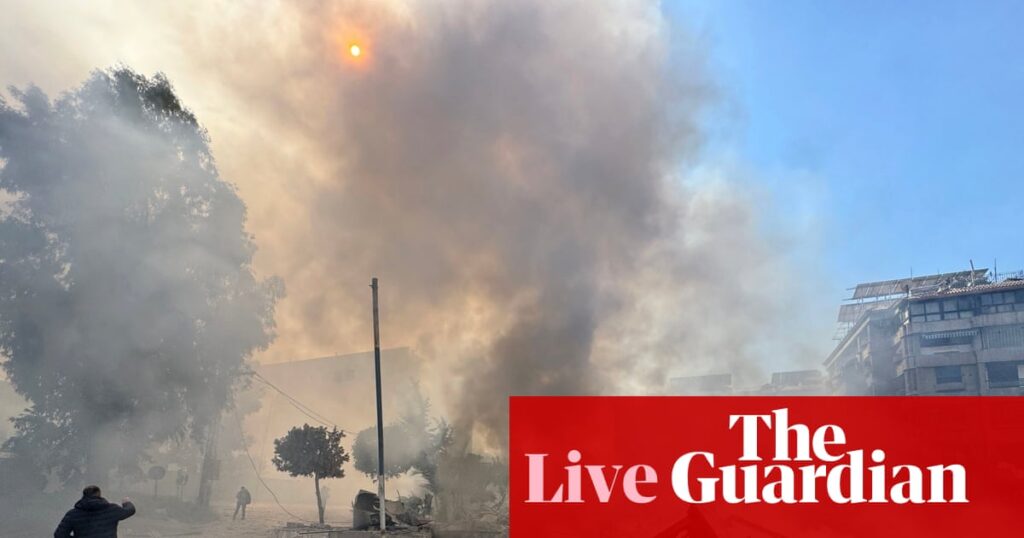
In response to these developments, US Secretary of State Marco Rubio provided details on a drone strike near the US consulate in Dubai, which resulted in a fire but no casualties. Rubio condemned the attacks on US diplomatic facilities, attributing them to a “terroristic regime.”
The UAE has reported over 1,000 attacks from Iran since the onset of US-Israeli strikes. Despite this, the UAE maintains that it has not allowed its territory to be used in any offensive against Iran and has not altered its defensive posture.
France’s Defensive Posture
French President Emmanuel Macron announced the deployment of the aircraft carrier Charles de Gaulle to the Mediterranean, alongside other defense assets, as part of France’s commitment to its regional allies. Macron stressed that France’s actions are “strictly defensive” and reaffirmed France’s solidarity with Qatar, Kuwait, and the UAE.
“France must support its allies in the region and show it was a partner to be trusted,” Macron stated, highlighting the deployment of French anti-air systems and air radars.
Geopolitical Implications and Economic Concerns
The closure of the Strait of Hormuz, through which approximately 15% of the world’s oil and 20% of its liquefied natural gas pass, poses significant risks to the global economy. Oil prices have surged in response to the potential for sustained disruption in shipping traffic.
Israel’s UN envoy, Danny Danon, urged the Lebanese government to restrain Hezbollah to prevent further escalation. He noted that despite UN Security Council resolutions, Hezbollah has not disarmed or withdrawn from southern Lebanon.
As the situation continues to evolve, the international community remains on high alert. The US’s decision to escort tankers through the Strait of Hormuz marks a significant escalation in its military involvement in the region, with potential implications for global trade and security.
Observers will be closely monitoring the situation for further developments, particularly any changes in Iran’s military posture or additional international responses aimed at de-escalating tensions.