
WASHINGTON — United States lawmakers who reviewed classified footage of military strikes on a Venezuelan vessel suspected of drug trafficking have emerged with starkly different interpretations of the events. However, they concur that War Secretary Pete Hegseth did not issue an order to “kill everybody” on board.
The briefing, conducted by Admiral Frank “Mitch” Bradley and Chairman of the Joint Chiefs of Staff Dan Caine, took place on Thursday (Friday AEDT). It addressed growing concerns in Congress and among legal experts about the potential violation of international law by the United States military.
Conflicting Interpretations of Disturbing Footage
The controversy stems from a report by The Washington Post alleging that Hegseth instructed Bradley to “kill everybody” on the vessel—a claim he has strongly denied. Both Democratic and Republican lawmakers have accepted the evidence presented by Caine and Bradley that no such order was given, yet they remain divided on the implications of the footage.
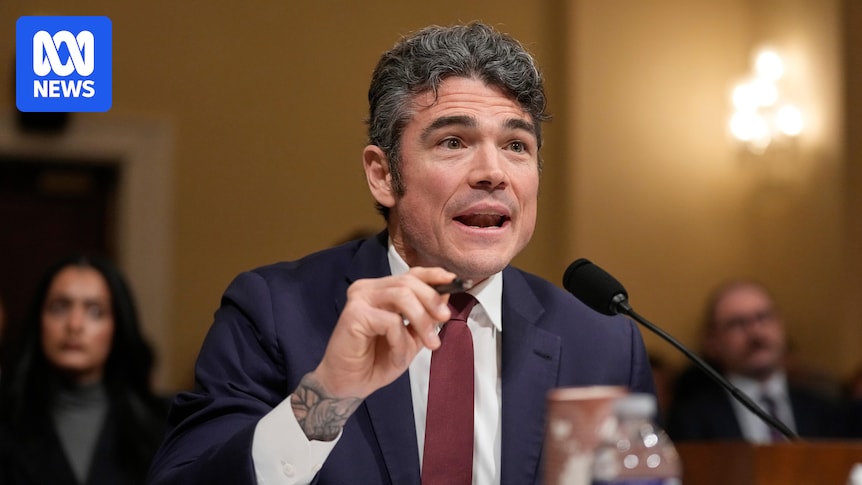
Democratic Congressman Jim Himes described the videos as showing two survivors in “clear distress” who posed no further threat. “What I saw in that room was one of the most troubling things I’ve seen in my time in public service,” Himes told reporters. “Any American who sees the video that I saw will see the United States military attacking shipwrecked sailors—bad guys, but attacking shipwrecked sailors.”
“You have two individuals in clear distress, without any means of locomotion, with a destroyed vessel, who were killed by the United States.” — Jim Himes
Meanwhile, Republican Senator Tom Cotton from Arkansas offered a contrasting view. He argued that the footage depicted the two men attempting to right the boat and continue their mission. “I saw two survivors trying to flip a boat loaded with drugs bound for the United States back over so they could stay in the fight,” Cotton stated. “I didn’t see anything disturbing about it.”
Legal and Ethical Implications
The debate over the footage has sparked broader discussions about the ethical and legal standards of U.S. military operations. According to international laws of armed conflict, attacking shipwrecked sailors contravenes established military policies. Cotton confirmed that there were four strikes against the boat, resulting in 11 fatalities, and defended the actions as lawful and necessary.
Democratic Senator Mark Warner of Virginia echoed Himes’ concerns, calling the video “very disturbing” and advocating for Congress to review it. Warner also called for the legal rationale behind the strikes to be made public, highlighting America’s complex history of interventions in the region.
“We all know that our country’s record of interventions in the Caribbean, Central America, and South America over the past 100-plus years hasn’t been a perfect record.” — Mark Warner
Ongoing Military Operations and Political Repercussions
On Friday (AEDT), the U.S. Southern Command announced another strike on a small boat in the eastern Pacific Ocean, directed by Hegseth after a nearly three-week pause. This marks the 22nd strike in a campaign targeting vessels suspected of drug trafficking, resulting in at least 87 casualties.
In a video accompanying the announcement, a small boat is seen moving across the water before being engulfed by an explosion. The footage then shows the boat in flames, emphasizing the intensity of the military’s actions.
Following Senator Cotton’s comments, Pentagon spokesman Sean Parnell demanded that The Washington Post retract its story, calling it an “insult to the American People & to everyone who wears the uniform of our country.” The Post has stood by its reporting, citing its commitment to accurate and rigorous journalism.
“The Washington Post is proud of its accurate, rigorous journalism.” — The Washington Post spokesperson
Further Investigations and Future Implications
The developments coincide with the release of a report by the Department of Defense’s inspector general, which found that Hegseth violated department rules by sharing sensitive operational information via a Signal group chat. This revelation adds another layer of complexity to the ongoing scrutiny of Hegseth’s conduct.
As the debate continues, the implications for U.S. military policy and international relations remain uncertain. Lawmakers are calling for greater transparency and accountability, while the military faces increased pressure to justify its actions in the region.
The situation underscores the challenges of balancing national security interests with adherence to international law, a dilemma that has long shaped U.S. foreign policy.