



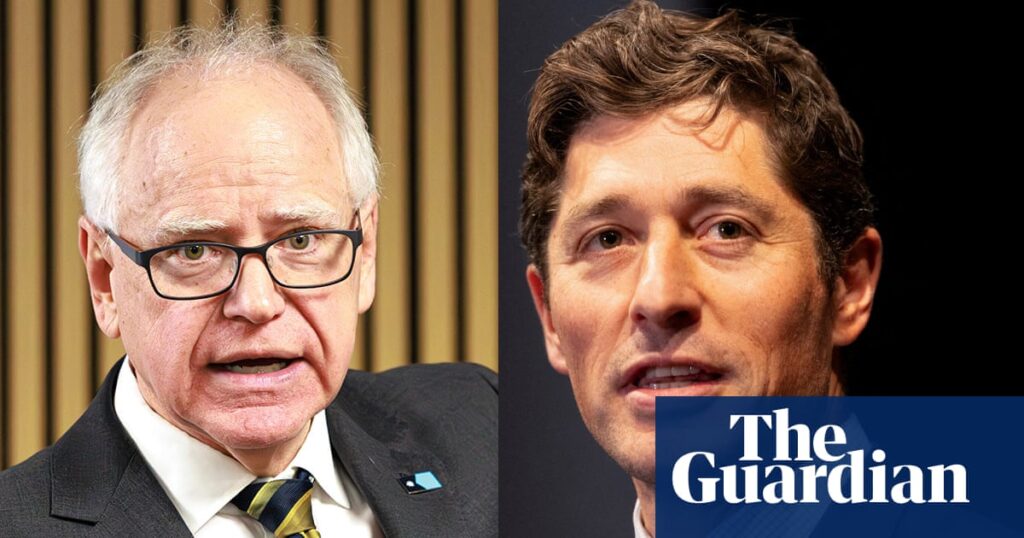
The US Department of Justice is investigating political leaders in Minnesota for allegedly conspiring to obstruct the Trump administration’s controversial immigration crackdown, according to multiple reports. The investigation, initially reported by CBS News, represents an extraordinary use of federal power to challenge two of the crackdown’s most vocal Democratic critics: Governor Tim Walz and Minneapolis Mayor Jacob Frey.
Governor Walz, who was also the Democratic nominee for vice-president in 2024, responded to the news of the investigation via social media. “Two days ago it was Elissa Slotkin. Last week it was Jerome Powell. Before that, Mark Kelly. Weaponizing the justice system against your opponents is an authoritarian tactic,” Walz wrote. “The only person not being investigated for the shooting of Renee Good is the federal agent who shot her.”
Mayor Frey echoed similar sentiments in a statement to the Minnesota Star Tribune, asserting, “I will not be intimidated. This is an obvious attempt to intimidate me for standing up for Minneapolis, our local law enforcement, and our residents against the chaos and danger this administration has brought to our streets.” He added, “My focus will remain where it’s always been: keeping our city safe. America depends on leaders that use integrity and the rule of law as the guideposts for governance. Neither our city nor our country will succumb to this fear. We stand rock solid.”
Federal Subpoenas and Political Tensions
The Washington Post reports that the Justice Department has already issued subpoenas for both Walz and Frey, intending to serve them imminently. This development follows the shooting of Renee Good by ICE officer Jonathan Ross, which ignited nationwide protests and turned Minneapolis into a flashpoint of resistance against the Trump administration’s increasingly severe immigration policies.
Homeland Security has deployed approximately 3,000 immigration enforcement officers to Minnesota, a force five times the size of the Minneapolis police department. This move has intensified tensions between local and federal authorities, particularly over the investigation into Ross’s actions. A New York Times analysis of witness videos suggests that Ross sidestepped the vehicle driven by Good, who did not appear to pose a threat when he fired his weapon.
Federal Defense and Local Resistance
Despite the controversy, federal authorities, including President Donald Trump and Vice-President JD Vance, have staunchly defended Ross’s actions. The FBI has taken the unusual step of refusing to cooperate with state investigators, who require access to evidence to determine whether criminal charges against Ross are warranted.
Deputy Attorney General Todd Blanche alluded to the investigation in a statement on X earlier this week, stating, “Minnesota insurrection is a direct result of a FAILED governor and a TERRIBLE mayor encouraging violence against law enforcement. It’s disgusting. Walz and Frey – I’m focused on stopping YOU from your terrorism by whatever means necessary. This is not a threat. It’s a promise.”
Historical Context and Implications
This investigation is part of a broader pattern of the Trump administration directing the Justice Department to pursue criminal investigations against political opponents since retaking office. The use of federal power in this manner raises significant concerns about the politicization of justice and the potential erosion of democratic norms.
Experts warn that such actions could set a dangerous precedent, undermining the independence of the judiciary and eroding public trust in law enforcement institutions. The implications for Minnesota’s political landscape are profound, as the state becomes a battleground for broader national debates over immigration policy and federal authority.
As the situation develops, the nation watches closely to see how these legal and political battles unfold, potentially shaping the future of governance and civil liberties in the United States.