




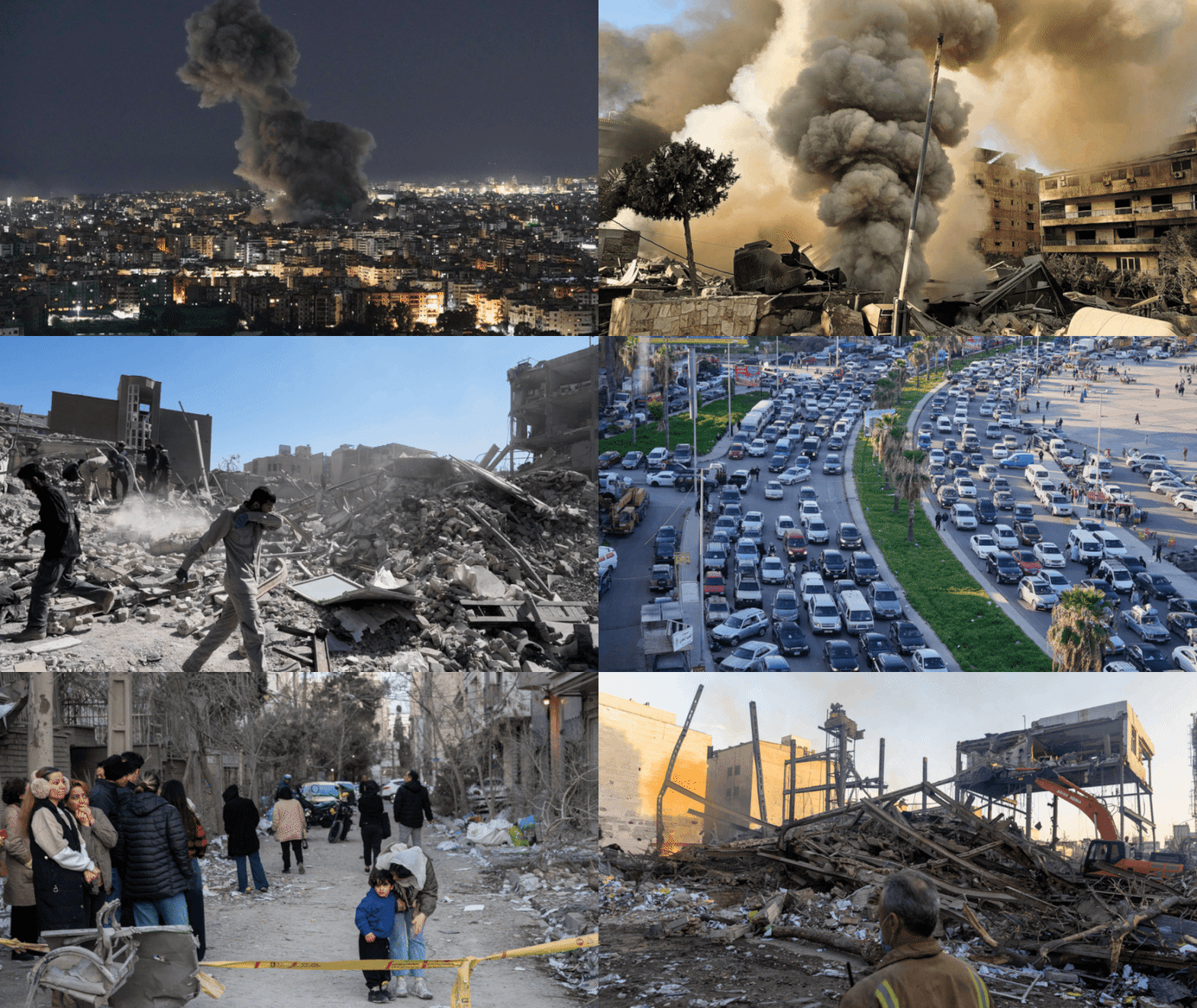
The ongoing conflict between the US-Israel coalition and Iran has intensified, spreading its impact beyond the Middle East. The United States has temporarily lifted certain sanctions on Russian oil to stabilize the global market and mitigate the economic ripple effects of the war. This decision, announced by US Treasury Secretary Scott Bessent, aims to alleviate the price spikes caused by the conflict.
In a significant development, Australian Prime Minister Anthony Albanese confirmed that three Australians were aboard a US nuclear-powered submarine involved in sinking an Iranian frigate near Sri Lanka. Meanwhile, the Israeli military has ordered the evacuation of Beirut’s southern suburbs, home to nearly half a million residents, as it escalates attacks on Hezbollah.
US Lifts Sanctions on Russian Oil
The US Treasury’s decision to temporarily lift sanctions on Russian oil is a strategic move to ensure the continuous flow of oil into the global market. This comes as oil prices have surged due to the conflict in Iran. US Treasury Secretary Scott Bessent emphasized that the waiver is a short-term measure, allowing Indian refiners to purchase Russian oil stranded at sea, thus preventing a significant financial benefit to Russia.
“This deliberately short-term measure will not provide significant financial benefit to the Russian government as it only authorizes transactions involving oil already stranded at sea,” Bessent stated.
According to Bloomberg, approximately 9.5 million barrels of Russian oil are currently in Asian waters, with Indian officials considering these cargoes as a contingency measure to stabilize their supply.
Australian Nationals on US Submarine
Prime Minister Anthony Albanese has confirmed the presence of three Australians on a US submarine that sank an Iranian frigate. This revelation comes amid heightened tensions and increased military activities in the region. Albanese assured that no Australian personnel participated in offensive actions against Iran.
In a statement, Albanese highlighted the importance of Australia’s strategic alliances and the country’s commitment to global peace and security.
Beirut Evacuation and Humanitarian Concerns
The Israeli military’s evacuation order for Beirut’s southern suburbs has raised significant humanitarian concerns. The densely populated area, home to between 400,000 and 500,000 people, is experiencing a mass exodus as residents flee the escalating conflict.
Ahmad Alhendawi, Save the Children’s regional director, warned, “Forced displacement strips children of almost everything that keeps them safe: shelter, education, community, and routine.”
Save the Children has urged world leaders to take immediate diplomatic action to prevent further escalation and protect the civilian population, particularly children, from the devastating impacts of war.
Regional and Global Repercussions
The conflict’s repercussions are being felt globally, with the UAE intercepting six out of seven ballistic missiles fired towards its territory. The UAE Foreign Ministry reported that since the conflict’s outbreak, it has detected a significant number of ballistic missiles, drones, and cruise missiles targeting the country.
Meanwhile, former US President Donald Trump has expressed support for Kurdish militias launching an offensive against Iranian security forces, following consultations with the US on potential strategies.
In Australia, Prime Minister Albanese reassured citizens of the country’s strong economic position despite potential impacts from the conflict. He noted that Australia’s fuel reserves are at their highest levels in 15 years, and the economy is experiencing its fastest growth rate in three years.
“We are not immune from the effects of the war,” Albanese stated, acknowledging the potential inflationary impact similar to that of Russia’s war against Ukraine.
International Reactions and Future Implications
As the conflict continues, international reactions vary. Demonstrators in North Sydney have expressed mixed sentiments, with some supporting the US-Israel strikes and others calling for an end to the war. The situation remains volatile, with diplomatic efforts ongoing to address the crisis.
Commercial flights remain the primary means for Australians stranded in the Middle East to return home. The Australian government is monitoring the situation closely, with contingencies in place for military evacuations if necessary.
The global community watches closely as the conflict unfolds, with potential implications for international relations, economic stability, and humanitarian efforts. The need for diplomatic resolutions and strategic alliances is more critical than ever as nations navigate the complexities of this escalating conflict.