


The United States has announced the commencement of the second phase of the Gaza ceasefire, which includes establishing a committee of Palestinian technocrats tasked with managing the day-to-day operations of the territory during a transitional period. This announcement was made by Donald Trump’s special envoy, Steve Witkoff, via social media, yet it lacked specific details or names of potential members for the proposed “national committee for the administration of Gaza.”
The committee’s operations are contingent upon a mandate from a “peace board” chaired by Trump, which has not yet been formed. According to Witkoff, this phase aims to initiate the “full demilitarization and reconstruction of Gaza,” focusing primarily on disarming unauthorized personnel.
Background of the Ceasefire
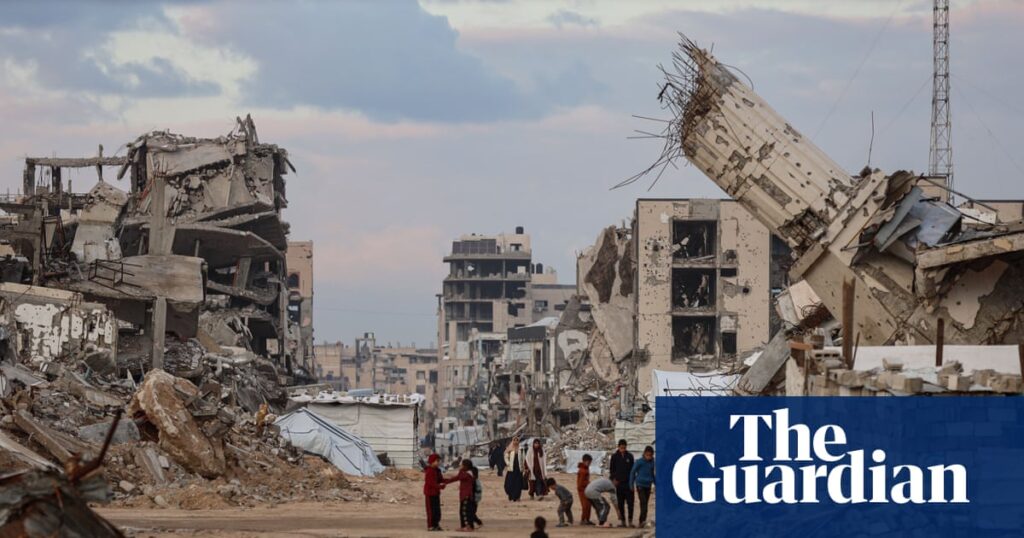
The first phase of the ceasefire plan began on October 10, involving the exchange of Israeli hostages held by Hamas and its allies for Palestinian detainees held by Israel. During this phase, Israeli forces withdrew to a designated truce line, maintaining control over most of the territory. Although the Israeli bombardment of Gaza has decreased, it has not completely ceased, resulting in approximately 450 Palestinian casualties since the ceasefire’s inception. Notably, no agreement has been reached regarding the disarmament of Hamas.
Two groups representing Israeli former hostages and their families had previously urged the US not to progress to the second phase until the remains of the last unaccounted-for hostage, Ran Gvili, were returned by Hamas. Despite efforts, Hamas has stated its inability to locate Gvili’s body. Witkoff emphasized,
“The US expects Hamas to comply fully with its obligations, including the immediate return of the final deceased hostage. Failure to do so will bring serious consequences.”
Formation of the Palestinian Interim Committee
While Witkoff did not disclose specifics about the Palestinian interim committee, Egyptian Foreign Minister Badr Abdelatty announced shortly before that an agreement had been reached regarding its 15 members. Abdelatty indicated that the committee would be “deployed to the Gaza Strip to manage daily life and essential services.” These members are expected to be technocrats rather than politicians, with some believed to have affiliations with the Fatah party, which is dominant in the Palestinian Authority.
Among the candidates speculated to lead the committee are Ali Shaath, a former deputy minister of planning in the Palestinian Authority, and Majed Abu Ramadan, the PA health minister. Diplomatic sources in the region suggest that Nickolay Mladenov, a seasoned Bulgarian and UN diplomat, will oversee the committee’s work. Mladenov, who served as the UN envoy for the Middle East peace process from early 2015 to the end of 2020, is well-respected across the region. He is expected to report to Trump’s peace board, which will include a group of world leaders, with its membership anticipated to be announced shortly.
Regional and International Implications
Discussions in Cairo regarding the second phase have also addressed the further withdrawal of Israeli forces from Gaza, the reopening of the Rafah crossing between Egypt and Gaza, and the entry of aid stockpiled on the Egyptian side of the border. These talks aim to increase the flow of goods and aid into Gaza, which is critical for the region’s stability and humanitarian relief.
This development follows a complex history of conflict and ceasefire attempts in the region. The move represents a significant diplomatic effort to stabilize Gaza and improve living conditions for its residents. However, the success of this initiative heavily depends on the cooperation of multiple stakeholders, including Hamas, the Palestinian Authority, and international actors.
As the situation unfolds, the global community will be closely monitoring the implementation of these plans and the reactions from key parties involved. The next steps will likely involve intensive diplomatic negotiations and on-the-ground assessments to ensure the ceasefire’s sustainability and the effective administration of Gaza during this transitional period.