


The recent crisis in Venezuela, marked by Washington’s capture of the country’s president in Caracas, underscores a significant shift in global oil dynamics. While the immediate impact on oil prices and supply may appear marginal, the real consequence lies in the control exerted over Venezuelan oil through U.S. sanctions, export licensing, and diplomatic authority. For major Asian importers, particularly China and India, this shift in influence has profound implications.
Venezuela’s oil sector, once a major player in global energy markets, has been in decline for years. Production has plummeted from its historical highs of multiple millions of barrels per day to approximately one million barrels per day, according to recent estimates. Despite this decline, oil prices have remained relatively stable, indicating that the market can absorb these changes. However, energy strategy is not solely about current prices; it is about ensuring access during times of stress.
The New Framework of Control
Venezuelan oil now exists within a framework where the United States exercises decisive gatekeeping power. Through embargoes, licensing regimes, and control over shipping and financial channels, Washington can dictate who can purchase Venezuelan crude, under what conditions, and with what continuity. This represents influence without direct administration, but it is significant influence nonetheless.
For Asian policymakers, this change alters the strategic value of Venezuelan oil. Historically, Venezuela offered Asian countries geographic diversification away from the Middle East, crude grades compatible with complex refineries, and supply relationships that operated largely outside U.S.-centric energy governance. This independence was crucial for Asian buyers, who were willing to tolerate high political risk to expand their supply options in adverse scenarios.
Impact on China and India
China’s exposure to Venezuelan oil highlights the consequences of this shift. Over the past two decades, Chinese policy banks and state-owned energy companies have invested tens of billions of dollars in Venezuela through oil-linked lending, upstream ventures, and infrastructure projects. These arrangements were based on the assumption of continuity, even during political turbulence.
However, production shortfalls, governance failures, and repeated renegotiations eroded this logic long before the current crisis. The added layer of U.S. influence introduces new uncertainty. Contractual rights are now subject to a regulatory structure beyond Beijing’s control, making access contingent on factors unrelated to operational performance or pricing. This transforms Venezuelan exposure into a risk to be managed rather than an opportunity to be expanded.
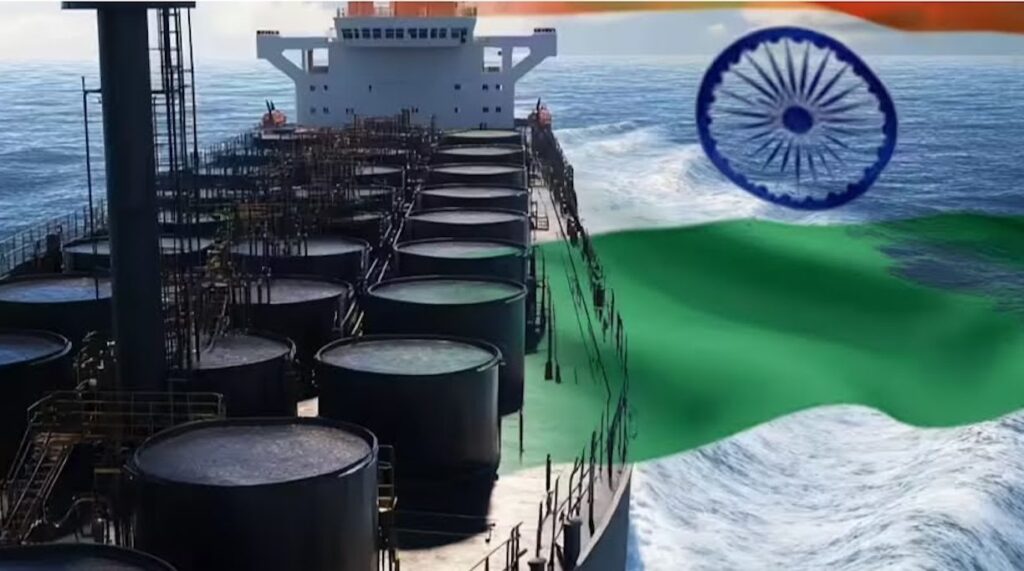
India’s experience, while different in form, leads to a similar outcome. Indian refiners have historically sourced Venezuelan heavy crude when economically viable and compliant with regulations. At its peak, Venezuela was a significant supplier to India’s complex refining system. However, sanctions risk and policy uncertainty have sharply reduced these flows. Recent U.S. measures have reinforced this trend, making Venezuelan supply less flexible and less competitive compared to alternatives that do not require navigating an external power’s influence.
Broader Implications for Asian Energy Strategy
The broader implication concerns diversification itself. Asian energy strategy has long relied on spreading supply across regions and political systems to reduce vulnerability. Venezuela once supported this goal by operating outside the dominant alliances shaping global oil flows. With this independence diminished, the diversification benefit is lost. Venezuelan oil no longer reduces concentration risk; instead, it increases exposure to a single policy center.
This distinction may not be immediately visible in market data, as Venezuela’s output is too small to decisively impact global balances. However, energy policy is shaped by tail risks rather than averages. Planners must consider who controls access during diplomatic breakdowns, sanctions escalation, or conflict.
“A US-influenced Venezuelan oil sector may, over time, operate with clearer rules, stronger compliance, and improved operational discipline, which could raise efficiency.”
However, this also removes the informal flexibility that once underpinned Asian engagement, including bespoke financing arrangements and politically negotiated supply terms. For Asian state capital and commercial investors alike, the return profile becomes less distinctive while constraints multiply.
Looking Ahead: Strategic Adjustments
These observations extend beyond Venezuela. Asian governments and firms are closely monitoring how quickly control over strategic assets can shift, how contracts are treated during political transitions, and how decisively foreign policy overrides commercial logic. These lessons will shape future investment decisions across Latin America, Africa, and other resource-rich regions. Resource abundance without institutional durability now carries a higher discount.
The irony is that Venezuela still holds some of the world’s largest proven oil reserves, and Asia remains the center of global demand growth. In purely economic terms, the relationship should be central. Strategically, however, it has become peripheral.
Asian responses will likely be incremental rather than declarative. China and India are unlikely to announce abrupt policy changes. Instead, portfolio weightings will continue to adjust quietly. Capital will flow toward suppliers offering predictability, institutional depth, and insulation from great-power confrontation. Exposure to politically mediated supply will continue to decline.
Nigel Green, CEO and founder of the deVere Group, notes that the strategic landscape is shifting, and Asian countries are recalibrating their energy strategies accordingly. As the global energy market evolves, the ability to adapt to these changes will be crucial for maintaining energy security and economic stability.