


In a complex geopolitical landscape, the United States’ attempts to exert financial control over Venezuela are being met with significant challenges from various armed groups entrenched in the country’s socio-political fabric. These groups, ranging from state-sanctioned military forces to guerilla and criminal organizations, hold substantial influence and power, complicating external efforts to stabilize the nation.
The Role of Venezuela’s National Bolivarian Armed Forces
The National Bolivarian Armed Forces (FANB) play a pivotal role in Venezuela’s power dynamics, remaining staunchly loyal to President Nicolás Maduro’s regime. Named in honor of Simón Bolívar, the revered liberator of South America, the FANB comprises approximately 123,000 active personnel, supported by about 8,000 reservists, according to the International Institute for Strategic Studies (IISS).
Despite the country’s prolonged economic crisis, the FANB remains a formidable force. As noted by Rebecca Hanson and Veronica Zubillaga in The Conversation, “Venezuela’s armed forces remain a formidable actor.” The military’s influence extends beyond traditional defense roles, deeply embedded in both political and economic spheres, a legacy of former President Hugo Chávez’s “civic-military” model.
Under the leadership of Defence Minister Vladimir Padrino López, the FANB has been instrumental in suppressing anti-government protests, as documented by Human Rights Watch and UN investigators. General Padrino López has publicly condemned US actions as “imperialist aggression,” reaffirming the military’s loyalty to interim President Delcy Rodríguez.
Bolivarian Militia: A Civilian Force
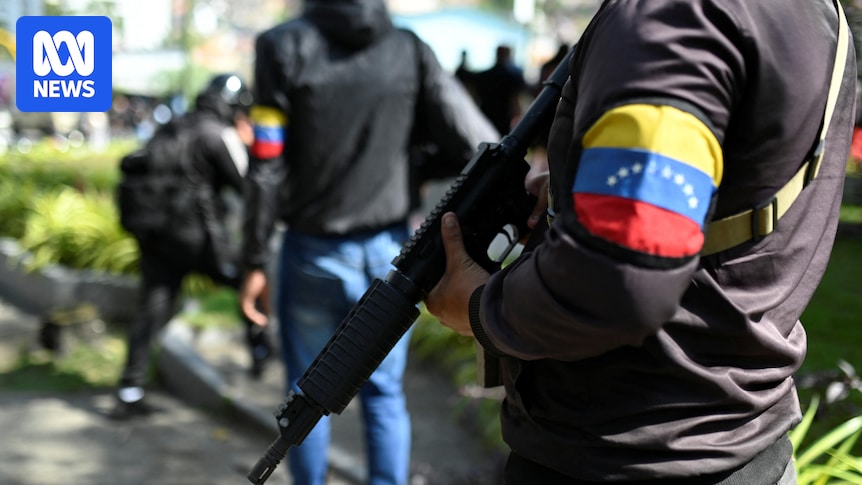
The Bolivarian Militia, the fifth pillar of the FANB, integrates civilian volunteers into military operations. With a membership ranging between 200,000 and 300,000, the militia operates across neighborhoods and state institutions, originally established by Chávez in 2005 to defend the “revolution.”
However, the militia’s capabilities are largely symbolic, with limited training and poor equipment, as highlighted by the Wilson Center. The UN High Commissioner for Human Rights, Volker Türk, has raised concerns over the increasing militarization of public life in Venezuela, warning of coerced enlistment and state-sponsored surveillance practices that foster fear and mistrust.
The Bolivarian National Guard’s Controversial Role
The Bolivarian National Guard (GNB) is tasked with internal security functions, including public order and border control. With approximately 23,000 active personnel, the GNB has been implicated in a “decade-long pattern of killings, arbitrary detentions, torture, and sexual violence,” according to a UN fact-finding mission.
These actions have fueled unrest, exemplified by the 2019 rebellion of 27 National Guard members who attempted to incite public uprising against Maduro. The GNB’s involvement in systematic repression underscores the challenges faced by external forces seeking to influence Venezuela’s governance.
Policing and Intelligence: Instruments of Control
Venezuela’s policing is divided among 147 groups, with the Bolivarian National Police (PNB) being the largest. Known for its heavy-handed tactics against protesters, the PNB is part of a broader network of law enforcement bodies accused of systematic state violence and corruption.
The Bolivarian National Intelligence Service (SEBIN) and the CICPC, a criminal investigatory body, further extend the government’s reach, often employing severe measures against political opponents. A 2022 UN report detailed instances of torture and extortion within SEBIN’s facilities, highlighting the oppressive environment under Maduro’s regime.
Guerilla and Criminal Groups: A Parallel Power Structure
The National Liberation Army (ELN), a Colombian rebel group, operates extensively in Venezuela, engaging in illegal mining and drug trafficking. With a presence in at least 40 Venezuelan municipalities, the ELN has established parallel authorities, complicating efforts to assert external control over the region.
Meanwhile, the Colectivos, pro-regime militia groups, serve as an additional layer of security for the government. Known for their violent suppression of dissent, these groups are deeply anti-imperialist and maintain close ties with key political figures, posing a significant threat to any perceived ideological betrayal.
Operating independently, smaller gangs and “megabandas” contribute to the country’s instability. These groups, focused on criminal activities such as extortion and drug trafficking, further entrench the challenges facing US efforts to influence Venezuela’s financial and political landscape.
The intricate web of state-sanctioned and non-state actors in Venezuela underscores the complexities of external intervention. As these groups continue to wield significant power, the path to financial control and stabilization remains fraught with obstacles.