




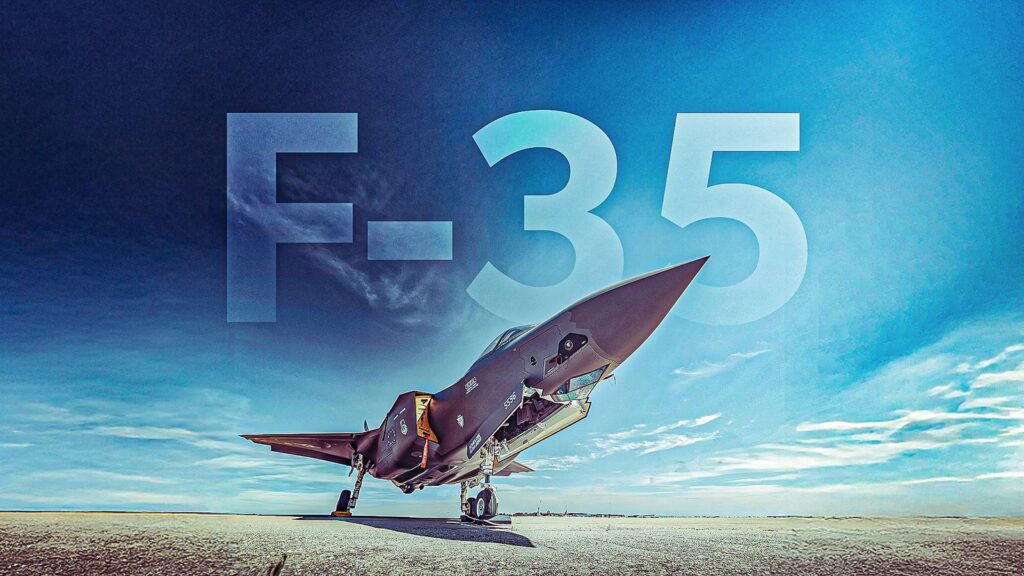
The United States, known for its advanced military technology, has been selective about which countries can purchase its F-35 fighter jets. While it might seem that the US would want to maximize profits by selling these jets widely, geopolitical and domestic considerations heavily influence these decisions. The US often restricts the export of its most advanced fighters to safeguard sensitive technology and maintain strategic advantages.
Despite the F-35’s reputation for high costs and debated dog-fighting capabilities, the fighter jet remains highly sought after. Most US allies with the necessary funding have placed orders, with notable exceptions such as France and Sweden, which prefer to develop their own fighter jets. However, several countries have been denied access to the F-35, and understanding the reasons behind these decisions reveals much about global military alliances and strategic priorities.
Why The US Restricts F-35 Fighter Jet Sales
The F-35 Lightning II, unlike its predecessor the F-22 Raptor, was developed through a broad coalition of international partners. It serves as a 5th generation fighter for the US Air Force, Marine Corps, Navy, and key allies. Despite this collaborative development, the US remains cautious about its sales.
Two primary reasons for restricting F-35 exports are the protection of sensitive technology and the preservation of Israel’s qualitative military edge. Countries like Thailand, the UAE, Turkey, and Taiwan have been barred from purchasing the F-35 due to concerns over Russian and Chinese systems, such as Russia’s S-400 SAMs and Huawei’s 5G networks, which could potentially compromise the jet’s security.
The US-Israel Strategic Partnership Act of 2014 mandates that the US maintain Israel’s military edge, influencing decisions on military exports to the Middle East.
Turkey’s Exclusion from the F-35 Program
Perhaps the most high-profile exclusion is Turkey, a NATO ally. Initially a partner in the F-35 program, Turkey contributed financially and produced components for the jets. However, after purchasing Russia’s S-400 missile systems, the US expelled Turkey from the program in 2019, fearing that the S-400 could gather intelligence on the F-35.
Turkey has since attempted to negotiate its return to the program and continues to express interest in purchasing 40 F-35As. Meanwhile, it is acquiring the latest F-16 Block 70 Fighting Falcons, negotiating for Eurofighter Typhoons, and developing its own stealth fighter, the TAI Kaan.
Middle Eastern Countries and the F-35
Countries such as the UAE, Qatar, Saudi Arabia, and Egypt have shown interest in the F-35. During the Trump Administration, tentative agreements were made with the UAE and Egypt, but these fell through due to concerns about Huawei’s 5G networks and the potential impact on Israel’s military edge.
Saudi Arabia and Qatar have also been denied access. In 2025, Saudi Arabia announced significant military purchases from the US, excluding the F-35. Morocco, however, may soon announce a deal to purchase the F-35, benefiting from its historical ties with the US.
In 2020, the US warned the UK, a key partner, that it would not deploy more F-35s if Huawei’s 5G was not banned. The UK complied, planning to remove Huawei technology by 2027.
Asia-Pacific and the F-35
In the Asia-Pacific region, the US has sold the F-35 to trusted allies like Japan, Australia, and South Korea. However, Thailand, despite being a major non-NATO ally, has been denied due to its ties with China. Similarly, Taiwan’s requests have been rebuffed to avoid antagonizing China, with the US opting to supply upgraded F-16s instead.
Indonesia, under US pressure, canceled plans to purchase Russian Su-35s and sought the F-35, but was denied due to concerns over its Chinese and Russian military ties.
Historical Context and Export Policies
The US has a history of restricting fighter jet exports. The F-22 Raptor’s export has been banned since 1998. The F-15 Eagle was similarly restricted, with sales limited to NATO and select allies. Past sales, such as the F-14s to Iran and F-16s to Venezuela, have led to regret due to changing political landscapes.
While the F-35 is available to many allies, stringent conditions apply. Partners cannot modify the jets or their software, with Israel being the sole exception for limited modifications. The US tightly controls who can operate the jets, ensuring strategic advantages are maintained.
Saudi Arabia, Qatar, the UAE, Turkey, Egypt, Taiwan, Indonesia, and Thailand have all been denied F-35 purchases, reflecting US concerns over their relations with China and Russia.
The US’s cautious approach to F-35 sales underscores its strategic priorities in maintaining technological superiority and safeguarding alliances. As global dynamics shift, future administrations may reevaluate these restrictions, potentially opening up sales to new partners.