


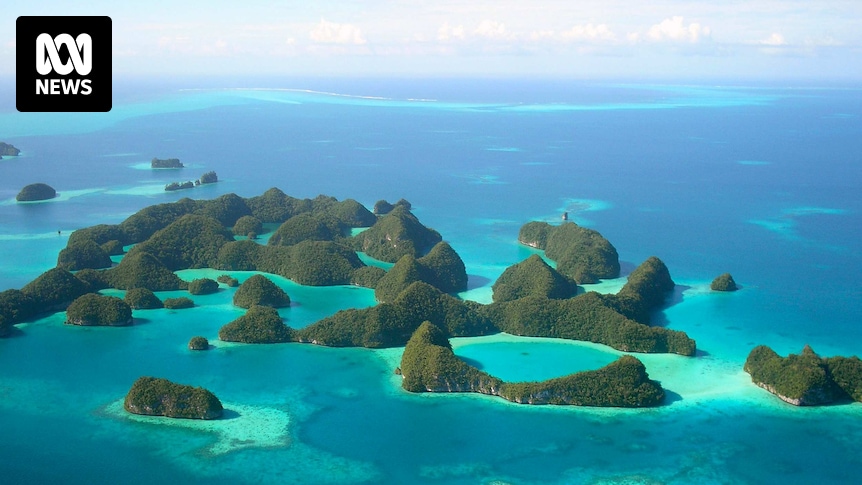
A senior politician from Palau has vehemently denied allegations made by the United States Department of State, accusing him of accepting bribes from Chinese entities. On Tuesday, the US State Department announced it was barring Hokkons Baules, the president of Palau’s senate, and his family from entering the United States, citing his “involvement in significant corruption on behalf of China-based actors.”
State Department spokesman Tommy Pigott stated that Mr. Baules had accepted bribes in exchange for “providing advocacy and support for government, business, and criminal interests from China.” Pigott emphasized that Baules’ actions constituted significant corruption, adversely affecting US interests in Palau. However, he did not provide further details on the allegations.
In response, Mr. Baules told the ABC, “The US should be ashamed of themselves. I am one of the strongest supporters of the United States government in Palau.” He acknowledged supporting Chinese businesses in Palau but denied any involvement with corrupt or illegal activities. Baules challenged the US to present evidence to the Palauan government if he had committed any crime.
Allegations Against a Former Marshall Islands Mayor
The US State Department’s statement also included accusations against Anderson Jibas, a former mayor in the Marshall Islands. Jibas is accused of misappropriating funds intended for communities affected by historic nuclear weapons testing. According to Pigott, Jibas “abused his public position by orchestrating and financially benefiting from multiple misappropriation schemes involving theft, misuse, and abuse of funds from the US-provided Bikini Resettlement Trust (BRT).”
“The lack of accountability for Jibas’ acts of corruption has eroded public trust in the government of the Marshall Islands, creating an opportunity for malign foreign influence from China and others,” Pigott stated.
The BRT was established to aid the Marshall Islands communities displaced by US nuclear testing in the mid-20th century. Jibas, who was head of the council managing the fund, has not yet commented on the allegations. Attempts to reach him for comment have been unsuccessful.
Geopolitical Context and US-Pacific Relations
The allegations against Baules and Jibas come amid growing geopolitical tensions in the Pacific region. Palau and the Marshall Islands, both strategically positioned US allies, have become focal points in the intensifying rivalry between Washington and Beijing. Both nations benefit from economic support through the Compacts of Free Association (COFA) with the US, which also provides for their defense and grants the US exclusive military access to parts of the Pacific.
China, eager to expand its influence, has been courting Pacific nations with promises of development and economic opportunities. Under Baules’ leadership, the Palau Senate has passed resolutions critical of US military activities, reflecting the nuanced dynamics of regional politics.
Palau and the Marshall Islands are among the few countries maintaining official diplomatic ties with Taiwan, a point of contention with China, which claims Taiwan as its territory.
Implications and Future Prospects
The US actions against Baules and Jibas underscore the broader strategic contest in the Pacific, where both the US and China are vying for influence. The allegations, if substantiated, could strain relations between the US and these Pacific nations, potentially impacting ongoing military and economic cooperation.
Palau has sought increased US patrols in its waters following incursions by Chinese vessels, highlighting the security concerns in the region. Additionally, the US military’s presence in the Marshall Islands, including critical facilities like the missile defense testing base at Kwajalein Atoll, underscores the strategic importance of these islands.
The embassies of Palau and the Marshall Islands in Washington have not yet responded to requests for comment. As the situation develops, the international community will be closely watching the outcomes of these allegations and their impact on Pacific geopolitics.