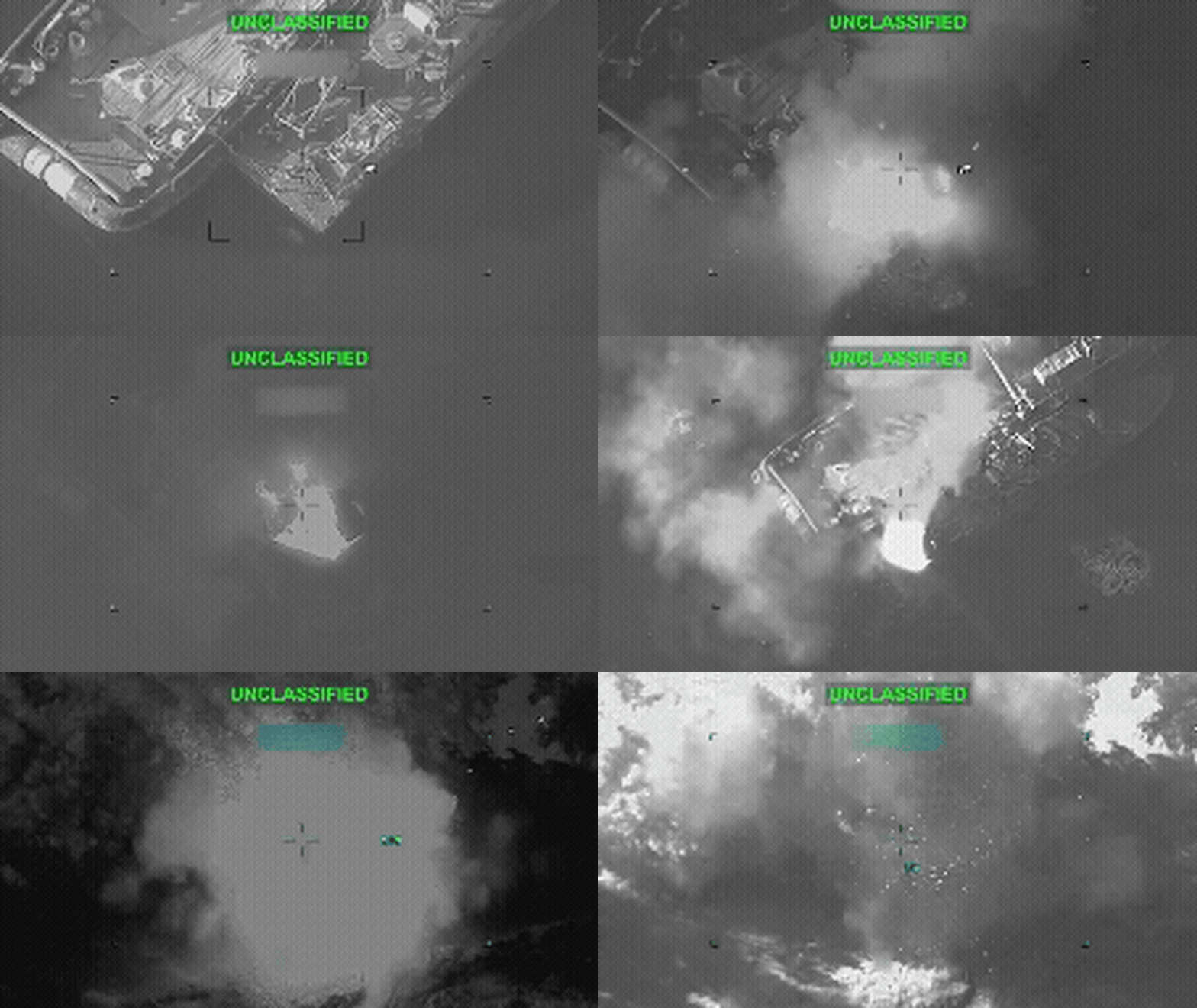



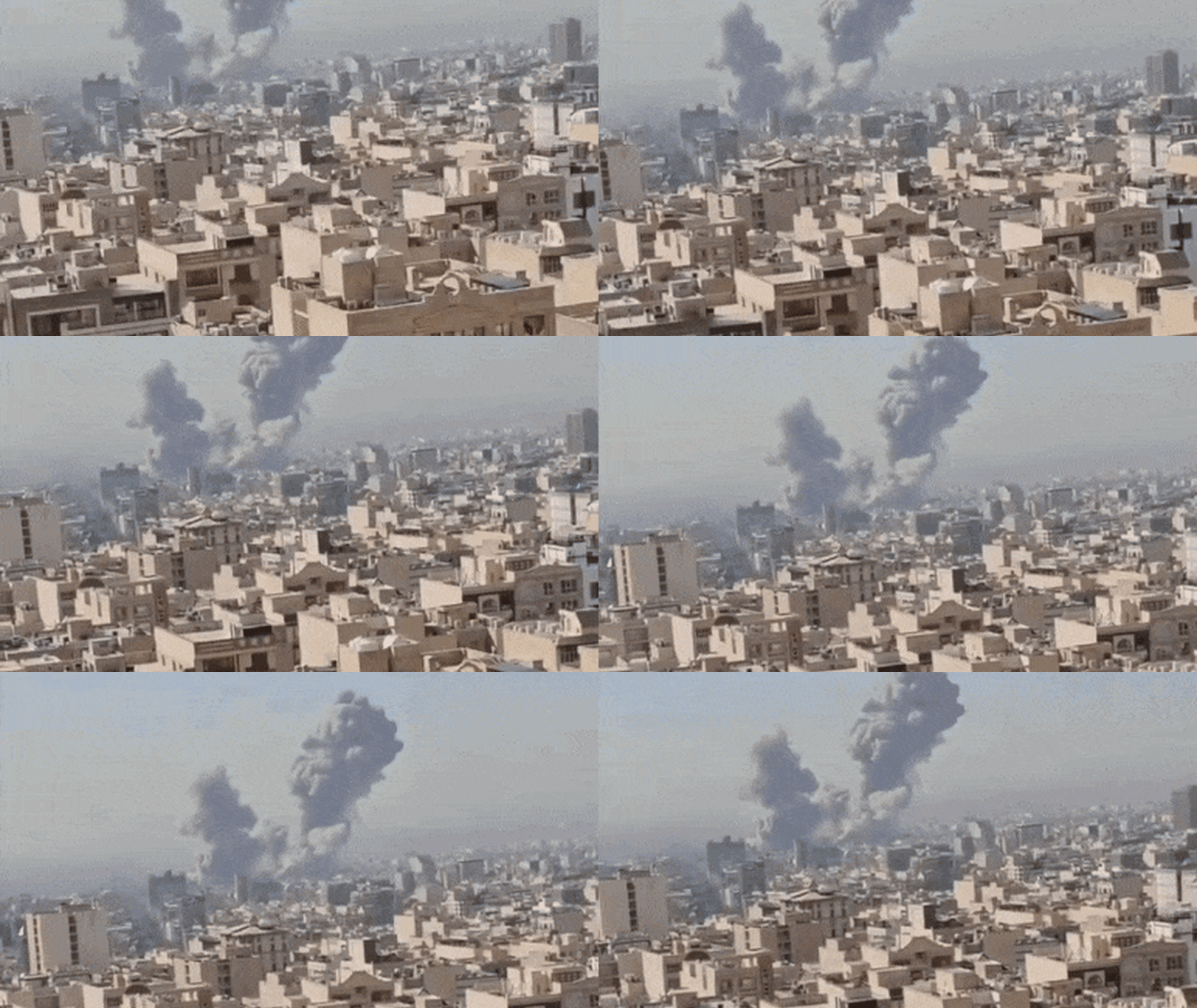
The United States and Israel have launched a series of coordinated strikes on Iran, targeting key cities such as Tehran, Isfahan, Qom, and Karaj. This military operation, named “Operation Epic Fury,” has rapidly escalated tensions in the Middle East. In response, Iran has launched retaliatory attacks on US interests across the region, marking a significant escalation in hostilities.
US President Donald Trump confirmed the initiation of “major combat operations” against Iran, citing unverified claims that Iran is advancing its nuclear program and could soon develop missiles capable of reaching the United States. The strikes in Tehran reportedly targeted areas near the offices of Supreme Leader Ayatollah Ali Khamenei and the Presidential Palace, though there is no current information about Khamenei’s status.
Retaliation and Regional Impact
Iran’s response was swift, with missile and drone attacks directed at Israel and several US military bases in the Middle East, including locations in Jordan, Kuwait, Bahrain, and the UAE. This has prompted countries across the region to close their airspaces to civilian flights, impacting major airlines such as Qantas, Qatar Airways, and Emirates.
In Israel, a national state of emergency has been declared. The government has moved hospital operations underground and instructed civilians to stay near shelters. The situation remains volatile, with further developments anticipated.
International Reactions and Diplomatic Efforts
The escalation has drawn reactions from global leaders. French President Emmanuel Macron has called for an urgent United Nations Security Council meeting, urging Iran to engage in negotiations to end its nuclear and ballistic programs. Macron’s statement reflects a broader European concern about the potential for a wider conflict.
Meanwhile, Indonesian President Prabowo Subianto has offered to mediate between the US and Iran, expressing regret over the failure of previous negotiations. Indonesia, the world’s most populous Muslim-majority country, has taken a proactive stance in seeking a peaceful resolution.
US Leadership and Military Strategy
President Trump is expected to address the nation soon, with reports indicating he will speak from his Mar-a-Lago resort in Florida. The operation against Iran was reportedly monitored from this location by Pentagon officials, highlighting a modern approach to military oversight.
Despite Trump’s assertions about Iran’s nuclear capabilities, sources indicate that the US Defense Intelligence Agency’s assessment suggests Iran is years away from developing a missile capable of reaching the US, even with external assistance.
Impact on Global Travel and Economy
The conflict has disrupted international travel, with several flights being rerouted or canceled. Virgin Australia, in partnership with Qatar Airways, has redirected flights bound for Doha back to Australia, advising passengers to monitor updates closely.
The closure of airspace and the uncertainty surrounding the conflict have broader implications for the global economy, particularly in the energy sector, as tensions in the Middle East often affect oil prices and supply chains.
Looking Forward: Potential Outcomes
The current situation underscores the fragility of peace in the Middle East and the potential for significant geopolitical shifts. The international community is watching closely, with many calling for restraint and dialogue to prevent a broader conflict.
As events unfold, the world awaits President Trump’s address and any subsequent diplomatic efforts that may arise. The stakes are high, and the consequences of this conflict could reshape alliances and power dynamics in the region for years to come.