
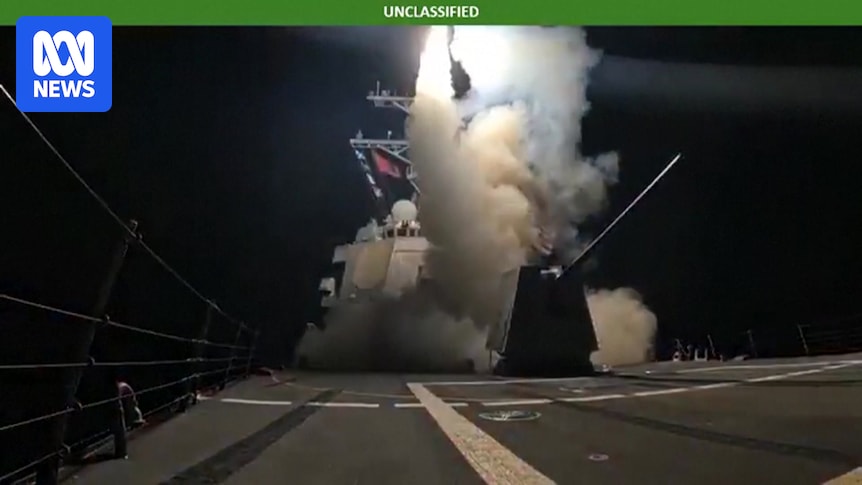
The United States launched a series of air strikes targeting Islamic State militants in north-west Nigeria on Thursday, marking a significant escalation in the ongoing conflict that has beleaguered the West African nation for years. The strikes were conducted at the request of the Nigerian government, as the country’s military has struggled to contain the insurgency.
US President Donald Trump announced the operation via his social media platform, Truth Social, describing the strikes as “powerful and deadly.” He emphasized that the militants had been “viciously killing, primarily, innocent Christians,” and hinted at the possibility of further military actions.
Details of the Recent Air Strikes
The air strikes were carried out in Nigeria’s north-western state of Sokoto, a region that has seen increasing militant activity. According to President Trump, the timing of the strikes was deliberately chosen to coincide with Christmas Day, framing it as a “Christmas present” in his interview with Politico.
Nigeria’s government stated that the strikes were part of a broader exchange of intelligence and strategic coordination between the two nations. This collaboration underscores the ongoing international efforts to combat terrorism in the region.
Future US Military Actions
President Trump has suggested that more US-led attacks could follow if the militants continue their activities. In his social media post, he warned, “Under my leadership, the Country will not allow Radical Islamic Terrorism to prosper.” US Secretary of Defense Pete Hegseth echoed this sentiment, indicating that the Department of War is prepared for further actions.
Hegseth stated, “The President was clear last month: the killing of innocent Christians in Nigeria (and elsewhere) must end.” This statement reflects the administration’s firm stance against the militant groups operating in Nigeria.
The Complex Security Situation in Nigeria
Nigeria faces a multifaceted security crisis, with several armed groups active across the country. These groups have varying motives, and both Muslim and Christian communities have been targeted. The lack of security in conflict hot spots has facilitated recruitment by these groups, exacerbating the situation.
Nigeria’s Minister of Defence, Christopher Musa, has emphasized that military action alone is insufficient to resolve the crisis. He argues that good governance is crucial, as the absence of state presence in remote communities allows non-state actors to gain influence.
Malik Samuel, a security researcher with Good Governance Africa, noted, “The absence of the state in remote communities is making it easy for non-state actors to come in and present themselves to the people as the best alternative government.”
Challenges Faced by Nigerian Military
Nigeria’s security forces are often overstretched and outgunned, facing multiple crises across different regions. Although the military conducts air strikes on militant hideouts, these operations are not always sustained, allowing militants to relocate easily.
The militants frequently use hostages, including schoolchildren, as shields, complicating military operations. This tactic underscores the challenges of conducting air strikes in densely populated areas.
Militant Groups in Nigeria
Several armed groups affiliated with the Islamic State operate in Nigeria, including the Islamic State West Africa Province and the lesser-known Lakurawa group. The latter has become more prominent in the north-west, particularly in Sokoto.
Security analysts suggest that the recent strikes likely targeted members of Lakurawa, which has been active in the region since 2017. Initially invited by local authorities to protect communities from bandits, Lakurawa has since become a source of oppression.
James Barnett, an Africa researcher with the Hudson Institute, remarked, “The militants overstayed their welcome, clashing with community leaders and enforcing a harsh interpretation of Sharia law.”
Lakurawa is known for its violent activities, including killings, kidnappings, and armed robberies, further destabilizing the region.
Religious Tensions and Fatalities
President Trump claims thousands of Christians have been killed by militant groups in Nigeria. However, experts caution against framing the conflict as solely religious. Both Muslims and Christians have suffered significant casualties.
Republican Senator Ted Cruz previously cited a report estimating that over 50,000 Christians and 34,000 Muslims have been killed since 2009. However, the accuracy of these figures is debated, as they are based on news reports that often do not specify victims’ religions.
Minister of Information Mohammed Idris emphasized that the portrayal of the crisis as a campaign against a single religious group is a “gross misrepresentation of reality.” He stated, “Terrorists attack all who reject their murderous ideology — Muslims, Christians, and those of no faith alike.”
Understanding the Islamic State’s Influence
Once known as “the world’s deadliest terror group,” the Islamic State ruled large parts of Iraq and Syria before its caliphate was defeated. Despite setbacks, the group has been regaining ground with new operational models.
Professor Amin Sabaileh, a terrorism expert, noted that the Islamic State’s influence continues to spread, adapting to new environments and challenges.
As the situation in Nigeria evolves, the international community remains vigilant, balancing military interventions with efforts to address the underlying causes of the conflict.