




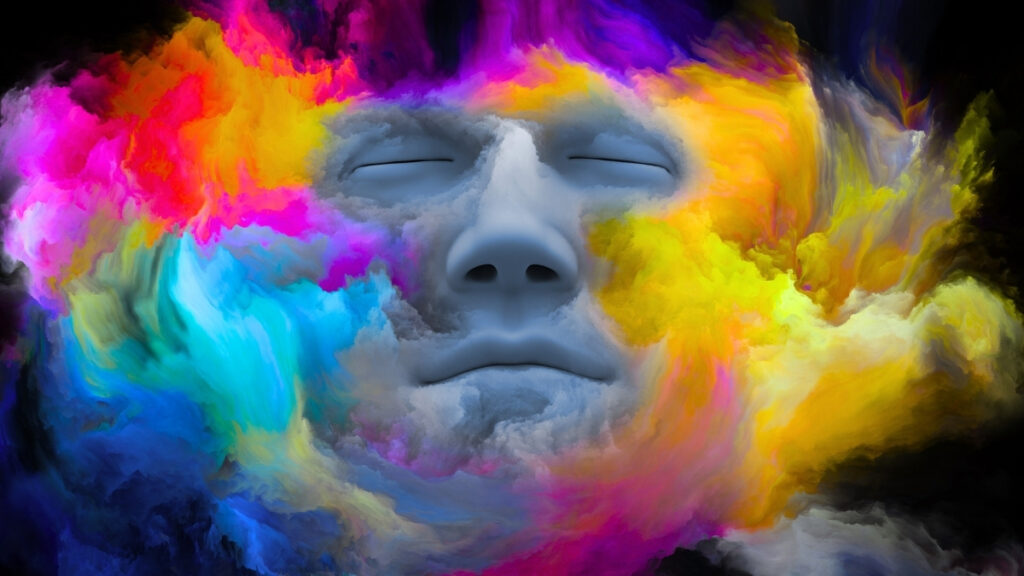
The Beatles’ iconic song “Yesterday” was born in a state of mind that psychologists refer to as the “hypnagogic state.” This is the twilight zone between sleep and wakefulness, where one lingers in a semi-conscious state, experiencing vivid mental images and sounds. It was during this state that Paul McCartney awoke one morning in early 1965 with a complex melody playing in his head. He quickly sat at his piano, transcribing the melody and finding chords to accompany it, creating placeholders for lyrics that would later become one of the most famous songs in history.
McCartney’s initial disbelief in the originality of the melody led him to consult others in the music industry, fearing subconscious plagiarism. As he recounted,
“For about a month I went round to people in the music business and asked them whether they had ever heard it before … I thought if no one claimed it after a few weeks, then I could have it.”
Ultimately, the melody was indeed original, a testament to the creative potential of the hypnagogic state.
The Hypnagogic State and Creative Breakthroughs
The hypnagogic state has been credited with numerous groundbreaking discoveries and inventions. Renowned physicist Niels Bohr, for example, conceptualized the atomic structure while drifting into sleep, visualizing electrons orbiting the nucleus like planets around the sun. This insight contributed to his Nobel Prize-winning work.
Research underscores the hypnagogic state as a “sweet spot” for creativity. A 2021 study demonstrated that participants in this state were three times more likely to solve a mathematical problem by discovering a hidden rule. Psychologists link creativity to traits such as openness to experience and cognitive flexibility, suggesting that creativity arises from the coordination between the brain’s cognitive control network and the default mode network, which is associated with daydreaming.
Historical Perspectives on Creativity
One of the earliest theories of creativity, proposed by British psychologist Frederic Myers in 1881, posits that ideas and insights emerge as a sudden “uprush” from a subliminal mind. Myers argued that our conscious mind is just a fraction of our total mind, which includes not only what Freud called the unconscious but also broader levels of consciousness. Ideas may gestate unconsciously before surfacing into awareness, often feeling as if they are gifts from beyond.
This theory aligns with the notion that relaxation and idleness foster creativity. As the conscious mind quiets, mental boundaries become permeable, allowing creative insights to flow from the subliminal mind. Meditation, known to promote openness and cognitive flexibility, also quiets the conscious mind, enhancing receptivity to inspiration.
Nurturing the Hypnagogic State for Creativity
Approximately 80% of people have experienced the hypnagogic state, with about a quarter doing so regularly. It typically occurs at the onset of sleep but can also happen upon waking or during drowsy moments throughout the day. Capturing ideas that arise in this state can be challenging due to drowsiness, leading to the common experience of losing brilliant ideas upon fully waking.
However, with practice, one can develop the habit of recording hypnagogic ideas. Keeping a pen and paper or a recording device nearby can help capture these fleeting insights. Paul McCartney, for instance, trained himself to write in the dark to preserve his ideas.
The technique of “conscious napping,” used by inventor Thomas Edison, involves drifting into unconsciousness while holding an object that falls and wakes the individual upon sleep onset, often resulting in new insights. More broadly, embracing idleness and relaxation as creative tools can lead to some of life’s most inspired ideas and insights.
As Steve Taylor, Senior Lecturer in Psychology at Leeds Beckett University, notes,
“Far from being unproductive, relaxation and idleness may lead to the most inspired ideas and insights of our lives.”
By understanding and harnessing the hypnagogic state, individuals can unlock their creative potential, much like McCartney and Bohr did in their respective fields.