



In 2025, University of Utah Health marked a year of exceptional research, growth, and achievement, despite facing an uncertain funding landscape. The institution’s research community showcased remarkable resilience and commitment, leading to a record-breaking amount of research funding for the fiscal year. This surge was driven by an increase in grant proposals submitted in 2024 and 2025, highlighting the collective dedication to improving lives in Utah and beyond.
The announcement comes as the university celebrates numerous accomplishments over the past year, each reflecting unwavering dedication, innovation, and a collaborative spirit.
Record Growth in Health Sciences
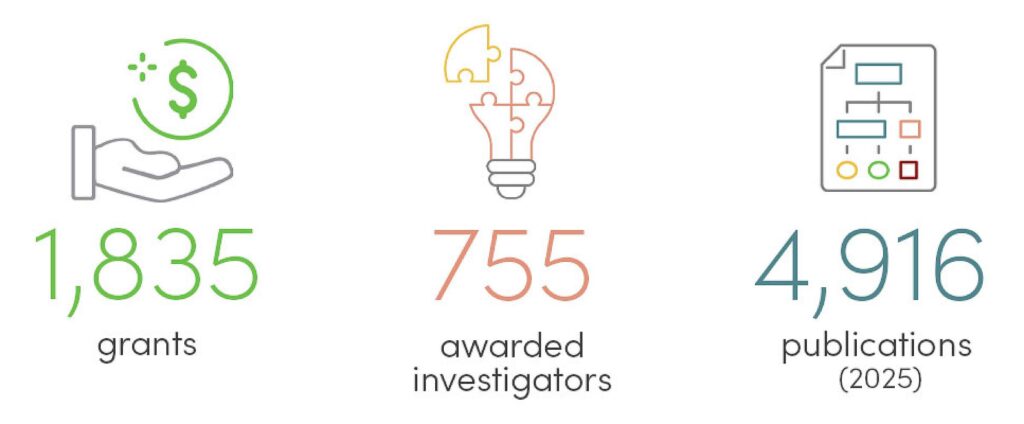
Health sciences research at the University of Utah has seen a 24% increase over the past five years, more than doubling since FY14. In FY25, these awards represented 68% of the university’s total research portfolio, amounting to $782 million. A total of 755 principal investigators received 1,835 awards, underscoring the university’s robust research environment.
At U of U Health, grants have been directed towards initiatives such as reducing childhood obesity in the Mountain West, developing blood tests to assess the impact of environmental factors like poor air quality, and investigating the benefits of acupuncture for Veterans with Gulf War illness.
Research support also comes from the U of U Health Philanthropic Partners Group, which funds high-risk, innovative projects not yet eligible for traditional funding. Last year, they supported projects aimed at developing novel treatments for adrenal cancer, creating organoid models for aneurysms, and improving drug delivery methods for ECMO patients.
Securing funding is essential to the University of Utah’s mission of delivering exceptional societal impact. These investments drive the development of new technologies, launch start-up companies, fuel Utah’s economy, support student training, advance knowledge, inform policy, and improve health.
Worldwide Impact of University Research
In 2025, the university’s research drew significant media attention both locally and globally. The most impactful stories highlighted the U’s expertise in health and disease.
One notable study analyzed extreme divers off the coast of Korea, uncovering genetic differences that help them survive the intense physiological stresses of free-diving. This research could ultimately lead to better treatments for blood pressure disorders and was covered by 283 news outlets, including The Washington Post and National Geographic.
Another study focused on the popular anti-diabetic and weight-loss drug Ozempic, addressing concerns about potential muscle loss. Research in mice suggested muscle mass changes less than expected, although muscles may still weaken. This study was reported by 91 news outlets, including The Independent and MSN.
Additionally, new research revealed that weight stigma, rather than weight itself, has the most significant impact on mental health and behaviors post-weight-loss surgery. This finding was covered by 137 news outlets, including CNN and Scientific American.
Ingenuity at Work: Transforming Research into Real-World Impact
The University of Utah’s Technology Licensing Office plays a crucial role in transforming pioneering research into tangible impacts by guiding innovators through the commercialization process. At the 2025 Innovation Awards, the office honored significant achievements that have shaped the university’s entrepreneurial culture.
Top awards were given to researchers like Welm, who has developed groundbreaking models of human breast cancer that have become a standard for studying metastatic behavior and treatment response. Another awardee, Sundquist, laid the groundwork in defining the structure of an HIV protein, leading to a twice-a-year therapy to prevent HIV infection in high-risk individuals.
Scientific Success and Future Prospects
U of U Health fosters an environment where researchers can thrive, enabling senior investigators to build distinguished careers and early-career scientists to launch programs that will shape the future. Notable awardees in 2025 include Bob S. Carter, MD, PhD, CEO of University of Utah Health, who was inducted into the National Academy of Medicine, and Jessica Osterhout, Ph.D., an assistant professor of neurobiology, selected as a 2025 Pew Scholar by the Pew Charitable Trusts.
Tracey Lamb, PhD, a professor of pathology, became the University of Utah’s first National Academies of Sciences, Engineering, and Medicine Jefferson Science Fellow, highlighting the institution’s commitment to advancing scientific knowledge and societal impact.
As the University of Utah Health continues to build on its successes, the institution remains focused on driving innovation, improving health outcomes, and contributing to global scientific advancements.