




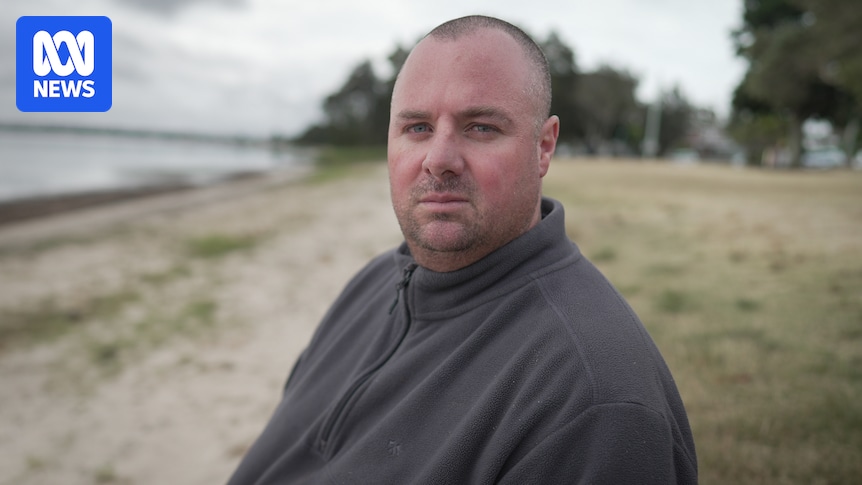
Senior disability support worker Nathan Secomb sensed something was amiss long before the fateful email arrived in June, notifying his team that the NDIS company they worked for was entering voluntary administration. The email was a harbinger of the collapse of United Employment, a labor-hire company employing around 480 staff in New South Wales. The company’s downfall left workers like Secomb facing a $6 million shortfall in wages, superannuation, and entitlements.
Secomb, who had previously witnessed the financial troubles of another NDIS provider, recognized the warning signs, the most glaring being the missing superannuation. “That’s always a warning sign,” he noted. The shock of the company’s collapse was compounded by management’s offer for employees to transition to a new company within the same email, with less than 48 hours to decide.
The offer included a “consideration payment” equal to the previous two weeks of wages owed, but it excluded superannuation and recognition of outstanding leave and entitlements. A company spokesperson stated the short time frame was “unavoidable” to ensure continued service delivery and uninterrupted staff income.
Impact on Workers
For many workers, the transition was a difficult decision. Secomb, 43, signed onto the new entity, driven by financial necessity and a commitment to his clients. “I needed the job, also, I had invested so much time and energy into my clients,” he explained. “I’d been with one of them for four years, and he didn’t like change.”
Meanwhile, 28-year-old Stephanie Shoobert, working at a supported living home on the NSW central coast, found the new contract disregarded her 130 hours of accrued leave. “I was doing so much overtime and so many extra shifts,” she said. “I was constantly cancelling plans to go to work to cover these houses and participants, and all for what? To be dropped?”
Shoobert’s financial situation took a severe hit. After examining her pay-slips, she discovered unpaid superannuation and tax, along with outstanding entitlements. “It felt silly to check [my superannuation] … I didn’t think I needed to. Look where it’s left me,” she lamented.
The Financial Fallout
An administrator’s report by Olvera Advisors revealed that United Employment, existing for less than a year, owed over $6 million in wages, superannuation, and other entitlements at the time of its collapse. The company also failed to pay over $5 million to the Australian Tax Office. United Employment is now in liquidation.
The report exposed a complex business structure involving multiple companies, with United Employment operating as the labor hire arm for a private NDIS-funded provider, We United Aus (WUA). Publicly trading as United for Care, WUA receives federal funding to support NDIS clients.
“The administrators reported that United Employment ended up in significant debt because it ‘routinely failed to invoice its clients’ (WUA) in line with the labor hire agreements.”
The company’s failure to invoice for all payroll costs, including PAYG tax and superannuation, left it unable to meet statutory obligations. Preliminary investigations suggested the company “may have been insolvent from inception,” according to the administrator.
Response and Investigation
The Australian Services Union’s Angus McFarland is advocating for affected workers seeking to recover their lost entitlements through the liquidation process. “We have almost 500 workers who have lost their superannuation, their leave accruals, who weren’t paid for several weeks,” McFarland stated. “We understand that’s up to $6 million of workers’ entitlements that’s gone missing.”
Fair Work Ombudsman Anna Booth confirmed an investigation into the outstanding entitlements owed to former United Employment workers. Booth noted a significant increase in complaints about missing pay and superannuation in the disability sector over the past five years.
“In the last financial year, we had a 40 per cent increase in inquiries and a 48 per cent increase in anonymous reports,” Booth reported.
Booth is also spearheading a separate inquiry into the disability sector, investigating over 100 service providers. “Right now we are investigating over 100 disability support service providers, and that’s in addition to conducting what is a broader inquiry where we talk to a range of employers and workers about their workplace experience,” she said.
Broader Implications
Fiona MacDonald, Interim Director of the Centre for Future Work, has extensively studied the care workforce. She noted that the NDIS has transformed disability work from a community-based model to a fragmented, largely unregulated free-market system with numerous for-profit providers.
“There are now around 270,000 service providers, of which less than 10 per cent are registered with the federal government’s National Disability Insurance Authority (NDIA),” MacDonald explained.
The shift has resulted in a workforce that is more casual, younger, and less experienced, with inadequate protection for workers and clients. “Many of them are out and about working in isolation, going in and out of people’s homes,” she said. “They can be invisible, and they can be out of touch with where to get information from or even to know what their rights are.”
The collapse of United Employment highlights the vulnerabilities within the NDIS framework and underscores the urgent need for regulatory reforms to protect workers and ensure the sustainability of disability services.