



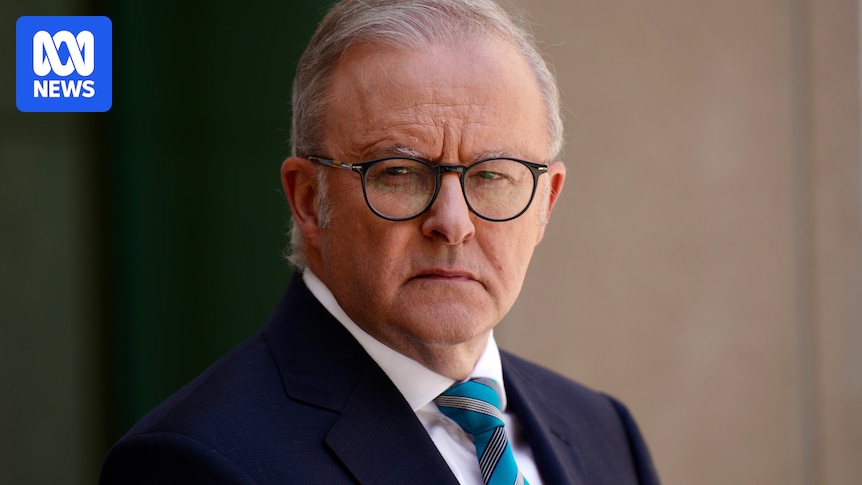
Anthony Albanese’s efforts to strengthen hate laws remain uncertain as politicians gather in Canberra for a special parliamentary session aimed at addressing the recent Bondi terror attack. On Saturday, the Prime Minister withdrew a controversial proposal to criminalize the promotion of racial hatred, which had faced criticism from both sides of the political spectrum.
The remaining legislative proposals include a new gun buyback scheme, measures to blacklist hate groups, and the deportation of migrants who spread hate. However, the fate of these stripped-back hate laws is uncertain unless the Coalition pledges its support in advance. The government is keen to avoid a futile parliamentary debate over any measure lacking bipartisan backing.
A Liberal source indicated that the Prime Minister’s office is open to shelving parts of the bill that the Coalition opposes, proceeding only with sections that have bipartisan support.
“The position of the government appears to be whatever the opposition says it should be,” the source remarked. “The Prime Minister has indicated no attachment to any aspect of his own bill … The Coalition will consider all our options, in the national interest. There will be a negotiation on the opposition’s terms, not the government’s.”
A government spokesperson dismissed this account but declined to detail the nature or substance of the government’s communications with the opposition.
PM Calls for Unity Amid Accusations of Political Maneuvering
On Saturday, Mr. Albanese urged for an end to political gamesmanship, stating that the Coalition had “no excuse” not to pass the new hate laws. Opposition Leader Sussan Ley responded by saying she would review the bills but refused to be “lectured about unity.”
Labor’s Senate business manager, Katy Gallagher, told reporters on Sunday that while she had spoken with opposition counterparts, she had yet to receive “concrete feedback.” She emphasized that the government would not proceed without assurances of support.
“The PM was pretty clear, he doesn’t want division on the floor of parliament. This is a moment of national importance … We want agreement on the way forward. We want the parliament to work together,” she stated.
In a strategic shift, the gun laws will be presented as a separate bill, despite previous insistence on a comprehensive package deal. This bill, along with any hate measures that have garnered support, will be introduced to the Lower House on Tuesday. Monday’s session will primarily focus on condolence motions for the attack victims.
Legislative and Political Context
The parliamentary joint committee on intelligence and security, which reviewed the earlier draft of the bill last week, reconvened on Sunday to finalize its report. Senator Gallagher announced that the report would be published by Sunday night or Monday morning. Meanwhile, the Coalition’s shadow cabinet is expected to meet on Sunday, with a final stance to be determined at a full party room meeting on Monday.
Peter Wertheim, co-chief executive of the Executive Council of Australian Jewry, expressed the importance of bipartisan cooperation to pass effective legislation against racial hatred.
“The major parties should work together to get legislation passed now that will advance us further down the road towards having effective laws against the deliberate promotion of racial hatred,” he said.
He also voiced disappointment over the abandonment of the new offense for hate promotion, expressing concern about the message it sends regarding the seriousness of racial hatred.
Implications and Future Prospects
The current political maneuvering highlights the complexities of passing hate laws in a divided parliament. The government’s willingness to compromise underscores the delicate balance of power and the need for consensus in addressing national security concerns.
As the parliamentary session unfolds, the focus will be on whether the government and opposition can reach an agreement that satisfies both parties’ objectives while addressing the public’s demand for stronger hate laws. The outcome of these negotiations will not only impact the legislative landscape but also set a precedent for future bipartisan cooperation on contentious issues.
The coming days will be crucial in determining the direction of Australia’s legislative response to hate crimes, with potential implications for national security and social cohesion. Observers will be keenly watching how the political dynamics play out, influencing both the immediate legislative agenda and the broader political climate.