



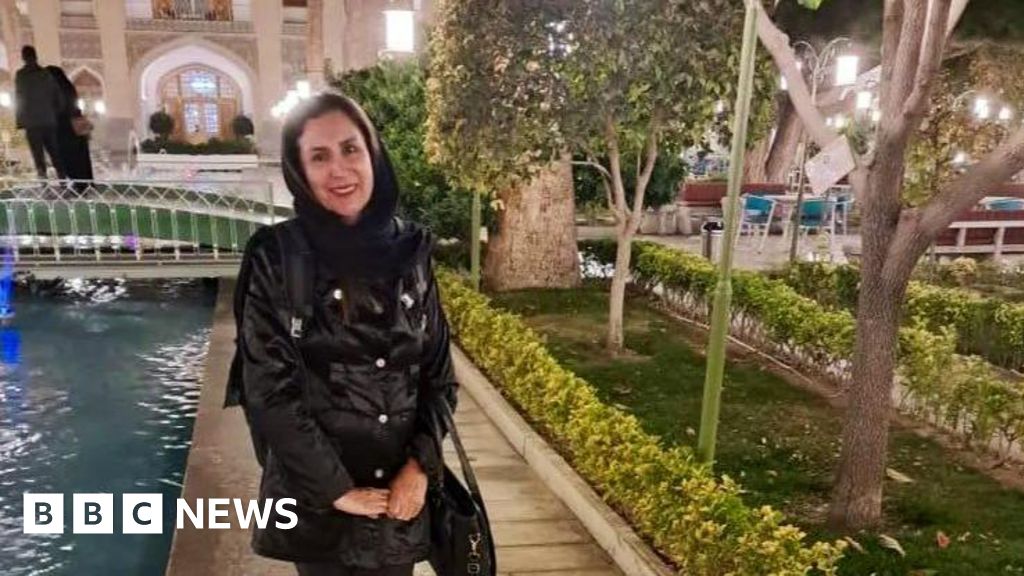
UN experts and over 400 prominent women have called on Iran to halt the execution of Zahra Tabari, a 67-year-old electrical engineer and women’s rights activist. Ms. Tabari was arrested in April, accused of collaborating with the banned People’s Mujahideen Organisation of Iran (PMOI), according to her family.
In October, a Revolutionary Court in Rasht convicted her of “armed rebellion” following a trial conducted via video link that lasted less than ten minutes. Her family asserts that the verdict was based on scant and unreliable evidence, including a piece of cloth inscribed with “Woman, Resistance, Freedom” and an unpublished audio message. Iranian authorities have yet to comment on the case.
International Outcry and Legal Concerns
The UN Human Rights Council’s special rapporteurs on human rights in Iran, violence against women, and arbitrary executions, along with the working group on discrimination against women and girls, issued a joint statement. They warned that Ms. Tabari’s case exemplifies “a pattern of serious violations of international human rights law.”
According to the experts, Ms. Tabari was arrested during a raid on her home without a judicial warrant. She was held in solitary confinement for a month, during which she was pressured to confess to taking up arms against the state and to membership in an opposition group. She was denied access to a lawyer of her choosing and was represented by a court-appointed lawyer. Her death sentence was issued immediately after a brief hearing.
“The severe procedural violations in this case – including the unlawful deprivation of her liberty, the denial of effective legal representation, the extraordinarily brief trial, the lack of adequate time to prepare a defence, and the use of evidence that appears insufficient to support a charge of [armed rebellion] – render any resulting conviction unsafe,” the experts stated.
Global Support for Zahra Tabari
More than 400 prominent women, including several Nobel laureates and former leaders of Switzerland, Ecuador, Finland, Peru, Poland, and Ukraine, have signed a public appeal for Ms. Tabari’s immediate release. The appeal, organized by Justice for the Victims of the 1988 Massacre in Iran, highlights the dire situation for women in Iran.
“Iran is today the world’s number one executioner of women per capita. Zahra’s case lays bare this terror: in Iran, daring to hold a sign declaring women’s resistance to oppression is now punishable by death,” the appeal stated.
The appeal underscores the broader issue of gender discrimination and the criminalization of women’s activism in Iran. The UN experts emphasized that international law restricts the death penalty to the most serious crimes, such as intentional killing, and executing Ms. Tabari under these circumstances would constitute an arbitrary execution.
Broader Implications and Ongoing Concerns
Another Iranian woman, Kurdish rights activist and social worker Pakhshan Azizi, is also facing the death penalty on similar charges. UN experts have previously noted that Ms. Azizi’s sentencing appears to be “solely related to her legitimate work as a social worker, including her support for refugees in Iraq and Syria.”
According to Iran Human Rights (IHR), at least 1,426 people, including 41 women, were executed in Iran in the first 11 months of 2025, marking a 70% increase from the previous year. Nearly half of those executed were convicted of drug-related offenses, while 53 were convicted of national security offenses, as reported by the Norway-based group.
By the Numbers: 1,426 executions in Iran in 2025, including 41 women, with a 70% increase from last year.
This development follows ongoing international scrutiny of Iran’s human rights record, particularly concerning the treatment of women and political dissidents. As the global community continues to rally for Ms. Tabari’s release, the case underscores the urgent need for reform and adherence to international human rights standards in Iran.
The move represents a significant moment in the ongoing struggle for women’s rights and freedom of expression in Iran. As international pressure mounts, the world watches closely to see how Iranian authorities will respond to these calls for justice.