

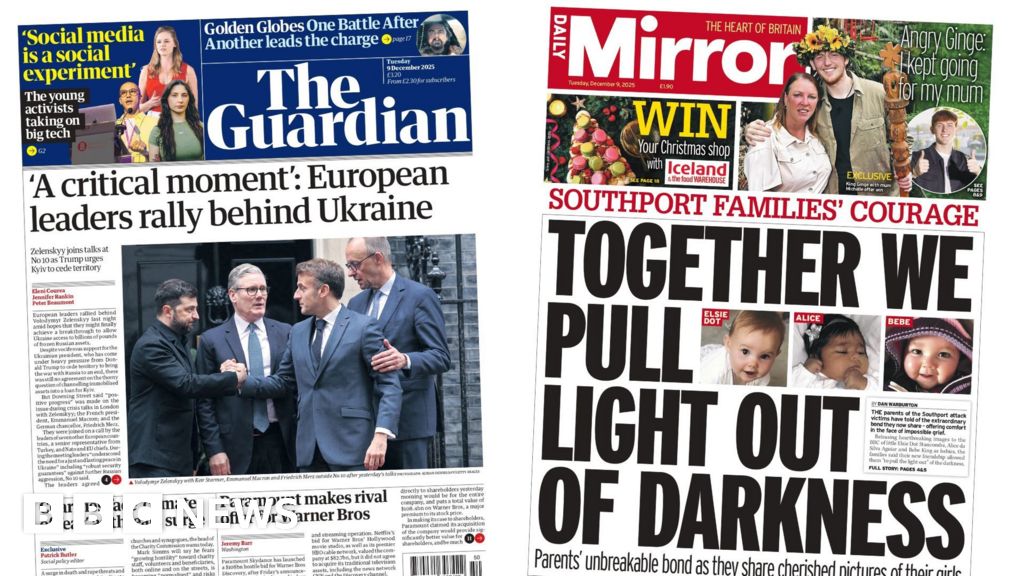
In a significant diplomatic gathering, Prime Minister Sir Keir Starmer met with Ukrainian, French, and German leaders in Downing Street on Monday. The discussions, captured in numerous photographs across Tuesday’s newspapers, signal a pivotal moment for Ukraine as Europe edges closer to a deal that could release up to £100 billion of frozen Russian assets. This potential agreement is seen as a crucial step in supporting Ukraine amidst its ongoing conflict and reconstruction efforts.
The Times highlights that these frozen assets represent one of the few leverage points Europe holds in its negotiations with Washington. The release of such a substantial sum could markedly influence the geopolitical landscape and bolster Ukraine’s position in the war.
Diplomatic Tensions and the Trump Peace Deal
Meanwhile, diplomatic tensions are simmering over former President Donald Trump’s peace proposal. According to The Daily Telegraph, the deal is “on the brink of collapse” due to President Volodymyr Zelensky’s firm stance that Ukraine will not cede territory to Russia. In response, Kyiv is preparing to send a counter-proposal backed by European allies to the U.S. president, reflecting the complex international dynamics at play.
This development underscores the broader geopolitical chess game, where national interests and international alliances intersect. The steadfastness of Ukraine’s position highlights its determination to maintain sovereignty despite external pressures.
Shifts in Global Leadership Roles
The Financial Times reports a notable shift in global leadership roles, particularly concerning Sir Tony Blair. Once considered for Trump’s “board of peace” in Gaza, Blair is now excluded following objections from Arab and Muslim states, partly due to his support for the 2003 US-led invasion of Iraq. A source close to Blair has indicated that the board will comprise “serving world leaders,” disqualifying him from participation, though he may still contribute to a smaller executive committee.
This exclusion reflects the lingering impact of historical decisions on current diplomatic relationships and the evolving nature of international peace efforts.
Security Concerns: Drug Trafficking and Migration
In a separate but equally pressing issue, The Telegraph has uncovered a troubling link between migration and drug trafficking. An investigation reveals that migrants crossing the Channel in small boats are being coerced into smuggling heroin into Britain. Asylum seekers are reportedly offered free or reduced-cost crossings from northern France in exchange for transporting Class A drugs for organized criminal gangs.
“The findings have been shared with the Home Office, raising significant security and humanitarian concerns,” the report states.
This revelation adds a layer of complexity to the ongoing debate over migration policies and border security, highlighting the need for comprehensive strategies to address these intertwined challenges.
Looking Ahead: Implications and Future Steps
The unfolding events in Europe and beyond underscore a critical juncture in international relations. The potential release of Russian assets could redefine economic and military support for Ukraine, while the diplomatic maneuvers surrounding Trump’s peace deal and global leadership roles reflect shifting alliances and power dynamics.
As these stories develop, the international community will be watching closely, with the outcomes likely to influence global policy and security strategies for years to come. The intersection of diplomacy, security, and humanitarian issues calls for coordinated efforts and innovative solutions to navigate the complex landscape ahead.