




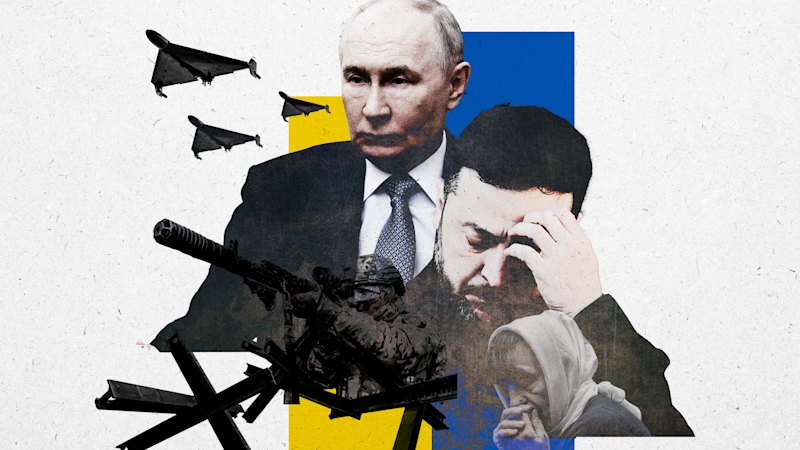
As the conflict between Ukraine and Russia intensifies, the relentless missile strikes by Russian forces continue to claim civilian lives across Ukraine. This brutal campaign, which has persisted for four years since the full-scale invasion, is shaping the future of the war as survivors grapple with the violence.
The anniversary of the invasion, marked by Russian President Vladimir Putin’s attempt to seize Kyiv, underscores the ongoing struggle. Despite the continued attacks, Putin’s objectives remain unfulfilled. Olena Davlikanova, an associate senior fellow at the Sahaidachny Security Centre in Ukraine, emphasizes the dire conditions faced by many Ukrainians and the growing animosity towards Russia.
Ukraine’s Resilience Amidst Russian Aggression
Davlikanova, speaking from Kyiv, describes the harsh reality of living without electricity for extended periods, with temperatures plummeting to minus 20 degrees outside and barely above freezing indoors. Despite calls for peace, progress is sluggish, and a ceasefire remains elusive, even as former U.S. President Donald Trump discusses a potential quick deal.
Putin’s ambitions extend beyond Ukrainian territory, seeking a settlement that consolidates Russian power in Europe and America. However, Ukraine, backed by European allies, refuses to concede. The potential scenarios range from capitulation to continued conflict, with Ukrainian President Volodymyr Zelensky and his supporters negotiating the terms.
Strategic Implications and Military Stalemate
Ukraine’s refusal to abandon fortified positions, which have withstood Russian assaults for years, reflects a strategic decision. Davlikanova warns against yielding to pressure from some international partners, labeling it a “suicidal act.” The trust deficit with Putin remains a significant barrier to peace, as Ukrainian and European leaders fear future aggression.
Russia’s control over parts of the Donetsk Oblast and demands for strategic cities like Kramatorsk highlight the ongoing territorial struggle. Zelensky remains steadfast, unwilling to relinquish positions that have resisted Russian advances.
The Human Cost and Military Dynamics
The United Nations Human Rights Monitoring Mission in Ukraine reports over 15,000 civilian deaths and more than 41,000 injuries since February 2022. Civilian casualties have escalated, with a 31% increase in 2025 compared to the previous year. Russia’s recent offensive involved over 1,300 attack drones and numerous missiles, further intensifying the conflict.
Neil Melvin, director of international security at the Royal United Services Institute, highlights the asymmetry of resources between Ukraine and Russia. Despite Ukraine’s technical advantages in certain areas, Russia’s larger population, industrial base, and military capabilities pose significant challenges.
“In current circumstances, it’s quite difficult to see that Ukraine could hold Russia back and not cede territory,” Melvin states, pointing to the attritional nature of the conflict.
International Support and Strategic Challenges
Ukraine’s reliance on U.S.-made Patriot systems for air defense underscores the limitations of its military capabilities. Marianna Fakhurdinova, a fellow at the Centre for European Policy Analysis, notes Europe’s inability to replace American systems, complicating Ukraine’s defense strategy.
Kurt Volker, former U.S. ambassador to NATO, argues for more robust support, emphasizing the need for long-range systems to target Russian military infrastructure. The reluctance of Western allies to provide such resources frustrates Ukrainian efforts to protect its citizens.
Geopolitical Ramifications and Future Prospects
As the war drags on, the geopolitical stakes remain high. European leaders, wary of a peace deal that favors Putin, continue to support Ukraine’s defense. Kaja Kallas, the EU’s foreign affairs high representative, stresses the need to increase pressure on Russia to end the conflict.
Amidst ongoing threats, including drone flights and disinformation campaigns, European security leaders acknowledge the Kremlin’s use of “hybrid” warfare tactics. This complex security landscape influences decisions regarding support for Ukraine.
“We are now operating in a space between peace and war,” says Blaise Metreweli, head of British spy agency MI6, highlighting the nuanced challenges posed by Russia.
German general Wolf-Jürgen Stahl warns of potential military actions by Russia, emphasizing the need for vigilance. The frustration with Trump’s peace proposals is palpable, as European nations bear the burden of Ukraine’s defense.
Radosław Sikorski, Polish Foreign Minister, asserts Europe’s right to influence peace negotiations, given its financial and security investments in Ukraine’s defense.
The broader implications of the conflict extend beyond Ukraine, as Putin seeks to reshape European security dynamics. Neil Melvin notes the return to a 19th-century vision of European power dynamics, complicating the path to peace.
Four years into the conflict, both Ukraine and Russia face mounting pressure. Despite Trump’s calls for a peace deal, Ukraine and its European allies remain committed to resisting Russian aggression. As elections loom in the United States and Europe, the path forward remains uncertain, but the necessity of defeating the threat is increasingly clear.