




A century-old idea by Thomas Edison is finding new life in the 21st century as UCLA scientists have revived his forgotten nickel-iron battery design. This development could revolutionize energy storage, particularly for solar farms. The research, co-led by UCLA, has produced a prototype that charges in seconds and boasts over 12,000 cycles, equivalent to more than 30 years of daily recharges.
In the early 1900s, electric cars were more common than their gas-powered counterparts. Edison’s lead-acid batteries, however, were costly and offered limited range. He envisioned nickel-iron batteries as the future, promising a 100-mile range and a seven-hour recharge time. Despite these ambitions, the technology was overshadowed by advances in internal combustion engines.
Reviving a Century-Old Vision
The UCLA-led team has developed a modern version of Edison’s battery using innovative yet straightforward techniques. They utilized tiny clusters of metal patterned with proteins, bonded to a two-dimensional material just one atom thick. Despite the advanced materials, the process remains cost-effective and accessible.
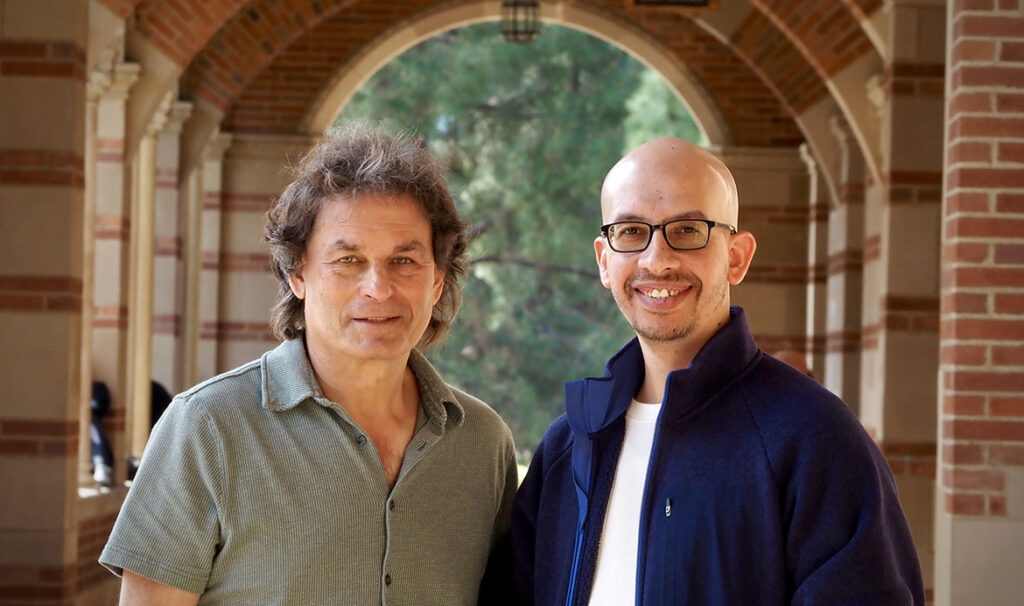
“People often think of modern nanotechnology tools as complicated and high-tech, but our approach is surprisingly simple and straightforward,” said Maher El-Kady, a study co-author and assistant researcher in UCLA’s chemistry and biochemistry department. “We are just mixing common ingredients, applying gentle heating steps, and using raw materials that are widely available.”
Batteries Inspired by Nature
The researchers drew inspiration from nature, specifically how animals form bones and shellfish create their shells. Proteins act as scaffolds for collecting calcium-based compounds, a mechanism the team mimicked to generate clusters of nickel and iron.
“We were inspired by the way nature deposits these types of materials,” said Ric Kaner, co-corresponding author and distinguished professor at UCLA. “Laying down minerals in the correct fashion builds bones that are strong yet flexible. How it’s done is almost as important as the material used.”
“As we go from larger particles down to these extremely tiny nanoclusters, the surface area gets dramatically higher,” El-Kady said. “That’s a huge advantage for batteries. When the particles are that tiny, almost every single atom can participate in the reaction.”
Surface Area and Efficiency
The secret to the battery’s efficiency lies in its surface area. The graphene aerogel’s thinness and empty space provide ample room for chemical reactions. The tiny metal nanoclusters exploit a fundamental principle: as objects shrink, their outer surface area increases significantly more than their volume.
This results in faster charging and discharging, greater charge storage, and overall improved battery performance. However, the current iteration does not yet match the storage capabilities of lithium-ion batteries, which dominate the electric vehicle market.
Future Prospects and Applications
Despite this limitation, the technology’s rapid charging and durability make it ideal for other applications, such as storing excess solar energy or providing backup power for data centers. “Because this technology could extend the lifetime of batteries to decades upon decades, it might be ideal for storing renewable energy or quickly taking over when power is lost,” El-Kady noted.
The researchers are also exploring the use of their nanocluster technique with other metals and considering natural polymers as alternatives to bovine proteins, aiming for cost-effective and scalable manufacturing.
Study Contributors and Funding
The study’s first author, Habibeh Bishkul, hails from Tarbiat Modares University in Tehran, Iran. Co-corresponding authors include Abolhassan Noori and Mir Mousavi from the same university. Other contributors are Nahla Mohamed of UCLA and Cairo University, Mohammad Rahmanifar of Shahed University, Nasim Hassani of Razi University, Mehdi Neek-Amal of Shahid Rajaee Teacher Training University and the University of Antwerp, and Junlei Liu and Cheng Zhang of Zhejiang University of Technology.
The research received funding from various sources, including the Iran National Science Foundation, the National Science Foundation of Zhejiang Province, Nanotech Energy Inc., a University of California Climate Action Seed Grant, and the Tarbiat Modares University Research Council.